
June is internationally recognized as Pride Month, or LGBTQ+ Pride Month. This commemorates the Stonewall riots of June 1969 in New York City, when patrons of the Stonewall Inn resisted a police raid. Southend Pride is held annually, usually in July. It entails a parade starting at the Royal Artillery Terrace/Southend Pier area, going through the city centre to Warrior Square Gardens.
It is there that a free event takes place, including cultural and musical activities, with stalls promoting all sorts of charitable endeavours in the city. It seeks to be (and is) a friendly, fun, family occasion, and is well attended. There is also a faith element, with representatives of a local synagogue and churches taking part. Other Christians hold alternative events or preach in the open air, including on sexuality, during the weekend.
I confess to some surprise that two of the top secondary schools in my city had decided to promote Pride Month, although I shouldn’t be as these days organisations seem to be bending over backwards to show Pride solidarity. On one school’s Facebook page, accompanying the image below, is the text: “This week marks the beginning of Pride Month, a time to celebrate the LGBTQ+ community, honour its history, and recognise the ongoing fight for equality. At WHSG, we marked the start of Pride with assemblies led by our Senior Student Team, helping to educate, inspire, and promote allyship across the school. Pride is not just a celebration, it’s a reminder of the importance of creating safe, inclusive spaces where everyone feels seen, valued, and supported. From the legacy of the Stonewall Riots to Pride events across the UK today, this month encourages us all to reflect, learn, and stand together. Let’s continue to show kindness, speak up against discrimination, and support one another, not just in June, but every day”.
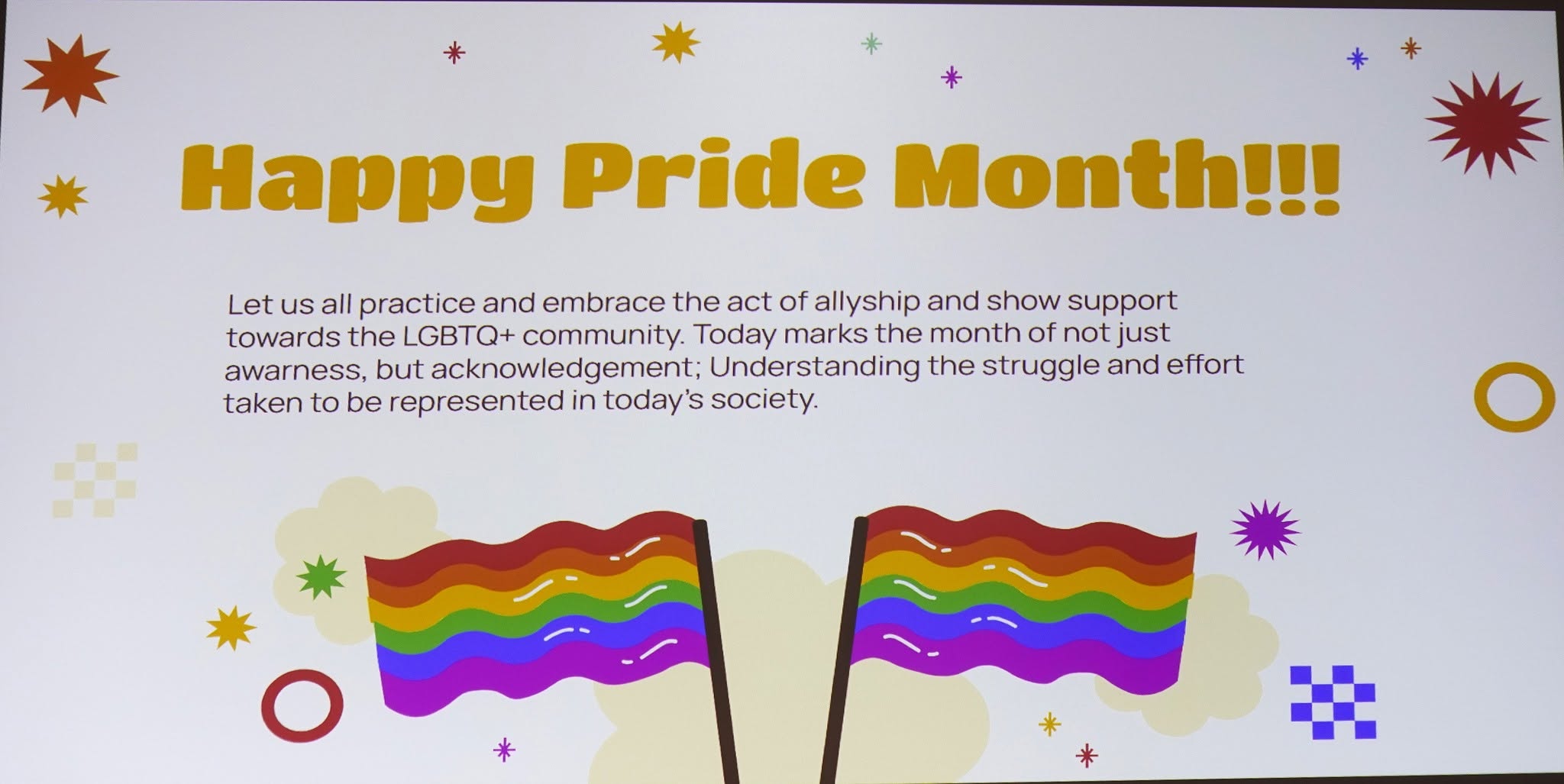
One of the ten (all supportive) comments to this “Happy Pride Month” post reads: “Pride is still vital WHSG —because too many are still held back, silenced, or shamed simply for being who they are. It’s more than a celebration. It’s a stand for freedom, authenticity, and for the right to exist without fear or judgment. It’s a call to be seen and to be heard. When people are targeted for loving freely, expressing their truth, or simply existing outside the norms, it shows us how far we still have to go. Pride is a declaration of worth. Of resilience. Of unapologetic visibility. It’s about claiming space for every identity and saying loudly: we all deserve safety, respect, and dignity. We won’t stay silent. We keep showing up, speaking out, and standing strong—because the fight for true equality is far from over”.
But I ought to declare an interest, not least because I used to organise community events that included LBGT interests. I could write reams but let me refer you to a blog I posted a little under a year ago following the last Southend Pride event: “LBGTQ+ Pride and Open Air Preaching” (see here). In many ways I admire the event organisers who I have had past positive dealings with and acknowledge they have put on fantastic events which I have attended and enjoyed. Moreover, I too recognise that all, including LBGTQ+ folk deserve safety, respect, and dignity and recognise that this did not happen in the past and still doesn’t in places. My gripe is the way impressionable youngsters may be indoctrinated and may themselves be disrespected should they not subscribe to Pride because they rightly hold to the belief that the Bible teaches us that pride is a sin, there are only two genders: man and woman and same sex relationships are not endorsed, rather the contrary.
As my recent “Whose Justice? Whose Wisdom? and the cases of George Floyd and Henry Nowak” (see here) blog shows there are other issues that children should be made aware off. If I had influence over what sort of ideology schools pushed what happened to Henry Nowak but tragically did not, because a false ideology had taken hold, would be one subject I might suggest.
Edit: after I posted this blog, I got this comment from a gay friend:
“When I was at school any boy suspected of being gay was mercilessly bullied – whether they were gay or not. Some boys had to endure a living hell, simply because they were different – not just from the other boys but the teachers too. So anything that helps queer kids avoid that is good!”
He gave me permission to share. This is my response:
“Thanks mate – really appreciate you allowing me to share. I was bullied at school because, now looking back at it, I too was different and didn’t have it in me to stick up for myself – and the wounds flare up from time to time. While I’d want a different response from the school than Pride flags, it needs to be commended for wanting to stand by those who don’t fit the mould.”


Thanks again for your original post, John. The more I reflect, the more I realise there’s a bigger conversation here—about how we confuse cultural norms with biblical absolutes, and how schools (and churches) pick and choose what to “celebrate” while calling it education.
You raised concerns about indoctrination around Pride. I get that. But let’s be honest: schools already indoctrinate. I had to celebrate royal jubilees and royal weddings at school, even though I’m a republican. No one called that indoctrination—it was just “tradition.” Yet today, 59% of 16–34 year-olds prefer an elected head of state, and among 16–17 year-olds, more want the monarchy abolished than kept (29% v 24%). So were we being indoctrinated? Or were we just being exposed to the dominant culture? The point is, every generation is shaped by its cultural moment. The question isn’t “are we shaping kids?”—it’s “are we shaping them well and honestly?”
And that brings me to the Bible.
The way many Christians use Scripture on same-sex relationships assumes that the biblical writers were addressing something equivalent to what we see today—committed, monogamous, loving same-sex partnerships. But they weren’t. In first-century Greco-Roman world, same-sex relations were typically exploitative: pederasty, temple prostitution, master-slave abuse. There was no cultural category for mutual, covenantal same-sex love. So when Paul or Leviticus speaks against “men lying with men,” they’re condemning specific practices in their world—not pre-emptively outlawing a modern reality they couldn’t have imagined.
We already do this with other parts of Scripture. We don’t stone sabbath-breakers. We don’t treat leprosy as divine punishment. We don’t shun people with mental illness or neurodivergence—even though first-century cultures often did. We’ve learned to read those texts through the lens of Christ’s own teaching: “The Sabbath was made for man, not man for the Sabbath.” That principle—that laws are meant to serve human flourishing, not crush it—applies here too.
Look at how our understanding has grown elsewhere. Alcoholism is now treated as a health condition, not moral failure. ADHD and autism are understood, not demonised. Leprosy isn’t a curse—it’s a bacterial infection. In each case, we stopped reading ancient texts as if they had the final medical or psychological word. Why do we treat sexuality differently?
I’m not saying every Christian must affirm same-sex marriage. But I am saying that insisting on a literal reading of a handful of verses—while allegorising or culturalising dozens of others—is inconsistent. And using that inconsistency to deny young people safety and belonging, when they’re already vulnerable to bullying and isolation, feels like missing the weightier matters of the law: justice, mercy, and faithfulness.
And if we’re worried about state indoctrination? Let’s talk about Remembrance Day. I know Christians who struggle with it—pacifists who believe in turning the other cheek and loving enemies. They’re not anti-memory or anti-gratitude; they just don’t think the state should use schools to glorify war. But we rarely hear “indoctrination” accusations there, because it’s a familiar cultural ritual.
So maybe the real question is: why is one form of cultural celebration (royalty, military, national pride) treated as neutral or good, while another (LGBTQ+ Pride) is treated as ideological capture? Both shape children. Both carry values. The difference is that Pride is explicitly about protecting kids who are being hurt—and that makes some people uncomfortable precisely because it names the harm.
Your gay friend’s testimony is the heart of this. He wasn’t asking for ideology. He was asking for a school where he didn’t have to live through hell. Pride flags and assemblies may not be the only way to do that—but they’re a visible, practical way of saying “you’re not alone.” And if a school can celebrate the monarchy without a single Bible verse to back it up, surely it can celebrate the dignity of its own students who are suffering.
Anyway, that’s my ramble. Thanks for giving me space to think out loud. I hope it adds something useful to your reflections.
God bless,
Mike.