
I have been asked by a friend why I do not write about the recent “Christ is King: America After Trump” conference in Texas. Besides being busy writing my book, I have not written about it because I did not know enough. Now that I know a lot more, I am glad I waited.
From what I could make out, there is much in that conference from which I would distance myself despite agreeing with some of it. When speakers talk about America remaining a majority White nation, when they talk about White Christian men reigning supreme, when they talk about removing the vote from women, when they despise foreigners arriving with a view to settle in the country, that is not my nationalism, nor my Christianity either.
And yet I am not a globalist. I have never been a globalist. I believe it is an ideology pushed by the bad guys for nefarious ends, just as are some forms of nationalism. I believe in nations. I believe God gave us nations, languages, histories, and homes. I believe love of neighbour begins with love of the place God has put you in and love of the people God has put you alongside. The confusion we are living through at the moment is quite different things are being called by the same name, in order to condemn nationalism altogether.
The first is what happened in Texas. The second is what happened in the Senedd, the Welsh Parliament, when Joe Martin was barred from speaking for talking about the “demographic replacement of white British people”. The third is a post I saw from a man I respect, Rev. Brett Murphy, who wrote that if you think Black people can be ethnically English you are just as misguided as those who say a woman can have a penis. It struck me that all talked about colour, contrasting white with non-white. For me, colour is irrelevant.
I replied to Brett, politely I hope, that his comment was unwise. He told me to read my history. I have read my history. Over the millennia people from many different places have settled in England. It is true that most, up to recently, have been White but what made them English was not the colour of their skin. It was that they adopted, over time, a shared language, shared laws, shared customs, and a shared Christian story about who we are and how we live. That is what I mean by cultural identity. That is what (in my view) nationalism, properly understood, is about.
My fear is that we are allowing people with very different cultural identities to settle here in large numbers, without any serious expectation that they will adopt (or at least respect and not impose upon) ours, and then we are surprised when our own culture begins to dissolve and some of the values once held dear have been ditched in order to promote diversity. Nationalism is a reaction against that. It is not hatred. It is love, love of home, love of heritage, love of the Christian inheritance that shaped our laws, our freedoms, our hospitals, our schools, and our sense of duty and neighbourliness.
I fear something else, too. We are being brainwashed as a country into thinking that anyone who believes certain things about their country is a nationalist, and nationalism is something undesirable (like “far right”), if not worse. The word is being made toxic on purpose, so that ordinary, decent people are afraid to say, “I love my country, I love its Christian heritage, and I want to keep it”.
That is why I was also saddened, though not surprised, by the King’s recent speech, in which Christians were urged to give space to other religions to do as they wish. Of course we should be courteous to our neighbours. Of course we should not persecute anyone for their honestly held beliefs. But Christianity is not just one religion among many in this country. It is the faith that made this country. To ask Christians to step back and make room, as if we were guests in our own home, is to misunderstand both history and hospitality.
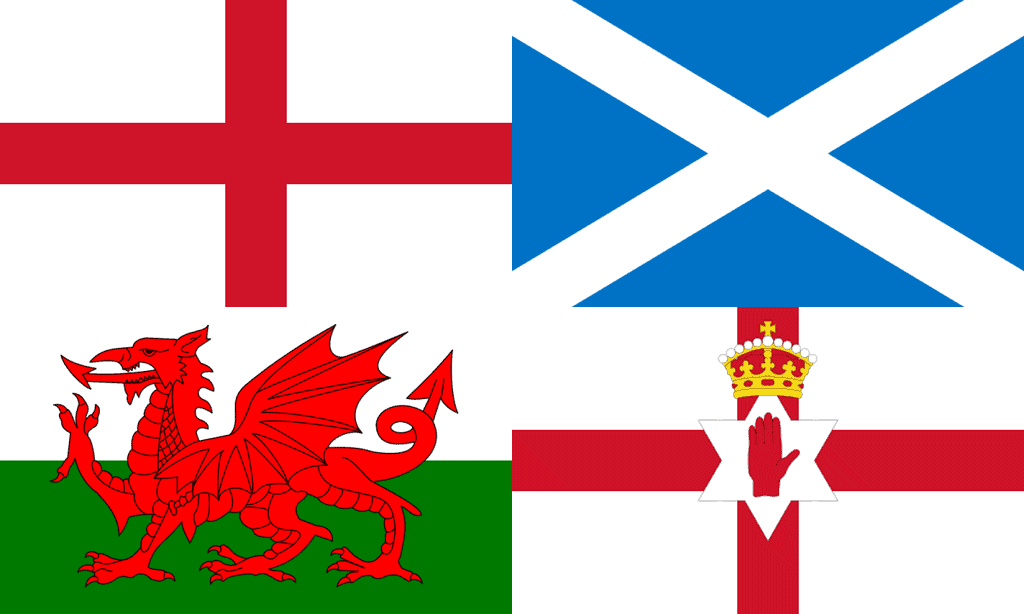
True hospitality does not mean giving away the house. It means welcoming the guest into a home that still knows whose house it is. So let me state my position plainly, gently but robustly, because I do not want to come like a tornado. Whilst suspicious of most “isms”, I am a nationalist because I am a Christian. I believe nations matter to God. I believe culture matters. I believe England, Wales, Scotland, and indeed America, while not insisting new arrivals ditch their own culture, have a Christian cultural identity worth preserving.
I do not believe that identity is White. A Black man who loves this country, speaks its language, honours its laws, and embraces its Christian heritage is, in the only sense that matters, English. A White man who despises that heritage, who rejects its faith and its freedoms, has cut himself off from it, whatever his ancestry. That is the test: not colour, not blood but rather: shared culture, a prominent place for true Faith and a sense of belonging.
If we lose that distinction, we will lose the argument. We will hand the word “nationalism” to some at that Texas conference, and to those who think it is all about race, and we will allow the rest of the country to be told that to love your nation is to be a bigot. I refuse to accept that. I want a nationalism that is wise, gentle, and firm. Mine is a nationalism that loves its neighbours without ceasing to love its home and a nationalism that says Christ is King, not because He gives us an excuse to dominate others, but because He teaches us how to love them truly, including foreigners coming here to settle, just as in the Book of Leviticus, by first knowing who we are.
As a parting thought, this coming from one who was born as an Englishman, who loves his country and who believes its only hope to avert calamity is for it to return to the God of the Bible. We must not blame an influx of the wrong sort of foreigner (who would seem to have little in common with what was once described as traditional British values) for our current dilemma or to push nationalism as the way to reverse the decline that is so evident, but instead we must proclaim and live Christ.

