
What do Jeremy Corbyn, George Galloway, David Icke and Stephen Sizer all have in common? This is relevant to what I want to say next, and I will come to my answer later.
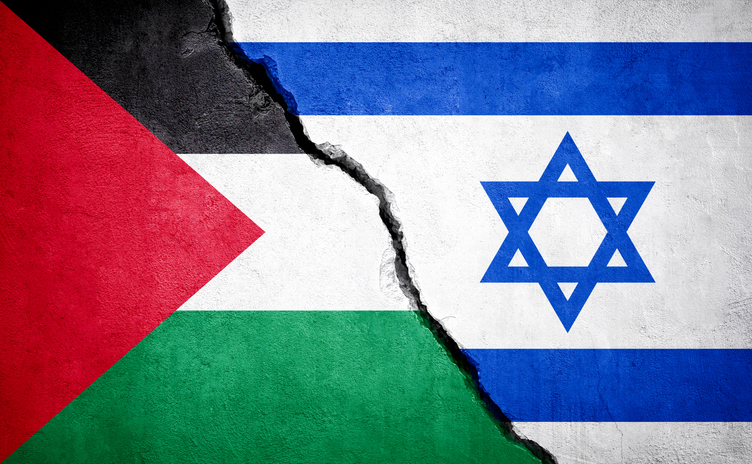
I recently set out my store on a subject that has never gone away in my twelve years as a blogger (see here) – Israel. Israel is much in the news these days along with questions concerning Zionism and AntiSemitism and how to relate to Israel in the light of the conflicts currently taking place, which have become bones of contention where opinions differ, and is why I have produced this Part 2.
The trigger was when my MP, David Burton-Sampson, raised concerns about the Green Party’s motion that Zionism is racism. He wrote to the local Green Party about it. They replied. I will publish both letters at the end of this article, so you can read them for yourselves and make up your own mind. But before I get to the letters, I need to get the definitions right. Because if we get the definitions wrong, we will spend the whole argument talking past each other. It is why I attempted to define Zionism in Part 1.
Let me start with antisemitism. Strictly speaking, and I know this is pedantic, but I think it matters, the Semitic peoples are wider than just the Jewish people. If you go back to the Table of Nations in Genesis 10, Shem is the father of a whole family of peoples – Elam, Asshur, Arphaxad, Lud, Aram, and through them the Hebrews and the Arabs and others. The Palestinians, as Arabs, are Semitic peoples too and as with Jews they warrant that same respect. Whatever way you look at it, antisemitism is on the rise and that is cause for alarm.
In common use, though, we use the word antisemitism to mean hatred of, hostility towards, or discrimination against Jewish people because they are Jewish. I will use it in that common sense in these pieces, but I want us to remember the wider root. It reminds us that hatred of any Semitic people is wrong. Jewish and Palestinian people share a deeper kinship than our politics usually allows.
So my definition is this: antisemitism is hatred of Jewish people because they are Jewish. It is not the same as criticism of a government, even the government of Israel. Criticism of a policy can be right or wrong, fair or unfair, wise or foolish. But it is not automatically hatred of a people. If we lose that distinction, we end up calling everyone we disagree with an antisemite, and the word loses its power when we really need it, for it is an issue to address.
The same problem applies to Zionism. There are, in my view, two very different things going by the same name. There is a good form of Zionism. Zionism as covenant, as justice, as a homeland. The belief that God promised a land to His people, that they have a right to live there in peace. They have a right to self-determination like any other people. If that is what Zionism means, then God is a Zionist. He is a God of covenant and justice, not a God of racism. Then there is a bad form of Zionism. Zionism as domination, dispossession and control. Zionism as the belief that one ethnic group may rule over, displace, or exclude another in order to keep its own supremacy is the definition many subscribe to.
If that is what Zionism means, then God cannot be a Zionist, because He is a God of justice. He does not bless domination. We have to decide which definition we are using, every time we use the word. Otherwise, if I say “I am a Zionist” and you can hear “I am a racist”, we are not arguing about the same thing.
That brings me to the question: What do Jeremy Corbyn, George Galloway, David Icke and Stephen Sizer all have in common? I have argued that antisemitism is hatred of Jewish people because they are Jewish and it is not the same as criticism of a government, even the government of Israel. As I see it, what they have got in common is that they have all been wrongly accused of antisemitism. And they have all been cancelled, in one form or another, because people have taken exception to their views on Israel. In particular, they have all called out what they see as Israel, the State, implementing the bad form of Zionism. Not covenant and justice and a homeland, but domination, dispossession and control.
Now let me weigh that carefully, because this is where I do not want to swallow whole or dismiss whole. I disagree with a lot of what these men say. I disagree with their theology and politics, and even some of their language. But I do not believe they are antisemites. I believe they have the right to call out injustice, whoever does it. Moreover, they should not have been cancelled. In my view, the reason they were cancelled was political posturing. It was easier to label them than to answer them. That does not mean everything they said was right. It means labelling is not answering. If we are going to call someone an antisemite, we should have to show hatred of Jewish people because they are Jewish, not just strong criticism of the State of Israel, or opposition to a particular form of Zionism.
That is why I wanted to look at what the five main parties actually believe about Israel. Not what their opponents say they believe. What they say themselves, as they stand now.
Labour
Labour, under Andy Burnham, supports a negotiated two-state solution, a secure Israel living alongside a viable Palestinian state. It recognised the State of Palestine, to try to keep that two-state hope alive. At the same time, Labour has condemned the Green policy that Zionism is racism as wrong and antisemitic. Burnham said Labour will have nothing to do with it, and Labour has ended power-sharing with the Greens in 11 councils over this. So Labour is trying to hold two things together: criticism of Israeli government policy and support for Palestinian statehood, and a clear line that Zionism itself is not racism.
Conservative
The Conservatives also say they support a two-state solution in principle. But they opposed Labour’s recognition of Palestine as disastrous and a reward for Hamas, arguing it came with no conditions on Hamas, no release of hostages, and nothing to stop the suffering. Their position is: two states in principle, but not recognition now, and not in this way.
Liberal Democrats
The Liberal Democrats support a two-state solution based on the 1967 lines, with two capitals in Jerusalem, and they have long supported immediate recognition of Palestine. They welcomed recognition when it came. They also condemned the Green motion as divisive and antisemitic. Ed Davey has ruled out a national partnership with any party committed to that policy, and has asked local Liberal Democrats to ask local Greens to publicly reject it and campaign for its reversal.
Green
The Greens are now the outlier on the left. At their conference in Brighton on 4 October, they voted, by 1,022 to 813, that the party is anti-Zionist, that Zionism is to be treated as any other form of racism, and that they support a single democratic Palestinian state in all of historic Palestine, with equal rights for all. That is not a two-state policy. That is a one-state policy. It is a rejection of a Jewish state alongside a Palestinian state, in favour of one state for all. I disagree with that policy, for the reason I have already given. If Zionism means covenant, justice and a homeland, then to call it racism is to call the Jewish right to self-determination racist. But I also want to weigh it fairly: the Greens say they are targeting an ideology, not Jewish people.
Reform
Reform is the outlier on the right. Nigel Farage opposed recognition of Palestine as wrong and a reward for Hamas terrorists, and said it would do nothing to bring about peace. Reform has no two-state policy in its manifesto, and its public position is unequivocally pro-Israel and against recognition now. Farage has said Hamas and a Palestinian state are inseparable for now. In practice, that means: no recognition, no two-state push, until there is a clear willingness for peaceful coexistence.
While a two state solution appears reasonable, I am not sure a two-state solution is possible any more. There have been many attempts. The hatred, and the people in power on both sides, are such that, sadly, I do not believe it is going to happen.
But where does that leave us? For me, I will continue to support Israel. I will not ignore my friend who I expect will respond to this article giving me another set of bad things that the State of Israel has perpetrated against the Palestinian people, including those who are Christian. I will not dispute what he says. I think the problem is we do not know all the facts, and bad things are being done on all sides.
Now is not the time to condone one side or the other without recognising that wrongdoing needs to be called out, whoever does it. But I stand on my support for Israel from my belief that there is a place for Israel, the people, and that they have the right to live in peace in their own state and do what is necessary to ensure that Israelites will live securely and not be terrorised. But I will condemn any injustice to anybody living in that land who are not ethnic Jews, or who have views different to those who oversee the country.
We live in interesting days. We have had the elections in America and in Israel. In America, the midterms were a resounding win for the Democrats, as I wrote about in my Trumpwatch 78 blog (see here). In Israel, the election on 27 October gave no one an outright majority, and Gadi Eisenkot is now trying to form a government. We have the ongoing Iran crisis. Who knows what is going to happen next? As for me, I will continue to pray for the peace of Jerusalem. I want to reach out to Jew and Arab alike. I will call out injustice when I see it. But I stand by the Jewish people, and I condemn any form of antisemitism, whoever pushes it.

