
It is lovely to come across something both surprising and enriching at the same time, but that is what happened to me recently.
INTRODUCTION: MUSIC, WORSHIP, AND GETTING OLDER
It never used to be so, but these days I love music and increasingly so as I get older. I think that is true for a lot of us. As the years go by you start to hear what is underneath the notes. As a Christian preacher, I can see the relation between music and real worship, and between music and the prophetic. Music can make us wait. It can make us long. It can name what we cannot yet say. That is why of late I keep coming back to the organ in the country church.
THE HOOK: BEN MATON AND COME O COME EMMANUEL
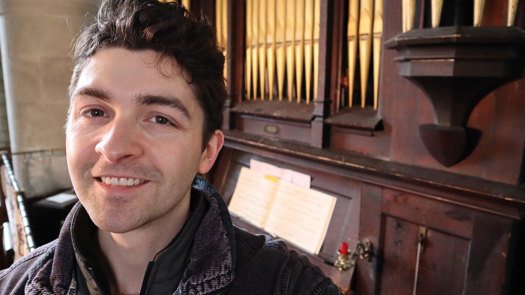
By chance, I happened to come across Ben Maton on YouTube (and Ben, if you are reading this, I did subscribe), while researching my next blog. Ben is a British musician, filmmaker, and popular internet creator who goes under the title: The Salisbury Organist. He records and shares music from rural parish church organs across England and regularly posts content concerning the churches he visits and music he plays that seem relevant – and whenever he can on their often not perfect organs, on YouTube. He also posts content on his own website.
I watched/heard Ben play “Come O Come Emmanuel” my favourite Advent and maybe any-season hymn in a cold country church. It was not a performance. It was a cry. It was the Old Testament longing (I’ve been writing about) set to sound, and it undid me. He has a particular fixation with parish church organs. He gives recitals, he teaches, and he rescues neglected village instruments. He treats the organ as a voice for worship, not as a museum piece.
ORGANIST VERSUS PIANIST: A DIFFERENT CALLING
I am a musical ignoramus but I am learning and this is what I learned about organists … While organists can and do play the piano, and vice versa, an organist is not just a pianist with extra keys. It takes ten fingers, two feet, and a brain that is managing stops all at once. He/she is a conductor, engineer, and worship leader in one seat. There is no touch dynamics. One shapes the sound by adding and removing stops, by breathing with the building. And the repertoire is mostly written for the church, not the concert hall. Bach, the king of organ music, typically provides the grammar. It requires a particular kind of musician to play.
THE PEOPLE BEHIND THE KEYS
I have known a number of organists in my day and every one of them was a character. Regrettably, I did not properly appreciate what they had to offer on the organ, at the time.
The church I once helped to lead had a seriously good electronic organ (I know this because our City’s finest organist once told me so). When we closed, we gave it to a Catholic church startup. The clincher was their organist, a Polish lady, who played a number of wonderful renderings of Charles Wesley hymns on it. Beauty crossed traditions in that hymn playing.
One fine organist I knew was once a lad I taught in Sunday School. He grew into an excellent musician. Life was heavy for him – and it is where it ended. It seems to me that the organ is at the centre of both joy and grief. It is ministry, and sometimes it is a burden.
As couple of years back, I visited the church I attended some 40 years ago. The same organist was still there. This time he played modern choruses as a pre-service intro. Back then he played Bach. Bach did not appeal to me then. It does now. How times change!
My own music career stopped before it even got going. I was sacked from the junior school recorder group as I wasn’t good enough, unlike my sister who was gifted yet couldn’t get into the group. I never got back to musical instrument playing – which is regrettable.
BACH AND WESLEY: THE POPULAR ONES
If you do not know where to start with Bach, start with perhaps my favourite: “Jesu Joy of Man’s Desiring” is pure light. It sounds like hope. But there is so much more. Try the chorale preludes. Everyone is a short sermon in sound. And then onto Charles Wesley. Shame it was not him who wrote “Thine Be The Glory”. That is my second favourite piece (after O come o come Emmanuel) that Ben so beautifully played on the organ. Wesley gave us doctrine that we could sing. Bach gave us doctrine that we could feel. There are so many others composers of note and Ben has done a good job in showing some of them off to us.
OLD STONES, NEW OBSESSION, AND HISTORY REPEATING
Many of those old churches were Lord-of-the-Manor vanity projects. But they were also built for God, for beauty, for permanence, with services held inside that included playing hymns that had weight. Nowadays we have swapped organs for playlists and doctrine for slogans. We threw the baby out with the bathwater in the name of relevance and saving the planet.
I studied the eighteenth-century Enlightenment movement some years ago as part of an (for fun) Open University history degree, and what followed was the nineteenth century Romantic movement. It was a reaction. Methinks, it is one of many instances of history repeating itself. My blog rants could be seen as part of that reaction. Ben’s work reminds us that you cannot disciple people concerning the true Way if you have nothing beautiful to invite them to.
THE HARD QUESTION
Is Ben a real Christian, more interest in organ than God? I can’t say; I don’t know his heart; God only does. But with music that makes you wait and hope and ache for Emmanuel, he is doing gospel work. My old Plymouth Brethren lot (a good example of the Romantic reaction) might be wary of Ben. Yet maybe God uses beauty to crack open hearts before the Word comes in with clarity. Thank you, Ben.
CLOSE: CARRY THE WEIGHT FORWARD
As a gospel preaching, community activist, watchman on the wall, I am on a mission. Our mission history was not just preaching. It was hymns in barns and organs in chapels. If we only do modern, fast, and utilitarian, we will raise a generation with no memory. We do not need to go backwards and rediscover the ancient paths. We need to carry the weight forward.
“Thus saith the Lord, Stand ye in the ways, and see, and ask for the old paths, where is the good way, and walk therein, and ye shall find rest for your souls. But they said, We will not walk therein” (Jeremiah 6:16).

