
Heaven and Hell and what happens to us when we die? What follows is the draft of my chapter on the important matter of Eternity, in the book I am writing: “It’s not what we were told”.
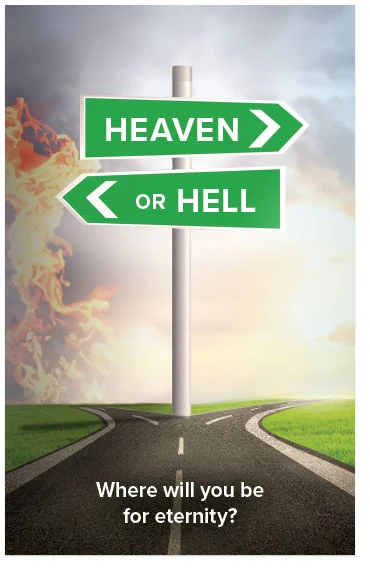
Eternity
God has put eternity into our hearts – the Bible tells me so:
We are here to prepare for eternity, not to be entertained for a few years.
A.W.Tozer – Man: The Dwelling Place of God
He has made everything beautiful in its time. Also, he has put eternity into man’s heart, yet so that he cannot find out what God has done from the beginning to the end.
Ecclesiastes 3:11 (ESV)
The key word here is “olam = עוֹלָם”. That’s the Hebrew word used in Ecclesiastes 3:11. It means “long duration, forever, the age, the world”. It’s the root of why ESV says “eternity” and KJV says “world”.
That’s the verse that explains me as a 5-year-old. Lying in bed trying to count to “forever”. Getting to a million, then a billion, then hitting a wall and feeling panic. If God was always there, what was He doing before, and if He is always there, what will He be doing after? I didn’t know the word “olam” then. I just knew there was something huge inside me that this world couldn’t satisfy.
Years later it came back. As a Christian, one key text told me concerned the afterlife. This became axiomatic to what I held dear and this became something I applied universally:
For God so loved the world, that he gave his only begotten Son, that whosoever believeth in him should not perish, but have everlasting life. For God sent not his Son into the world to condemn the world; but that the world through him might be saved. He that believeth on him is not condemned: but he that believeth not is condemned already, because he hath not believed in the name of the only begotten Son of God.
John 3:16-18
I loved my dad, while lamenting his own lack of fulfilment and self-esteem, who had just died. It was sudden and unexpected. He didn’t profess faith, as far as I knew. And the first sermon I heard was along the lines: “wouldn’t it be nice to see Aunt Fanny when we get to heaven”. I wasn’t angry but I was perturbed. Grief is raw. I wanted truth, not pious platitudes.
While the NT gave what I thought were solid answers, the OT only gave snippets – Job, Daniel, Psalms, kings (good and bad ones) who “slept with their fathers”. We even get Jonah the prophet praying from the place of death (Sheol).
Most important is the question: what happens after death?
After death?
Ecclesiastes tells us why we feel the ache in the first place: God gave us eternity to consider, but we can’t figure out the whole thing. Yet, the OT isn’t silent. It’s just veiled.
The main word is Sheol – “the place of the dead”. Kings, good and bad, “slept with their fathers” (1 Kings 2:10). It was shadowy concerning the question: what happens next?
But even in the OT the light starts to break through:
For I know that my Redeemer lives, and at the last he will stand upon the earth.
Job 19:25
You will not abandon my soul to Sheol, or let your holy one see corruption.
Psalm 16:10
For since the beginning of the world men have not heard, nor perceived by the ear, neither hath the eye seen, O God, beside thee, what he hath prepared for him that waiteth for him.
Isaiah 64:4
Many of those who sleep in the dust of the earth shall awake, some to everlasting life, and some to shame and everlasting contempt.
Daniel 12:2
A recurring theme in our studies is how the Apostles understood the OT, e.g., when it came to life after death, as evidenced by Paul’s defence before Felix the governor:
But this I confess unto thee, that after the way which they call heresy, so worship I the God of my fathers, believing all things which are written in the law and in the prophets: And have hope toward God, which they themselves also allow, that there shall be a resurrection of the dead, both of the just and unjust.
Acts 24:14-15
This is where GotQuestions, which I have referred to in preparing this chapter, along with AI, comes in, both of which I have found to be helpful, and which might be seen as progressive revelation. God gave His people the ache first – olam in the heart – and the answer later.
It came with Jesus. Because the tomb was empty, for He had risen, we now have the full picture. And we now have the NT to turn to in order to find out what that picture is.
Heaven
The Bible does not end with judgment (at least for the believer). It ends with a wedding (the marriage supper of the Lamb) – or at least the beginning of the end.
Heaven is not primarily streets of gold or disembodied souls on clouds. It is God with His people in a renewed creation. Jesus assures His disciples:
Let not your hearts be troubled. Believe in God; believe also in me. In my Father’s house are many rooms. If it were not so, would I have told you that I go to prepare a place for you? And if I go and prepare a place for you, I will come again and will take you to myself, that where I am you may be also.
John 14:1-3
I am the resurrection, and the life: he that believeth in me, though he were dead, yet shall he live.
John 11:25
Behold, the dwelling place of God is with man.
Revelation 21:3
He will wipe away every tear from their eyes, and death shall be no more.
Revelation 21:4
This is the home we were made for: no more death, no more mourning, no more pain, because the old order has passed away. In Christ, eternal life begins. The resurrection guarantees it, the Spirit is the down payment of it (Ephesians 1:14), and the return of Jesus will bring it in full. To be with Christ is what makes heaven (Philippians 1:23).
For the believer, there are the assuring words of the Apostle Paul:
Behold, I shew you a mystery; We shall not all sleep, but we shall all be changed, In a moment, in the twinkling of an eye, at the last trump: for the trumpet shall sound, and the dead shall be raised incorruptible, and we shall be changed. For this corruptible must put on incorruption, and this mortal must put on immortality. So when this corruptible shall have put on incorruption, and this mortal shall have put on immortality, then shall be brought to pass the saying that is written, Death is swallowed up in victory. O death, where is thy sting? O grave, where is thy victory?
1 Corinthians 15:51-55.
Hell
The New Testament speaks of a final judgment with sobering clarity. Jesus warns of “outer darkness”, of “weeping and gnashing of teeth” (Matthew 8:12), and of Gehenna where “the worm does not die and the fire is not quenched” (Mark 9:48). Jesus spoke about hell on numerous occasions in the Gospels. Revelation describes the lake of fire as “the second death” (Revelation 20:14), and Paul writes of “eternal destruction” (2 Thessalonians 1:9).
In the historic, traditional view once held by the majority of the church, this means eternal, conscious punishment – a real, ongoing separation from the presence and goodness of God for those who ultimately reject Christ. Hell is not an afterthought. It is the tragic corollary of a heaven that is glorious, and a sin that is serious, that God must and will judge justly.
In Chapter 2, Paul reflected on the 1970 Evangelical Alliance basis of faith. In it, we might see that the EA had softened from its previous stance on what happens to those dying outside of Christ, likely reflecting modern sentiment and that of members. The 1846 EA basis of faith stated: “the wicked shall be cast into eternal punishment.”
Some faithful evangelical believers have, in recent generations, argued for different readings. Some, like John Stott, suggested conditional immortality, or annihilationism – the view that those finally apart from Christ will be punished and then cease to exist. They point to biblical language of “perishing”, “destruction”, and “death”.
Others lean toward universalism – the hope that God’s mercy will ultimately reconcile all people to Himself. Let’s be honest – many have stumbled over the traditional teaching as unpalatable. Some who depart from the faith cite such teaching as being a key reason. Some may even borrow language that sounds like a Christian form of reincarnation – not cycles of rebirth, but the idea of post-death opportunities for those who don’t make heaven first time.
What unites the more biblical leaning witness is the urgency of the gospel. Whether one understands final punishment as eternal conscious torment or as final destruction, Scripture is clear: apart from Christ there is judgment to come, and in Christ there is rescue from it. All of these views are trying to answer the same ache Abraham voiced when pleading on behalf of Sodom: “Shall not the Judge of all the earth do what is just?” (Genesis 18:25).
The traditional view (I lean toward), is softened, not by sentiment, but by confidence that God is perfectly righteous and perfectly merciful. I do so aware off various “what ifs”, e.g., the death of infants and what about those who have never heard the Gospel message. As we have reflected: Jesus came to rescue humankind from God’s righteous judgement, and for that He needed to die. The cross is where God’s justice and love meet. By “believing in Him” Jesus atones for our sins and the door to the new creation is laid open. It is God’s remedy.
Christians differ widely on what happens at the time between our death and the resurrection of the body following Christ’s return. Catholics speak of purgatory, Orthodox of prayers for the departed, and many Evangelicals of true believers going to be with Christ at the time of death, while those alive at His return will be changed, and unbelievers await judgment.
What unites true believers is that death is not the end. On the last day, Christ will raise all people. There will be a resurrection to life, and a resurrection to stand before the great white throne of judgment (Revelation 20:11). For those whose names are in the book of life there is resurrection to the new heaven and new earth, and to reign with Christ. For those whose names are not, they face the prospect of being cast into the lake of fire (Revelation 20:15).
Scripture is blunt about deception and where it leads. The devil, who has been deceiving people since the garden, is the first to be cast into the lake of fire (Revelation 20:10). It was prepared for him and his angels (Matthew 25:41), but those who follow his lie rather than Christ end up on the same road. That is why the cross matters so much. Jesus came to undo the works of the devil (1 John 3:8) and to give us a different choice, one of life. And that judgment is not just for him. Scripture says we will all give an account.
Some groups (like many PBs), while holding that true believers will not face the great white throne judgment, believe they do have to come before the judgment seat of Christ.
For we must all appear before the judgment seat of Christ, so that each one may receive what is due for what he has done in the body, whether good or evil.
2 Corinthians 5:10
This doesn’t determine heaven or hell, but it is where rewards are handed out. It is a sobering and hopeful truth: nothing done for Christ in faith is wasted, and everything will be weighed by the One who died for us.
What now?
Our task now is not to speculate beyond Scripture, but to proclaim Christ crucified, comfort the grieving, and invite all to find refuge in Him before that day when men are judged. For those who believe, we must prepare for eternity.
I recognise that while I have answered some important questions and tried to correct some misinterpretations, I may have begged other questions and not given answers. Bear with me and be like a good Berean – search the scriptures for yourselves. But back to what now …
I’ve spoken at Christian funerals and humanist ones. In both rooms the question was the same, even if the vocabulary is different: “Is this it?”. I’ve noted that even among those who did not profess faith there is the hope of something better beyond the grave and I have seen other preachers dwelling on that thought. I have respected those who don’t believe there is but rather focusing on honouring the memory and legacy of the one whose funeral it is. But I want to offer hope; not a false hope but rather hope in a good God who is just and merciful.
I’ve attended many funerals, increasingly so in my latter years as people I knew well die, knowing the next one could be my own. One sobering reflection has been that while some will mourn the loss for a season, not long after that the person will be barely remembered. We do well to reflect on and take heed of the wisdom passed on by one the Church Fathers:
If you knew how quickly people would forget about you after your death, you will not seek in your life to please anyone but God.
John Chrysostom (347-407)
The 1662 Book of Common Prayer gives us words when we have none:
Man that is born of a woman hath but a short time to live, and is full of misery. He cometh up, and is cut down, like a flower; he fleeth as it were a shadow, and never continueth in one stay. In the midst of life we are in death: of whom may we seek for succour, but of thee, O Lord, who for our sins art justly displeased?
They sound harsh. But grieving people don’t need sanctimonious gobbledygook. They need weight. They need truth that can carry grief. And yes, they also need hope. The BCP does that too but in doing so it makes the assumption that the deceased had died as a believer in Christ.
All this got me thinking about my son’s headmaster when signing off on his report, when he wrote, noting my son could do better, needing to take heed of his teachers’ comments: “the remedy is obvious”. For those who believe, we must live in the light of eternity and play our part carrying out the Great Commission, doing so with urgency. For those who don’t believe in the only begotten Son of God, if they fail to do so they may not have another opportunity.
The choice before us is not so dissimilar to what Moses told the Israelites of his day:
I call heaven and earth to witness against you today, that I have set before you life and death, blessing and curse. Therefore choose life, that you and your offspring may live, loving the Lord your God, obeying his voice and holding fast to him, for he is your life and length of days.
Deuteronomy 30:19-20 (ESV)
Just as in Moses’ day, we too have to make an important choice. It is why Moses’ plea to choose life resonates. We don’t offer Aunt Fanny or woolly sentimentality. We offer Christ. We offer resurrection. We offer the promise that death is not the last word, for Jesus walked out of the grave first. We tell them of the Gospel that promises eternal life to whosoever will.
For true believers: “to live is Christ, to die is gain” (Philippians 1:21). For everyone else, today is still the day of mercy. The Bible solemnly warns us:
Behold, now is the accepted time; behold, now is the day of salvation.
2 Corinthians 6:2b
And as it is appointed unto men once to die, but after this the judgment.
Hebrews 9:27
And so we preach, we weep, we exhort, we warn, we hope, we pray and we invite. Eternity is already in peoples’ hearts, even including in that of those who say that there is no God. All of us must respond to the Gospel invitation (ignorance is no excuse), if for no other reason than that, whatever response is given, it will have humongous eternal consequences.


Thanks for this, John – very interesting. I’ve just been reading Surprised By Hope by Tom Wright which goes pretty deeply into heaven and hell but must admit having to use secondary sources to help me get my head around some of the theology.