
A Google search revealed: “The phrase “chicken and egg” is a metaphor used to describe a situation where it’s difficult to determine which of two events is the cause and which is the effect”.

Some folk will know that my third and final career, before drifting into retirement, or at least working without renumeration, was as a community worker within the Third (charity) sector. The trigger that led to the transition from me being a computer consultant, running my own business, not long after the turn of the millennium, to my being full time active doing what is commonly known as community work or activism, was that I had the opportunity to help set up and manage a project to help folk experiencing mental health issues, which we decided to call “Growing Together”, because it was linked to gardening, and it was at the time the main activity of a charity named “Trust Links” (which continues to this day and has significantly expanded – check here for their website).

Later on in my community activism, I found myself involved in activities to do with helping the homeless. Both my Growing Together and homeless activity experience taught me that not only was mental health a significant factor behind folk’s lack of wellbeing and their alienation from society and being in what might be termed as “not a good place” but so was the addictive behaviour of some, and often these were linked. Triggers for either are manifold and everybody’s experience is different as well as it being something affecting all sectors of society. When as often happened people were addicted to something that had an unwholesome hold over their lives, e.g. alcohol, drugs, gambling or pornography (and other examples can be cited, e.g. today’s obsession with smart phones) it was not always clear which came first, was it mental ill health or was it some addiction? and to what extent the one was a contributory factor in bringing about or accentuating the other. The tragedy often is that both mental ill health and addictions can have a disastrous outcome. My object here, however, is not to go too deeply into causes and cures (important as these are), but if people want to read my thoughts, based both on my community experience and my commitment to being a follower of Jesus, then check here.
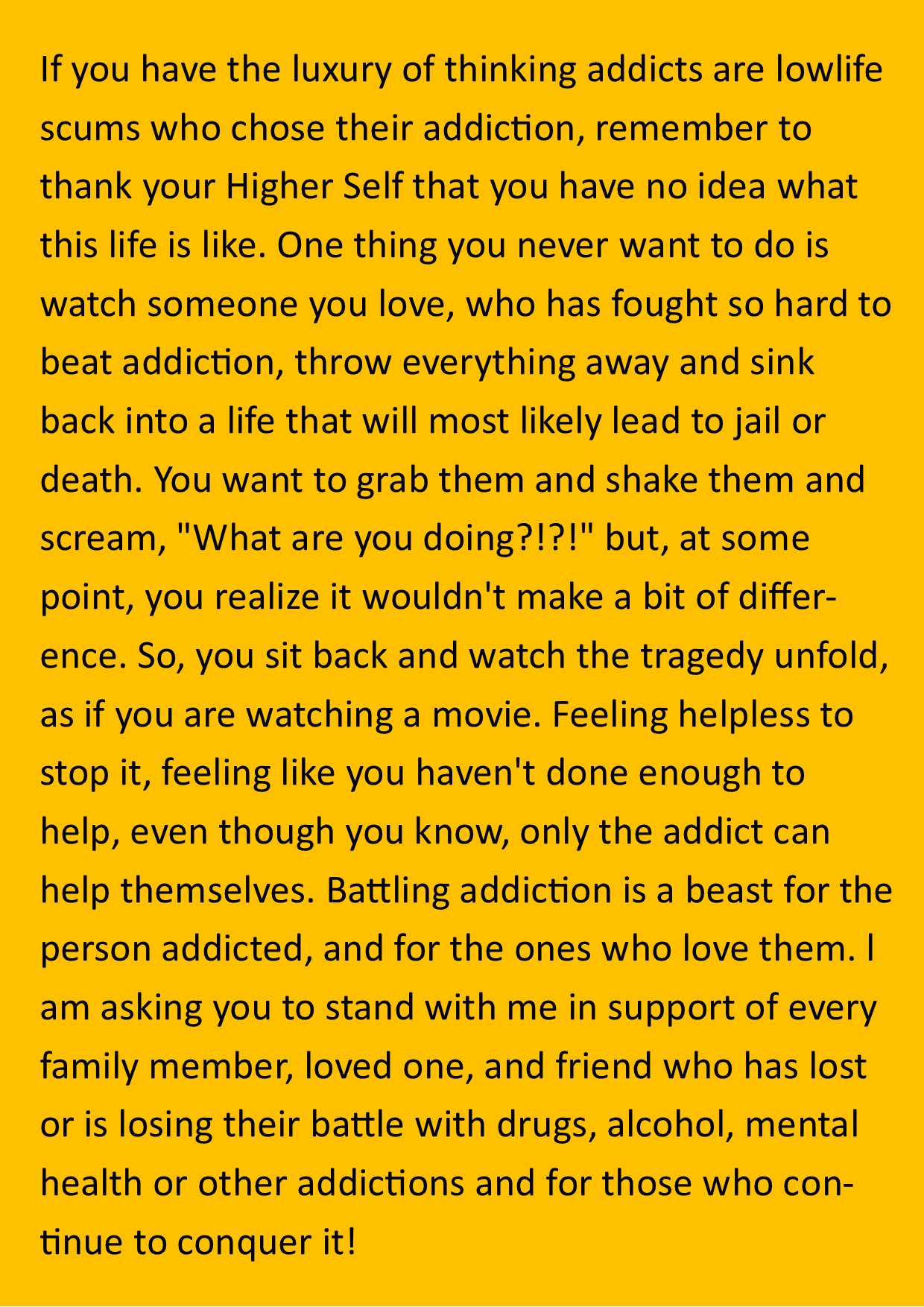
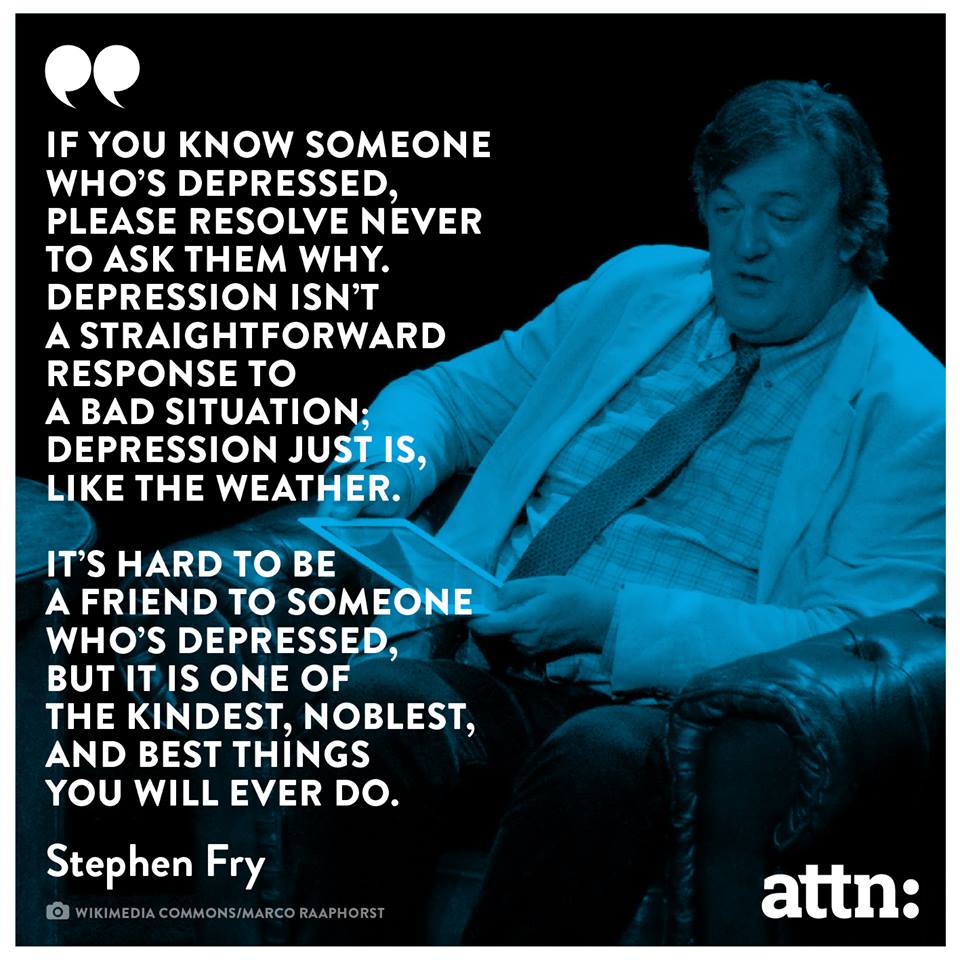
Part of my daily routine is to check out what folk post on Facebook. Quite often someone posts concerning these matters and it can range from thoughts that are incredibly profound and pertinent to such situations to anything but. The other day, someone posted the above (which definitely fell into the former category) and it stopped me in my tracks and made me think and want to share the message with others so we can all respond appropriately. As I move into my dotage and see more examples of human life in the raw, the good, the bad and the ugly, and including those things that hold people back, sometimes culminating in tragedy, and that which prevents people from being the sort of people we are meant to be, living wholesome and fruitful lives etc., the more I realise doing one’s bit to turn things around for many affected, including with likely the majority going through struggles etc. we don’t see, the more I want to contribute, not just by offering words of wisdom but by being an understanding, helpful, empathetic person. There is a lot I would disagree with Stephen Fry but here I will give him the last word (which while is about the most common mental health condition, depression, could just as easily apply to any condition covered or implied by the profound quote that appeared on my Facebook page).
Update 18/10/2024
One friend, commenting on the above, wrote:
“From my experience working with hundreds of people, I’ve come to understand the deep connection between trauma, mental ill health, and addictive behavior. It’s often a “chicken and egg” situation—one feeds into the other—but in most cases, trauma comes first. The people I’ve worked with have experienced painful events that impact their mental health, and addiction becomes a way to escape a reality they don’t know how to cope with. I would estimate that 90% of the people I’ve supported have followed this path.
This is why building trusted relationships is so vital. These relationships allow us to get to the root of the trauma, to understand the triggers, and to begin addressing why people behave the way they do. Early intervention is critical because it’s much harder to break the cycle once addictive behaviors become entrenched. Through trust, we can guide people toward healing.
I believe that healing communities are the key. Past traumas often break down relationships, leaving people isolated and disconnected. Healing is about compassion, mutual respect, and support—building a sense of belonging that fosters confidence and self-worth. It’s within these supportive communities that real recovery happens.”
My response:
“Before trying to answer the difficult and maybe impossible “which came first” question, we often need to go back further, as you say, even to early childhood. Sometimes those affected can figure out what those early traumatic experiences are but often they can’t or only vaguely. What is needed is healing and by dealing with the root cause we begin to address the mental health and addiction issues. Those who help to bring this about are the true heroes.”
Another friend wrote:
“Some Churches have a lot to answer for in their condemnation of Christian Gay people- The impact of Religious Trauma on LGBTQ People. Religious trauma is an issue that often goes unnoticed and unrecognized. Unfortunately, this issue is so pervasive among LGBTQ+ people that it can often be disregarded or overlooked as a source of distress for those suffering from its effects. It’s essential to recognize and address religious trauma to preserve the mental health, well-being, and happiness of those who experience it.”
My response:
“Long ago, I recognised that gay folk were more likely to experience mental health issues than are straight folk. Also, churches that if those in them adopted the right attitudes etc. these should be healing communities. These often turn off gay folk by their wrong attitudes and this adds to their distress, especially if they are spiritually inclined (my experience is that those who suffer from mental ill health tend to be more spiritual than those who aren’t). Some churches who rightly recognises the need to reach out to LBGT folk often compromise on traditional church and Bible teaching on homosexuality. Changing one’s approach to appease societal norms etc. is not the way to go. Rather we should take a leaf out of Jesus book who rightly engaged with the sinners and outcasts of His day and showed the love Christians need.”
 JRB Publications
as
as a Christian who was on the gay scene 40 years ago when I repented and believed that Jesus saved me fom my sins I would like to comment.
I knew I was a sinner but until I heard what Jesus did for me I didn’t know God loved me. I had many addictions and an eating disorder as well as a very immoral lifestyle.
I read in the bible that homosexual practice is wrong in God’s sight. Just because I, and many others wanted that lifestyle did not make it right. God does not ‘ change His mind” in any generation. His truths are not progressive., they are fixed He wasn’t going to change so I had to let Him change me
And he has, and dealt with the eating disorder. He saved my life, not only in this life ( I think I would be dead by now,) but also for eternity.
however, as Christiams we should be kind and compassionate, whilst maintaining biblical truth