
Last night, at my own church, we concluded a series of Bible studies on the Book of Ruth. Besides reflecting on the thrilling finale whereby the kinsman redeemer, Boaz, finally gets his prize, Ruth, we reflected on their descendants via David and eventually, Jesus. While Ruth and Boaz were the main seen characters, there was also Naomi, Ruth’s mother-in-law. We also considered the subject of genealogies. For my own thoughts on Ruth (see here) and Bible genealogies (see here). These go back nearly four years.
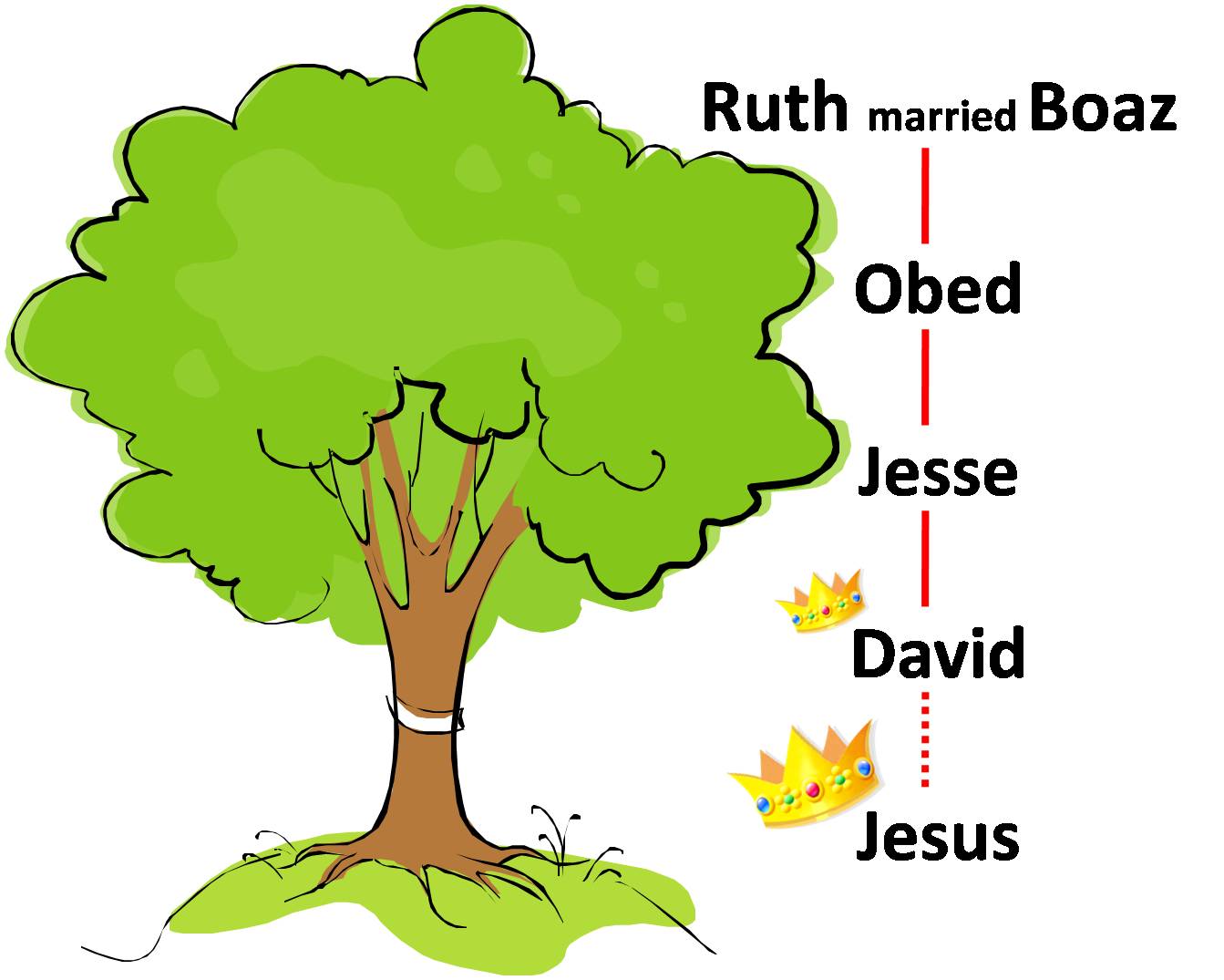
There are many aspects of the Book of Ruth that makes it one worth studying, particularly because it serves as a source of hope and encouragement, especially given the context of the events recorded, taking place in the time of the Judges when the recurring theme was Israel turning away from God. As for Naomi, who had returned to her home town, Bethlehem, along with Ruth, her daughter in law, after years living away in Moab and having to bury her husband and two sons, it was a time of bitterness that turned to joy, because the fourth (unseen) character, God, was ever at work. A major theme of Ruth was preserving the family line, which is where the love story between these two remarkable people, Ruth and Boaz, comes in.
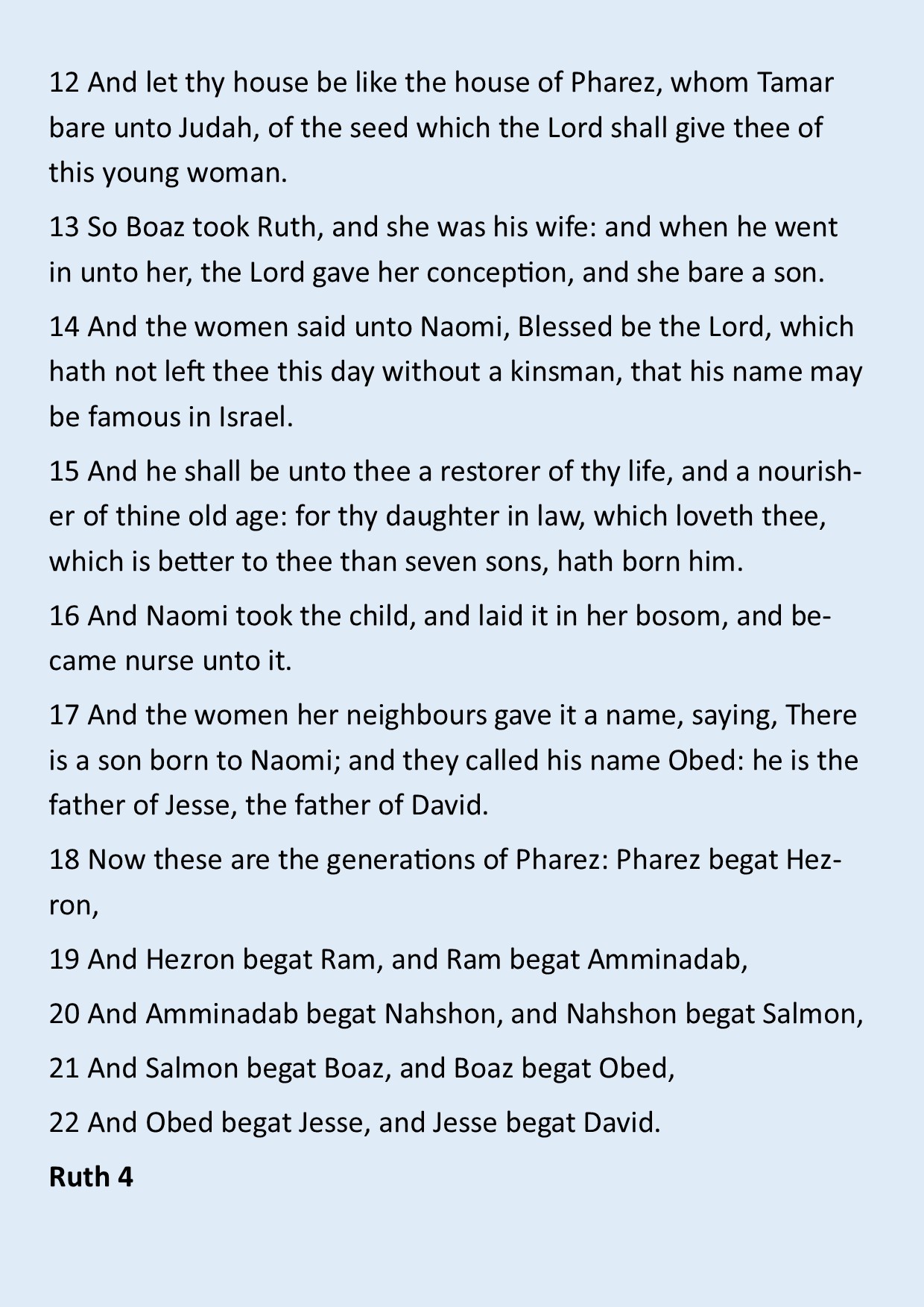
But what I really want to do is to turn to the subject of genealogy and say where Ruth fits into the overall Bible narrative. It is sometimes argued that the Bible is irrelevant and boring since it contains too much by way of genealogy. My response is that this is far from the case and that a consideration of family lineage is important when it comes to getting a balanced view of what the Bible teaches. This is particularly seen in Matthew’s account of the genealogy of Jesus. Matthew, unlike Luke with his genealogy, mentions five unlikely women when tracing back Jesus’ ancestry. Concerning these women, we read …
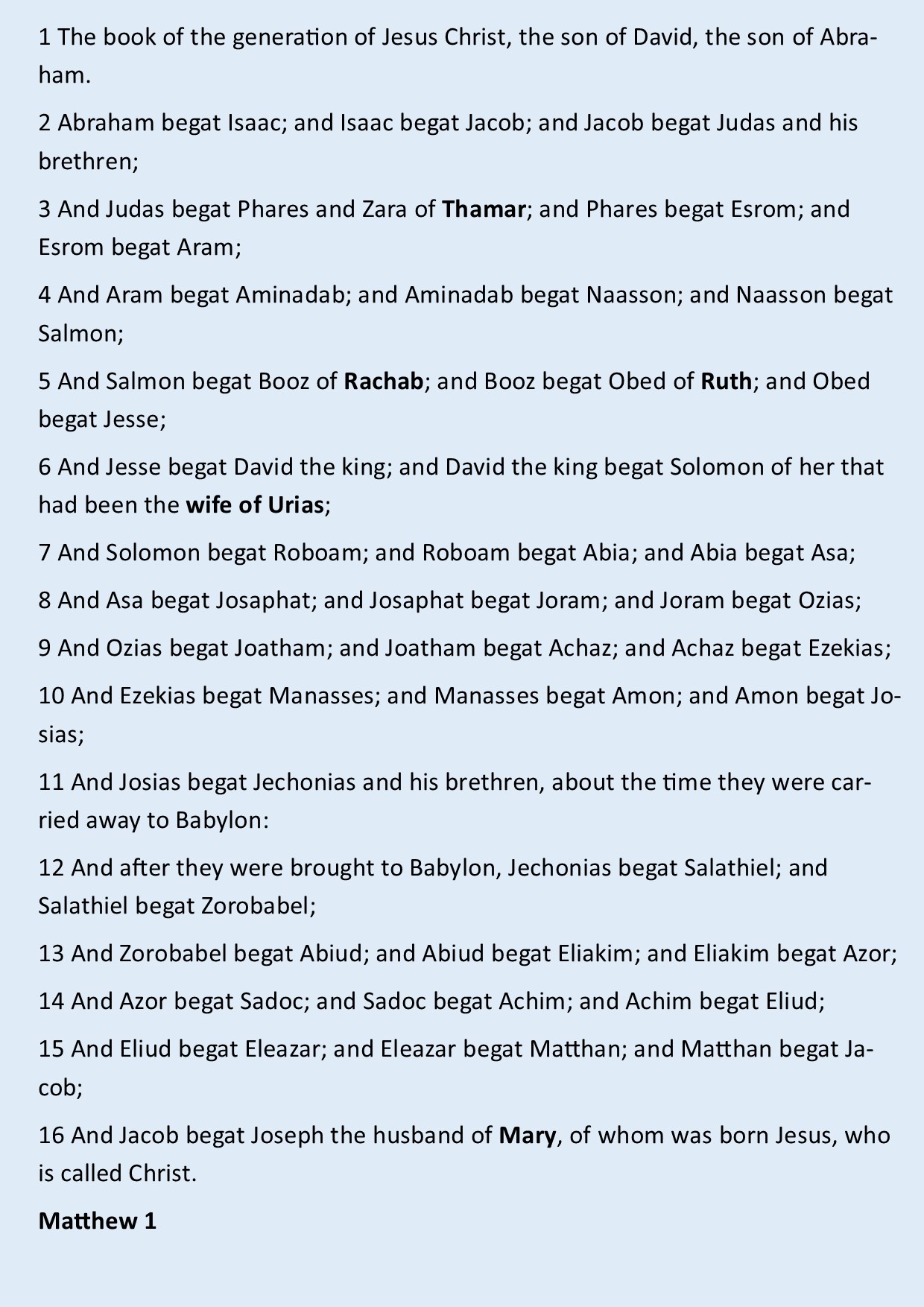
Tamar: the daughter-in-law of Judah, one of the twelve patriarchs, who after her husband died, tricked him by posing as a prostitute, resulting in an heir to carry on the family line.
Rahab: the prostitute, who helped and protected the two spies who had entered her city, prior to Joshua fighting the battle of Jericho.
Ruth: see above.
Bathsheba: the wife of Uriah the Hittite, who had an affair with King David, and after Uriah had been murdered at David’s command, married him and produced Solomon, later king.
Mary: the teenage virgin who married Joseph and was chosen by God to produce His Son, by the Holy Ghost, Jesus.
Make what you will from this account but when I think of how God used these five unlikely women, I do so with awe and wonder at how God uses the unusual and unexpected to fulfill His purposes.
Questions and Answers with AI
What is the role of a kinsman redeemer in the Bible?
In the Bible, a kinsman redeemer:
– Buys back family land (Lev 25:25-28)
– Redeems relatives from slavery (Lev 25:47-55)
– Avenges bloodshed (Num 35:19-27)
– Marries widow, preserves family line (Deut 25:5-10, Ruth 2-4)
How much of the Bible is about genealogy?
Genealogies are a significant part of the Bible:
– Old Testament: One third of Genesis, Numbers, and Chronicles focus on genealogies.
– New Testament: Genealogies in Matthew 1 and Luke 3.
– Many books reference family lines, tribal heritage, and ancestry.
Why are genealogies considered important in the Bible?
In the Bible, genealogies:
– Establish identity and heritage: Link people to tribes, families, and God’s promises.
– Validate roles and authority: Confirm priestly, royal, or leadership lineage.
– Show God’s plan through families: Connect stories, promises, and Messiah’s arrival.
In the Matthew and Luke accounts of the genealogy of Jesus, some of the names listed were different. Why was this?
Matthew and Luke’s genealogies differ:
– Matthew traces Joseph’s lineage (adoptive father), emphasizing Jesus’ legal right to David’s throne.
– Luke traces Mary’s lineage, showing Jesus’ biological connection to David.
In the accounts of the genealogy of Jesus, Matthew only goes back as far as Abraham, whereas in Luke it goes all the way back to Adam. Why is this?
– Matthew traces Jesus’ lineage from Abraham to Joseph, emphasizing Jesus’ connection to Israel’s promises and David’s throne.
– Luke traces Jesus’ lineage from Adam to Mary, highlighting Jesus as the Son of God and Saviour of all humanity.
Different purposes, different genealogical scopes.
In the Matthew account of the genealogy of Jesus, five women were mentioned. Name them and give chapter and verse.
– Tamar (1:3)
– Rahab (1:5)
– Ruth (1:5)
– Bathsheba (wife of Uriah, 1:6)
– Mary (1:16)
 JRB Publications