
Ever since I was a child, I have been an avid reader. While these days, now in my dotage, my capacity to absorb too many words has dwindled, I persist in reading up on all sorts of subjects and often I have several books on the go at the same time, as well as what I read electronically. Depending on the contents and my motives, I may read carefully, word by word, or skim quickly through what I read.
While I recognise that in my case it has sometimes served as a form of escapism and healing balm, and has meant that by often having my nose in a book (to quote my late mum) I haven’t always engaged in the real world or paid due attention to some of the practical matters that might occupy non-readers as I might have, I am pleased to note though that AI was able to list several benefits that may arise out of extensive and wide-ranging book reading …
“- Broadened perspectives: Exposure to diverse ideas, cultures, and experiences can foster empathy and understanding.
– Improved critical thinking: Engaging with various texts and authors can enhance analytical skills and encourage critical thought.
– Enhanced creativity: Reading widely can inspire new ideas and approaches, stimulating creativity and imagination.
– Better communication skills: Exposure to different writing styles and vocabulary can improve writing and speaking abilities.
– Stress reduction: Reading can be a calming and relaxing activity, providing an escape from daily pressures.”
Two books I have read in the past month that I also reviewed are David Icke’s “Perceptions of a Renegade Mind” (see here) and Leonard Ravenhill’s “Why Revival Tarries” (see here). After finishing my read before my latest, the one I want to talk about, which was about the history of a Christian mission in which I have an interest, I was presented with a quandary – what next? Two books I had begun but got nowhere near finishing were C.S.Lewis’s “That Hideous Strength” and G.K.Chesterton’s “Orthodoxy”. Either book would have been a good choice but I ended up reading: Joshua Raj’s “Indian Traditions and Beliefs”.
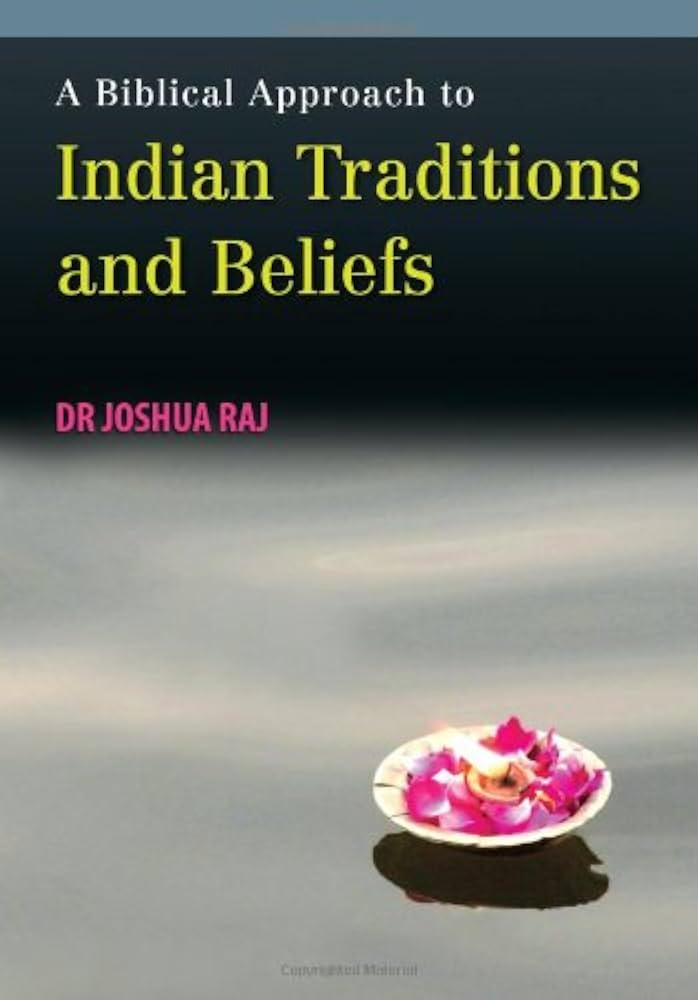
Amazon’s blurb reads: “This well-researched book fills a need for Indian Christians who are searching for guidance when confronted with beliefs, traditions, rituals and practices in the non-Christian Indian community. It reveals the truth about Christian living. This useful guide also discusses certain Indian spiritual and religious practices, and gives advice on the daily struggles of believers. Written from the agape (love) perspective, this resource is helpful for the new convert to Christianity, the generational Christian who may need to adjust his life, and leaders who seek some form of consistency in approaching the Indian diaspora”.
I confess my main reason for reading this book was that I was intrigued to know more, and while I could have been disappointed, happily, I wasn’t. My interest was partly sparked by the fact I am married to an Indian Christian and even before we got married nearly thirty years ago, I had a lot to do with Indian Christians both in India and the UK. As for Indian Traditions and Beliefs, typically relating to the Hindu religion, of which there are numerous variants, I have had a good deal of exposure and despite knowing a lot, there was still much I didn’t know that I could see was worth finding out.
This well-researched book was written by a hospital consultant who is also a Christian minister and was full of useful insights on a whole range of topics that matter, provided clear explanations and was written with a good deal of sensitivity and wisdom. Given his main audience were Indian Christians, especially those new to the faith or Hindu converts, whether or not they would have wanted to, they would have to deal with Indian Traditions and Beliefs. It struck me that two aspects were particularly pertinent – it has a bearing on the New Age spirituality that has affected many and can be a threat to orthodox Christianity and it points to ways of understanding and coming to terms with the huge differences in perception to be found among Christians, that I sometimes refer to in my blogs, when it comes to their religious beliefs and take on current affairs.
The Bible tells us “Besides, my son, be warned by them: of making many books there is no end and much study is a weariness of the flesh” Ecclesiastes 12:12, and that “Wisdom is the principal thing; therefore get wisdom: and with all thy getting get understanding” Proverbs 4:7. While experience tells us that being widely well read doesn’t necessary make people wise, it also tells us that it usually helps. I realise that reading is not everyone’s forte, but I would urge anyone reading this, and especially the young, to read widely and to include content that takes you out of your comfort zone, tells you things you didn’t know before and challenges your perceptions, whilst keeping humble, grounded and God fearing. But if you have to choose one book then it has to be the Christian Bible. But there is no excuse for not applying what we should learn, e.g.: “Your word is a lamp for my feet, a light on my path” (Psalm 119:105) and “All Scripture is God-breathed and is useful for teaching, rebuking, correcting and training in righteousness” (2 Timothy 3:16).
 JRB Publications