
Note: To help me prepare, I asked Meta AI about the evangelist / author Leonard Ravenhill, his classic book “Why Revival Tarries”, what is revival and for recent examples of revivals. I got more than decent answers, which I include in the appendix at the end (Google searches will also come up with helpful responses).
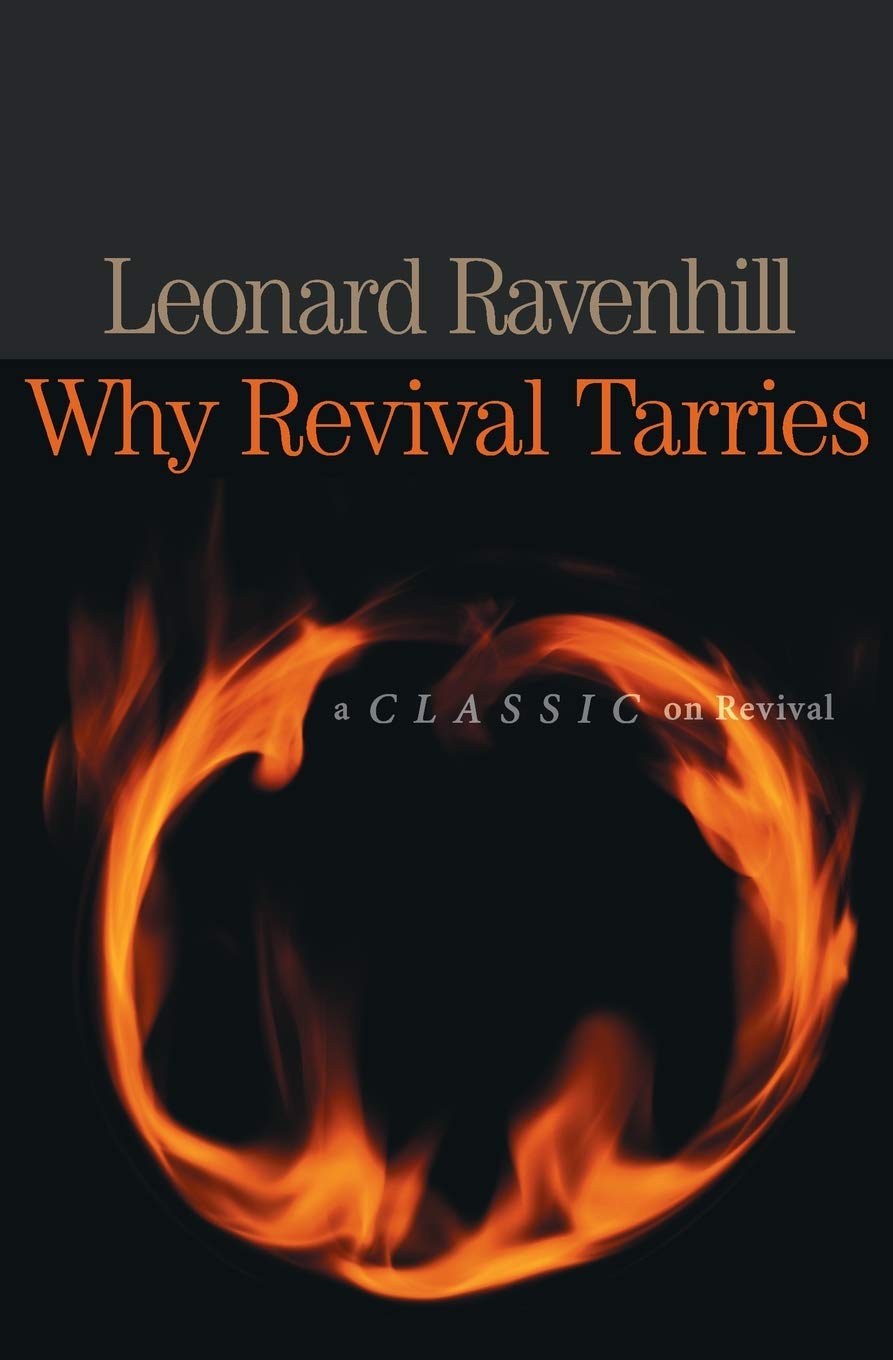
Despite being in my dotage and my mind having lost some of its staying power and capacity to take in too many complicated words, I am still an avid reader and have been since my youth. Often, as now, I am reading a number of books concurrently, often on a wide range of subjects, with my curiosity sparked by something relating to what I have read or musing on the events of the day. Recently, Leonard Ravenhill, and his book “Why Revival Tarries” came up in my social media. It was a book I read many years ago. It made an impact at the time although sadly I didn’t act on what I found as I should have. Because of what is happening in the world, especially my own country, and what needs to happen, I decided to re-read it.

When I was a lot younger, I noted the pre-occupations of spiritually mature, Christian old men, once engaged in active “Christian service”, typically having found themselves in positions of leadership in the church, nowadays seen as “retired” and sometimes ignored, often included speaking about the need of and longing for authentic Christian revival. I have now joined their ranks. While I can look back and testify the Lord has been good all the time, in my darker moments I see myself as a failure when it comes to fruitful Christian endeavour, and while I can say I have seen the Lord at work, I have seen too little of what Ravenhill and Meta AI would identify as being Christian revival. Yet, I have seen and see signs of revival, across the world, in the UK and even in my own church.

Besides what I see happening all across the world and in unlikely places, such as Iran and China, there is the “Quiet Revival” taking place in the USA and the UK. This involves that group typically missing from churches – young men, along with the sort of people disaffected with church or more likely to attend a Tommy Robinson rally – the Lord as ever works in mysterious ways! But given what I see as I watch on my wall, and the disastrous path that the world, and especially my country is now heading, as it turns its back on God, with Satan ever active, along with the wide scale deception, apostasy and lukewarmness in the church, I conclude, as many have done before me, that the need for revival is as great as ever.

The book is easy to read but does come with a health warning. It is mega spiritually intense and even for spiritual types this could be off putting – but then that was the point behind Ravenhill writing it. For it was the lack of serious spiritual intensity among Christians / church when doing business with the Almighty, that in his view was the main reason why revival tarries and if we are to see revival that had to change. His twenty chapters (table of contents above) is devoted to what that change ought to be – starting with meaningful, extensive prayer and including things like living a holy life, ending with a section asking readers some searching questions – to which I could add: what about those who have been put off by church (woke, hypocritical, Pharisaical etc.), and frustrated living in a country that has lost its way, along with disillusioned youth, looking for direction and purpose, having been fed lies by those who should know better?

One of my heartening observations of late is that this very group of “deplorables”, i.e. those so called Christian Nationalists, Tommy Robinson supporters (see image below), the Far Right etc., are among those being affected by this “Quiet Revival”, but we also do well to remember that their detractors, e g. those more concerned about societal injustice, the poor and marginalised and the welfare of newly arrived foreigners etc., may too be among its beneficiaries. On all these matters and mindful people see things differently, truth and balance matters. God, notwithstanding our foibles and frailties, is no respecter of persons. When it comes to revival, it’s open for all!

Despite its intensity, the book (all 172 pages but actually a lot less because of the blank pages, quotes by famous Christians, along with some extraneous gubbings that one may be tempted to ignore) can be read in a relatively short time. But that would be missing the reason why read in the first place as what is written requires serious reflecting upon by the readers – inviting us to respond to some of the questions asked. I would add – you don’t have to agree with everything he wrote and as with anything men of God write, you should chew the meat and spit out the bones. I disagreed with his premise that the two biggest threats facing us are Catholicism and Communism – I can think of worse! Besides buying the book, online e.g. Amazon, it can be freely downloaded electronically (see here).

I confess, reading the book (in my case it was neither done quickly nor slowly), was a humbling experience especially given despite my views on the state of the church, in the UK in particular, which sadly is overall a pessimistic one as things stand, it is clear as the old hymn reminds us that revival starts with me. Moreover, while us old dodderers may be past our sell by date and may have been put out to pasture, the book reminds us that there is a lot we can still do to help bring about the one thing that is going to save my beloved country from what will happens when we continue to let the Devil have his way – and may all glory go to God. Also, we have a great opportunity to pass the baton to the next generation. Let’s do so!

I am neither Calvinist nor Arminian, but there is a message that those taking one or other of these positions can take away. Firstly, God is sovereign – He acts, e.g. in revival, according to His will and uses whoever He wants (including Christians with dodgy theology) by whatever means He chooses etc. One message for theologically sound types to heed is that our living must match our believing. Secondly, God gives us freedom to choose how we live our lives. He responds to the cries of His people (a principle found throughout all of scripture) and as one headmaster was known to write in the reports of under achieving pupils – the solution is obvious!

APPENDIX
According to Meta AI …
Leonard Ravenhill was a British Christian evangelist and author who passionately preached about prayer and revival. His book, “Why Revival Tarries,” is a classic in the genre, challenging the church to seek true revival through fervent prayer and a return to the power of the Holy Spirit.
Published in 1959, the book explores the reasons behind the delay of spiritual revival, pointing to the church’s complacency, materialism, and superficial spirituality. Ravenhill emphasizes the need for personal purity, prayer, and a deep hunger for God.
Some key takeaways from the book include:
– The Importance of Prayer: Ravenhill stresses that prayer is essential for revival, citing the need for fervent, persistent, and agonizing prayer.
– Personal Purity: He argues that revival cannot occur in a church where sin is tolerated or ignored, emphasizing the necessity of a holy and consecrated life.
– The Cost of Revival: Ravenhill notes that revival always comes at a price, often involving sacrifice, persecution, or risking one’s reputation.
Ravenhill’s writing style is characterized as prophetic, passionate, and uncompromising, making “Why Revival Tarries” a thought-provoking and challenging read. The book has sold over a million copies worldwide and remains a powerful call to spiritual awakening.
Christian revival refers to a period of unusual blessing and activity in the life of the Christian Church, often marked by a restoration of a vital and fervent relationship with God after a period of moral decline. It’s a time when believers experience a renewed passion for their faith, and non-believers are drawn to Christianity.
There are several examples of Christian revivals throughout history:
– The Welsh Revival (1904-1905): This revival saw 100,000 converts made in less than a year, with Evan Roberts, a 26-year-old former collier, leading the movement.
– The Azusa Street Revival (1906-1909): This revival in Los Angeles is often credited with the birth of the modern Pentecostal movement.
– The Chinese Revival: Since 1949, the Church in China has grown from 1 million believers to around 100 million, making it one of the greatest revivals in Christian history.
– Iran: More Iranians have become Christians in the last 20 years than in the previous 1,300 years since Islam came to Iran, with many Iranians open to the gospel due to disillusionment with the government.
– The Quiet Revival in the UK: This recent movement has seen a rise in church attendance, particularly among Gen Z, with increased Bible sales and more people making first-time commitments to follow Jesus.
These revivals often share common characteristics, such as:
– Increased prayer and spiritual encounters
– Healing and miracles
– Prophecies and spiritual gifts
– Unity among Christians
– Evangelism and conversions
 JRB Publications