
I recently come across a book that can be freely download from the Web, titled “Travels with Calvin and Arminius” (click here). It was recommended to me in a Brethren Archivist and Historian Network (BAHN) email (I am a member of BAHN, a setup in which we can share our interests in the (Plymouth) Brethren movement).
The blurb about the book read: “Travels with Calvin and Arminius explores the rationale behind two interpretations of the Christian doctrine of salvation and highlights the key differences between them. The book can be used in different ways: some readers will simply require an overview of the issues while others will want to explore particular points of interest. The book is also suitable as a starter for personal study or group discussion. Church leaders may find it a helpful resource to guide their congregations should disagreement or conflict arise over this subject matter. The tone throughout is eirenic, encouraging readers to appreciate the rich spiritual truths shared by both perspectives”.
The blurb about the author read: “The research for this book draws on years of engagement with the challenges and insights of Brethren church life and aims to support readers in thoughtful faith and practice. David Clarkson was converted over sixty years ago in a small Gospel Hall in Ayrshire, Scotland, beginning a lifelong association with Open Brethren assemblies. His interest in biblical studies developed into a broad preaching and teaching ministry across the United Kingdom. David entered the teaching profession while simultaneously promoting Bible studies for young people and latterly serving as an elder in his local assembly. In 1991, after sensing God’s call to full-time Christian service, David became an elder and full-time worker at Cartsbridge Evangelical Church in Glasgow and teacher at Tilsley College, Motherwell. His particular interest in Church leadership – especially in training future elders – led to him contributing several articles to a range of Partnership publications and co-authoring two books with Stephen McQuoid on leadership and pastoral care”.
But before I get to share my own, mostly positive, thoughts about the book, I want to use this as a trigger to reflect on my (almost) sixty years, since I was converted, concerning my own travels with Calvin and Arminius and tell readers what I found on the way. Like the author, I have had a lifelong association with Open Brethren assemblies. Compared with a number of other issues, besides that of where one lies (or ought to) in-between the extremes of Calvinism and Arminianism (definitions, thanks to Meta AI, I give at the end) this has not been such a big deal but it has always loomed, even if only in the background. The big takeaway from my PB roots was the importance of doctrinal soundness. Not only were the Catholics dismissed (for adding to the Bible) and the Liberals dismissed (for taking from the Bible) but many Evangelicals were looked upon with suspicion over a wide assortment of “erroneous” beliefs.
At the end of my sixth form time at school, onto going to university, I had two experiences that made me more amenable to Christians who were not PB, recognising they were the real deal, i.e. true Christians rather than cultural ones, etc., having perspectives worth noting and gifts that were of value. The first was joining in a mission with Operation Mobilisation. The second was joining the College Christian Union and fellowshipping with non PBs, although it should be said that I kept my distance from Catholics and Liberals.
I don’t recall the subject of Calvinism or Arminianism arising in my early PB days. Looking back though, they were more Calvinist leaning than Arminian, making references to some of the Calvinist preoccupations. Sometimes, the matter of “the Eternal Security of the Believer” (Perseverance of the Saints) arose and it was the Calvinist view that was promoted. I remained with the PBs for most of my Christian life up to 12 years ago, when my “assembly” closed. We decided to join the Strict (Grace) Baptists (SB) and have been members of a SB church ever since. The SBs can firmly be placed in the “Reformed” category of churches, which are Calvinist in its doctrines. Having said that, most members of that church have NOT delved deeply into Calvinism and, to give the church credit, when I expressed qualms over some of its articles of faith, I was still made welcome and told it was ok for me to do so and be a member.
When I was at university, I was confronted with two contentious subjects. One was the Charismatic movement and the other was Calvinism. I gave both matters thought, leaning to the Charismatic and Calvinist positions, but was also prepared to agree to disagree. When I left university, other issues replaced those two. Nowadays, the subject of Israel and eschatology, “the Woke Agenda”, and the concerns of the anti-Great Reseters and pro-Great Awakeners are three that spring to mind. Also, particularly as I embarked on my own (third) “community activist” career around the turn of the millennium, I often found myself rubbing shoulders with Christians, many I saw as being the real deal, who frequently held a wide variety (sometimes contradictory) beliefs I disagreed with, including Liberals and Catholics. I often found I could respect and work with them, by adopting the common ground principle. I have also noted that along the lines of history being cyclic there may be a renewed interest in Calvinist doctrines by those folk looking for certainties and reacting against a widely prevalent watered-down “Gospel”.
Regarding my own church, where these days my wife and I have a good deal of involvement, it didn’t push Calvinism overmuch and held a conciliatory stance on these and other less essential issues, while still firmly adopting the “contend earnestly for the faith which was once for all delivered to the saints” position that I so much valued from my PB days. But there has to be a “however”. Unbeknown to many, Calvinism has subtly undergirded how my church nowadays operates. I saw this to be the case and was affected by it, but I also decided it was not an issue to fall out over with those who happened to see things differently, especially as I valued the mostly sound doctrine, godliness, faithfulness and kindness of members, and appreciated being part of a church I could call my spiritual home, where we could serve and be fed spiritually. Sadly, three families did leave, and did so partly over the Calvinist issue.
There is no doubt there are many issues that can and do divide churches, and sometimes unnecessarily and avoidably so, and is something I like to reflect on in the future. That, along with the thoughts of a good friend, who has considered and written about his journey from being an ardent Calvinist to that of an ardent non-Calvinist, got me again to thinking about the subject. I confess that I am a fan of the Puritans, my favourite theologian of modern times has been J.I.Packer and I quite liked John MacArthur. All of which can be placed under the Calvinist umbrella. I decided to read David Clarkson’s book in order to better understand the issues, thankful for a resource that does so concisely and with clarity.
With reference to the book, which I will get to, I promise, it often refers to a spectrum of Calvinist/Arminian beliefs, ranging from Hyper-Calvinism, a theological stance that takes Calvinist principles to an extreme, emphasizing God’s sovereignty to the point of undermining human responsibility and evangelism, at one end, to Pelagianism, a theological doctrine that emerged in the 4th century, emphasizing human free will and the ability to achieve salvation through personal effort rather than divine grace, at the other end. While I have met Christians at both extremes, most took either a moderate Calvinist or Arminian position, and some, like me, would rather not commit to either, although when I gave the matter some thought a few years back, and influenced in part by the teaching of R.T.Kendall, minister of Westminster Chapel, I saw myself as a four and a half point Calvinist, struggling with the notion of Limited Atonement, believing Christ’s atoning work is for everyone.
I have still to fully make my mind up of where I stand on the Calvinist/Arminian question, and this in the light of the fact that there are not enough hours in the day in which to come to a fully rounded view, despite being an avid student of the Bible, and that as a watchman on the wall there are many things happening around me that compel me to watch as well as warn and pray, such that finding the exact spot I am to be placed on the Calvinist/Arminian spectrum is a luxury I can’t afford. I have also found that as I know more, including having reflected on the “proof texts” of those holding Calvinist or Arminian positions, I find on some issues that these days I am less certain. This may be helped by my adopting a mindset that is more aligned to Hebrew thinking, with its ability to entertain “paradoxical” ideas than that of Greek thinking, beholden as it is to logic and reason that is typically found in church circles.
But as a teacher of the Bible, particularly having found a niche for myself when it comes to teaching the Old Testament, including things usually overlooked in Calvinist/Arminian debates, like the significance of Israel, OT types and shadows, End Times prophecy and the ongoing Seed War, I am committed to presenting sound doctrine and guiding rather than compelling others toward arriving at a good understanding of what the scriptures teach, including concerning issues thrown up in the Calvinist versus Arminian debate, while not getting waylaid by them, e.g. prevented from preaching the Gospel to whosoever will and loving our brother regardless, or be a cause for division. For all these reasons, I read this book, and because the author, like me, has long been a member of the Brethren, and began his working life as a chemistry teacher!
The first thing to say about the Book is it is eminently readable even though its content has been thoroughly well researched and covers a surprising amount of ground when it comes to a wide plethora of Calvinist/Arminian beliefs, including by way of support many notes and references, many of which are worth checking out, although I would imagine few would do so. I spent two hours reading the book from beginning to end, although I confess to skipping over several bits. I hope though to go back (I need to), picking up on the bits I missed and doing the one thing he urged his readers to do toward the end of each chapter – check out an appendix containing several verses, which we are invited to consider, relating to the subject of that chapter, and come to a balanced, reasoned view on issues raised, particularly those where Calvinists and Arminians differ.
One thing I particularly liked with the author’s approach, was his humility and recognition of the points made by those on different sides of the argument, including picking up on what might be construed as minor differences. I sensed his approach was an honest one and, unlike some, he did not resort to spurious arguments when arguing his points. While this included giving his own views toward the end of the book, I liked the gracious way he responded to those who see things differently, often recognising their valid points borne out of true faith and a desire to understand the scriptures. I loved the way he ended his introductory chapter: “The ultimate goal is for us to catch a glimpse of God’s majesty and transcendence, to hear His voice reminding us of spiritual and eternal realities. This is our task and, hopefully, our joy. My prayer is that we will always keep this goal before us as we engage with these studies“.
When I received the BAHN email, I sensed that the Book was worth checking out. I’m glad I did and that I can recommend it.
What Meta AI told me about Calvinism and Arminianism:
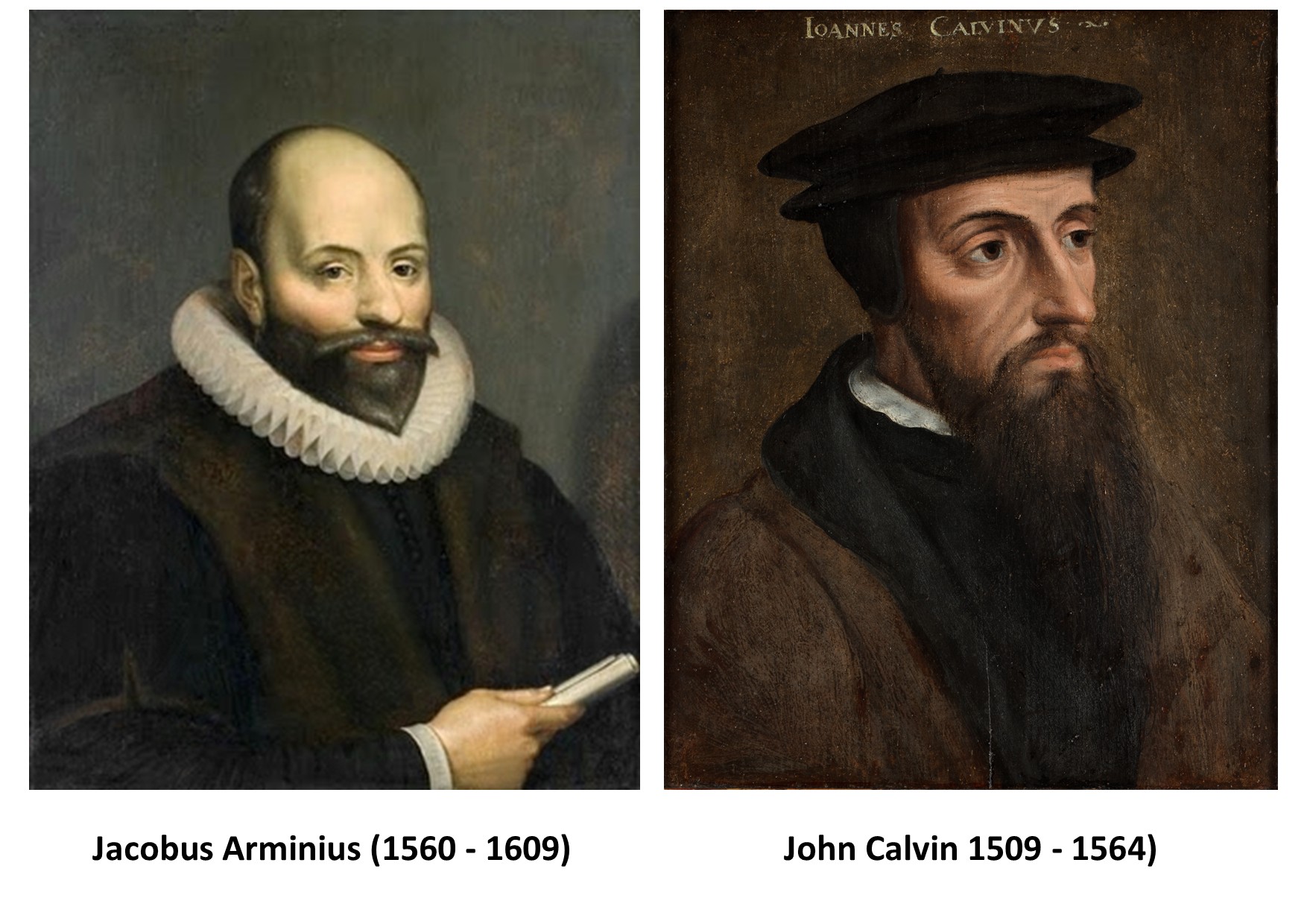
Calvinism is a major branch of Protestantism that emerged in the 16th century, primarily developed by French theologian John Calvin. It’s centered on the sovereignty of God, emphasizing that everything happens according to His will.
Key Beliefs:
– Total Depravity: Humanity is inherently sinful and unable to save itself.
– Unconditional Election: God chooses who will be saved, regardless of their actions or merits.
– Limited Atonement: Jesus’ death was specifically for the elect.
– Irresistible Grace: God calls the elect to salvation, and they cannot resist.
– Perseverance of the Saints: Those saved will persevere in their faith and never fall away.
Calvinism is often summarized by the acronym TULIP, representing these core doctrines. It’s influenced various Christian denominations, including Presbyterians, Reformed churches, and some Baptist groups.
***
Arminianism is a theological framework within Christianity that emphasizes free will and the possibility of salvation for all individuals. It’s named after Jacobus Arminius, a Dutch theologian who lived from 1560 to 1609. Arminianism arose as a response to Calvinism, focusing on God’s sovereignty and predestination.
Core Beliefs:
– Conditional Election: God’s election is based on His foreknowledge of who will accept His grace.
– Universal Atonement: Christ died for all humanity, not just the elect.
– Resistible Grace: Individuals can resist the Holy Spirit’s call to salvation.
– Perseverance of the Saints: Believers can fall from grace and lose their salvation if they choose to turn away from God.Arminianism has influenced various Christian denominations, including Methodism, some Baptist groups, and Pentecostal movements. It emphasizes human dignity, free will, and the importance of personal responsibility in salvation.
 JRB Publications