
Some months ago, I started writing what now follows but decided best not to continue, until now. About the two personalities being referred to, I had little problem. But concerning a subject they both considered important, I did, and it seemed somewhat hypocritical of me to attempt to write about a subject that I had too little experience of, and so I decided that I’d wait until such time that I had.
I have long learned that the one person I cannot fob off is the Lord, who I sense was nudging me to stop procrastinating and get real. A recent trigger was a sermon concerning the text: “this kind can come forth by nothing, but by prayer and fasting” Mark 9:29. The Bible version the preacher used in his sermon was NOT KJV, and so the words “and fasting” were omitted. The context was a boy who had been possessed by an evil spirit that earlier Jesus had cast out, when earlier his disciples had been unable to do so. Upon seeing Jesus’ success, they then enquired why couldn’t cast out the demon.
The full story can be found in Mark 9:17-29. An alternative account is Matthew 17:14-20 where Jesus told His disciples that the reason why they could not cast out the demon was “because you have so little faith”. When it comes to expounding the prayer and fasting text, many commentators would agree that the key element was prayer of the more intense sort. My own Brethren background recognised the importance and necessity for prayer but when it came to divine healing it was often with the caveat “if it be Thy will”. Anything to do with the demonic tended to be deemed as no go areas. As for the Pentecostals that did go into those areas, they tended to be viewed with incredulity, especially those who saw demons round every corner. I should add that while the Brethren rightly urged doing much that was good, it didn’t include fasting.
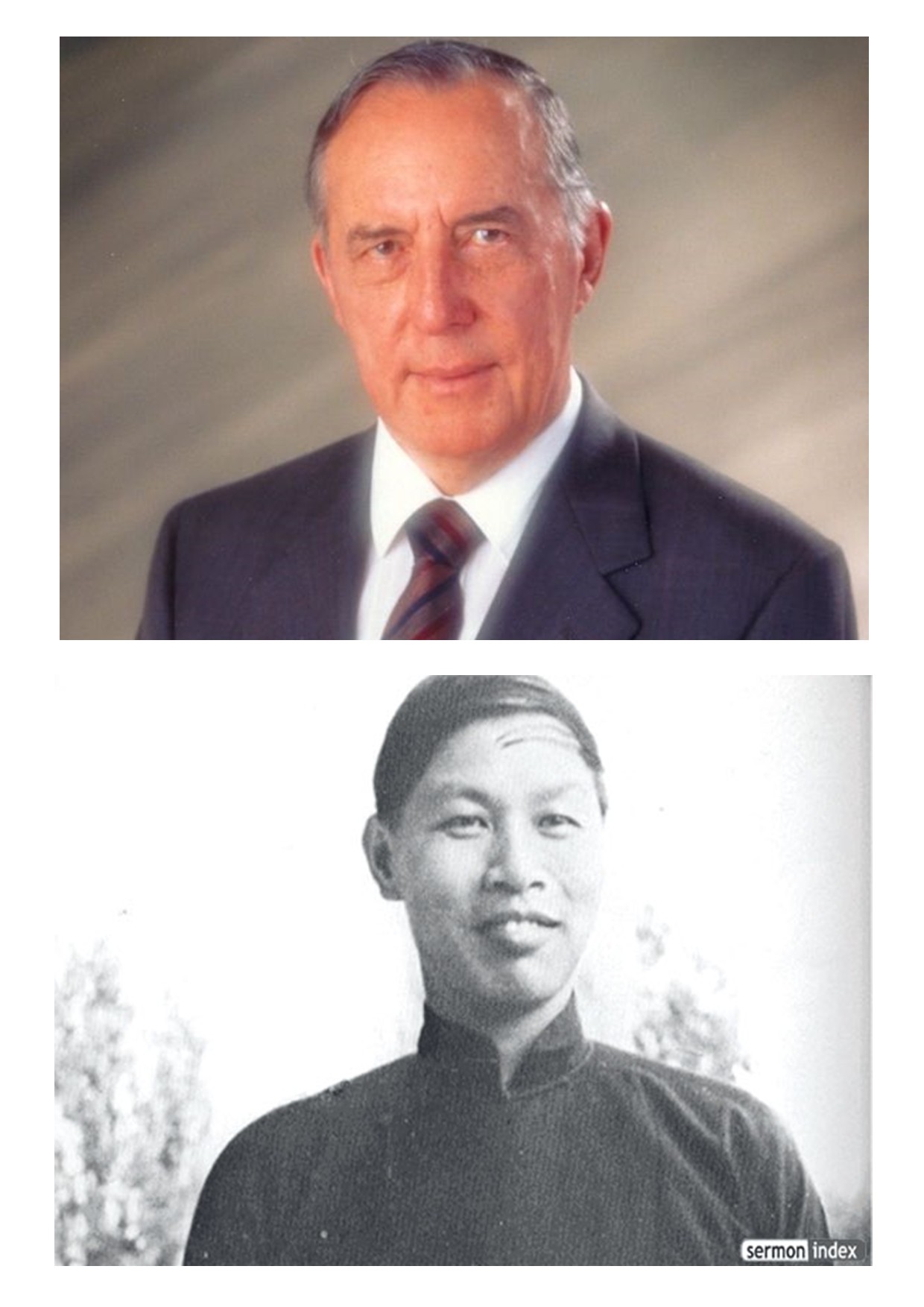
Derek Prince (see here for his Wikipedia bio) and Watchman Nee (see here for his Wikipedia bio) are two Christians from quite different theological stables (Prince was Pentecostal, Nee was Brethren), both of which, long ago affected me, opened my spiritual eyes and positively influenced me. They had much in common.
According to Meta AI:
Watchman Nee was a Chinese Christian leader, author, and church planter who played a pivotal role in developing indigenous Christianity in China. Born in 1903, Nee experienced a powerful conversion at 17 and dedicated his life to Christ and ministry. He founded the Local Church movement, emphasizing simplicity and Christ-centered living.
Key Aspects of Watchman Nee’s Ministry:
– Focus on Christ-Centered Living: Nee emphasized believers’ union with Christ, echoing Paul’s teachings.
– Persecution and Imprisonment: Nee endured 20 years of imprisonment for his faith, demonstrating the cost of discipleship.
– The Power of the Gospel: Nee’s focus on Christ-centered living highlights the transformative power of the Gospel.
– Call to Unity: His emphasis on local churches reflects Jesus’ prayer for unity among His followers.
***
Derek Prince was a renowned Bible teacher, author, and missionary who dedicated his life to spreading the Word of God. Born in 1915 in Bangalore, India, to British parents, Prince was educated at Eton College and King’s College, Cambridge, where he excelled in Greek and Latin. His academic career was interrupted by World War II, during which he served in the Royal Army Medical Corps.
Early Life and Conversion
Prince’s life took a dramatic turn in 1941 when he had a supernatural encounter with Jesus Christ, leading him to conclude that Jesus was alive and the Bible was a true, relevant book. This experience transformed his life, and he devoted himself to studying and teaching the Bible.
Ministry and Teachings
Prince’s ministry spanned over 60 years, during which he authored over 100 books, 600 audio teachings, and 100 video teachings. His daily radio broadcast, translated into multiple languages, reached millions worldwide. Key themes in his teachings include ¹ ² ³:
– Deliverance and Spiritual Warfare: Prince believed in the reality of spiritual forces and the power of demons to cause illness and psychological problems.
– Israel and the Jewish People: He strongly supported the establishment of the State of Israel, seeing it as a fulfillment of biblical prophecy.
– Christian Living and Discipleship: Prince emphasized the importance of living a Christ-centered life, prayer, and fasting.
I had been listening to and profoundly struck by videos featuring these men:
- Very Few Christians Think About This Nowadays | Derek Prince (see here)
- NEE discovered in PRISON why FASTING is the KEY that 95% of Christians IGNORE (see here)
I found both videos helpful, often making similar points, e.g. regarding the Spiritual Man (we are meant to be) and the importance of fasting in helping us become such a person. Prince’s presentation was a straightforward explanation of why we fast. He saw it firstly as a means of self-denial, something being downgraded in terms of priority by the modern church. His particular focus was on praying for the welfare of the nations, that would happen when people fast. Using the prophet Daniel as an example, he recognised that we are in a spiritual war and fasting was part of what needed to happen in order to take our place in fighting in that war on God’s side. Nee saw that fasting went far beyond going without food. It was to break soul dominion over spirit and one finding victory over self and things such as addiction. Through fasting, we start to see things from God’s perspective while finding ourselves dying to self.
Despite coming from quite different backgrounds, including theologically, and emphasising different things, both Derek Prince and Watchman Nee practised regular fasting in their own lives and, no doubt, this was a factor in their effectiveness in Christian ministry, influencing many, even long after their passing. While the New Testament does not appear to mandate how and when individual believers are to fast, there is little doubt that fasting formed an important part of the regular practice of and effectiveness of believers in their service for God, in Old and New Testaments.
For me, fasting is a subject not just to write about in order to encourage others, but it is something I need put into practice. The realisation that I hadn’t was why I delayed writing as I now do. This vital spiritual practice, adopted by Christians down the ages, from many different church backgrounds, including those of Prince and Nee, is deeply rooted in biblical teaching. It is not just abstaining from food or achieving health goals, but rather as a means to draw closer to God, seek guidance, and demonstrate dependence on Him.
- To deepen one’s relationship with God, since fasting helps believers focus on their spiritual lives, cultivate humility, and as a help when it comes to seeking God’s presence.
- In seeking guidance and wisdom, Christians can fast in order to seek God’s direction, clarity, and to find wisdom in times of uncertainty, confusion and deception.
- As one way to express grief and repentance, since fasting is a way to express sorrow for sins, demonstrate repentance, and as we seek forgiveness for ourselves and others.
- It helps to strengthens prayer life, intensifying praying, making it more fervent and effective, and as a means of engaging in much needed spiritual warfare.
- As a means to overcome selfish desires and ambitions, and the pull of the flesh, by helping us to become more aligned with God’s will and His purposes for our own lives.
- As part of our response to the unrighteousness and wickedness that is clearly now being seen the world over, along with our feeling unable to do much about it humanly speaking, and entreating God to act in accordance with His pleasure.
 JRB Publications