
What has all these got to do with each other, one may well else ask? My response is – be patient as I will get there. I start by saying what I see watching on my wall and examine my own spiritual journey.
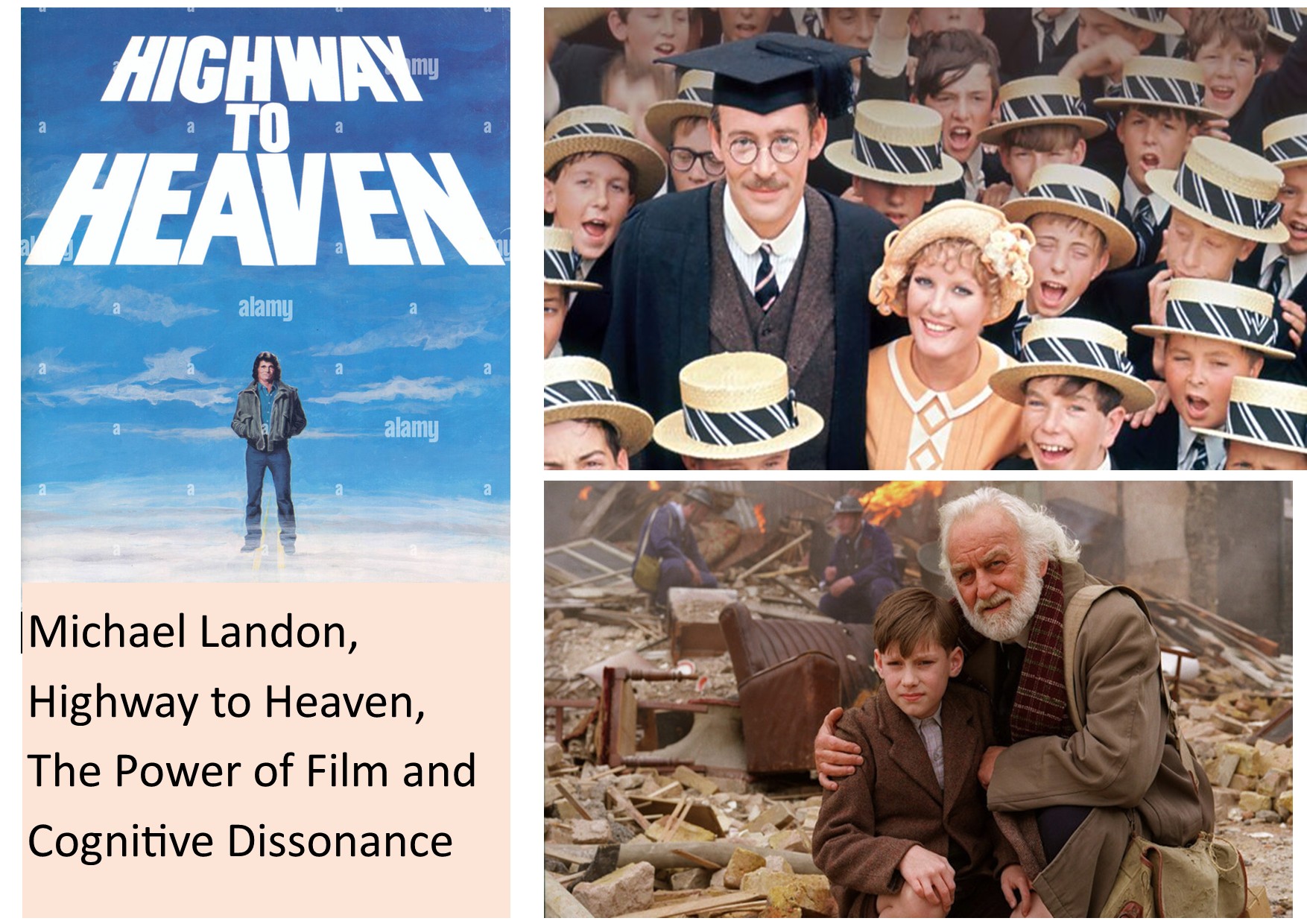
This strain of thought was re-ignited a week ago when I discovered that the film “Goodnight Mister Tom” (see here) was freely available, free of adverts, on YouTube and I was blown away after having watched it. These days, my video watching is usually confined to religious sermons, political analysis, alternative media, sporting events and sacred music. I rarely watch TV, and hardly any full-length films, but this was an exception. I posted my own positive response to watching the film on my Facebook page and one of my “friends” commented that “It’s one of my all time favourite films”.
Knowing, like me, this friend was also a fan of another “weepy”, “Goodbye Mr. Chips” (see here for what is, imho, the best film version), I asked her which of the two she preferred. Her response was “Mr Chips just pips it … but only just” and I agreed! I won’t give spoilers but each film as well as being very watchable also provided wholesome entertainment, and more than their fair share of heart wrenching moments. I went away thinking Messrs. Tom and Chips would be amazing role models in real life, as they did something I encourage myself and others to do – being kind and leaving a legacy.
Which brings me to another heart wrencher: Highway to Heaven, starring Michael Landon, aka Little Joe, also available (all episodes) on You Tube (see here for the very first episode, which I watched). According to Wikipedia: “Michael Landon Sr. (born Eugene Maurice Orowitz; October 31, 1936 – July 1, 1991) was an American actor and filmmaker. He is known for his roles as Little Joe Cartwright in Bonanza (1959–1973), Charles Ingalls in Little House on the Prairie (1974–1983), and Jonathan Smith in Highway to Heaven (1984–1989)”. I recall watching Bonanza growing up as a kid and seeing my mum waving to Little Joe and his brothers. Sadly, Little House on the Prairie passed me by, but later on in life I discovered Highway to Heaven and it became a firm favourite. While I couldn’t fully endorse its theology, I loved the idea of this probationary angel being given trouble shooter assignments by his boss (God) in order to sort out some problematic situation, helping resolve desperate conundrums and reaching out to those facing situations where a helping hand is much needed and to teach the lesson to everyone that kindness always wins. While I see lots of doom and gloom watching on my wall, I see lots of kindness and that gives me hope. The aforementioned films help to illustrate this.
Before I get to cognitive dissonance and the part played by religion, I would like to make a couple of further observations. I suspect Landon was no angel despite playing the good guy in three “hit” TV series. His life is an fascinating one as the Wikipedia article intimates (see here) – and no doubt had its trials, including two failed marriages and family tragedies. Also of interest is his long-time friendship with Victor French who played significant roles in each of the afore-mentioned series. The video titled “The Story Behind the Inspiring Friendship of Michael Landon and Victor French” (see here) is a moving one. And before I talk about the relationship between cognitive dissonance and religion, it was interesting that two of the more problematic, less pleasant characters in two of the films recently watched: “Good Night Mister Tom” and “Highway To Heaven Season 1 Episode 1” (see here) represented in your face piety that lacked empathy.
Those who know something of my own Christian journey will know that for most of that time I have been involved with the Plymouth Brethren (PB) and Strict Baptists (SB). Both put considerable store on personal piety and doctrinal soundness and would typically be the last groups, church wise, to push, as many churches do these days, notions of equity, inclusion and diversity. This can be off putting to some non PB or SB Christians and especially if they think others might be drawn to God and their church as a result of pushing ideas like God accepts us as we are and one isn’t to get hung up over things like sin and repentance but instead focus on being nice. They might rightly point to examples of cognitive dissonance whereby an uncompromising message is proclaimed by those who are so accused, yet void of human kindness and the common touch.
While the image of intense, up tight, uncaring and even hypocritical PB and SBers may have a degree of validity, I can also point out many examples of those who practice what they preach within those set-ups and who live (or at least seek to do so) according to the two great commands of loving God and loving one’s neighbour. But of late I have been doing a lot of personal soul searching, concerning living as God wants and in the light of my upsetting a long list of goody goody Christians, wondering whether I am at fault (likely, I am to some extent) or if God is using me as his instrument to get those I manage to upset to examine their own lives so He can use all those who call on His name to further His purposes. That self-examination is ongoing and besides God, His Word, and the examples of my PB/SB and non-PB/SB friends, I am grateful to Messrs. Tom, Chips and Smith, who have helped show me the way.
 JRB Publications