
Recently, my thoughts have once again turned to the words of the Book of Genesis, especially the first three chapters and, that of all the passages in the Bible, this one may be the most significant. We find many great doctrines introduced, many to be elaborated in the rest of the Bible, right up to the very end. Despite, at least in the eyes of many of the skeptics and detractors, these contain much that is of a controversial nature, we do ignore the words to our detriment.
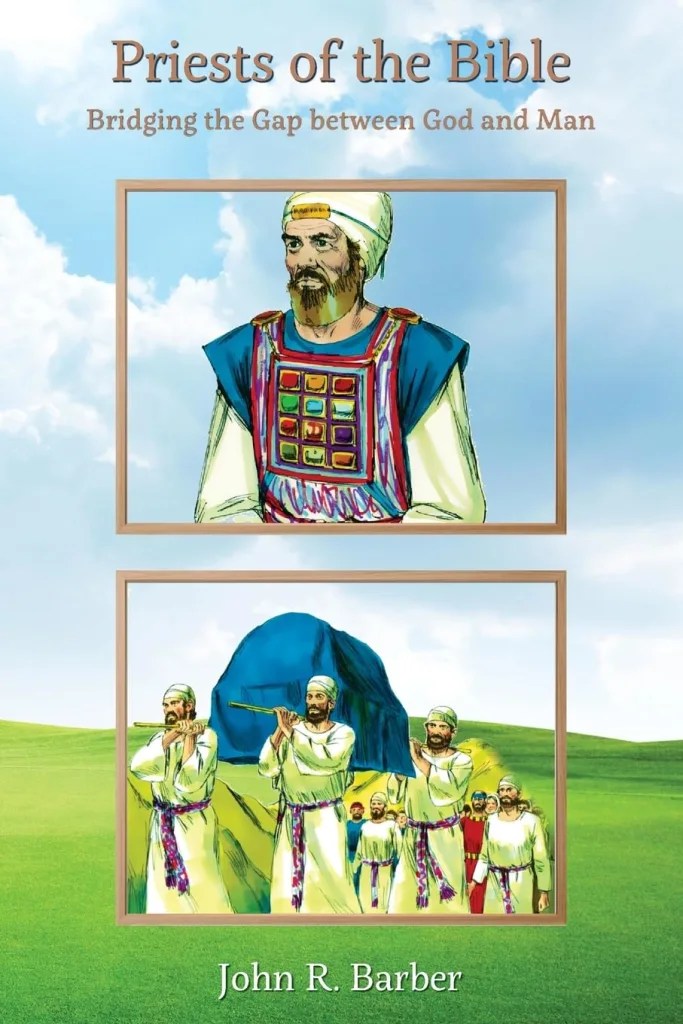
In my recent book “Priests of the Bible” (click here for a free download), I include a chapter titled: “Chapter 48: Genesis – The Seedbed of the Bible”, as providing the context for a book that is a lot to do with Bible priests. I write: “The Book of Genesis, especially the first eleven chapters, can be rightly looked upon as the seedbed of what is to follow, and a true understanding of what the Bible teaches, right up to the end of the Book of Revelation, starts with a consideration of these chapters, albeit the ones in the Bible most argued over. The age of the earth, the details of creation, including how these fit in with notions of evolution, and the Flood narrative, to name but three, all have proved to be controversial and much debated subjects, where many have tried to allegorise or label as myth what we find in these chapters”.
In this article, I wish to concentrate on the first three chapters of the Bible, not so much to argue why these are rightly included in the canon of scripture and how these can best be interpreted, but rather its teachings and how to apply them to our situation now. Within reasonable constraints, I take a literal approach, recognising that many of the happenings described have been dismissed as not having happened by many moderns yet believing in the scientific method and, as with all truth, Genesis 1-3 must also be subject to such scrutiny. What I attempt to do is to identify the key teachings found in these chapters and give reasons why I consider these teachings can be placed in this “most important” category.
I wrote in my book about several reasons why I believed these chapters were especially relevant and significant, especially in the light of a “climate emergency” and an LBGT agenda being pushed in our culture, quoting the relevant texts, e.g., “Concerning three of the ‘hot’ topics of our present age, these early chapters, notably the first two, provide helpful guidance on how we ought to respond to the secular rationale we are continually being subjected to, noting that what followed in Chapter 3 was the account of the Fall of Man:
- Sexual Orientation (and marriage): “And Adam said, this is now bone of my bones, and flesh of my flesh: she shall be called Woman, because she was taken out of Man. Therefore shall a man leave his father and his mother, and shall cleave unto his wife: and they shall be one flesh. And they were both naked, the man and his wife, and were not ashamed” (2:23-25).
- Sexual Identity (two genders): “And God said, let us make man in our image, after our likeness: and let them have dominion over the fish of the sea, and over the fowl of the air, and over the cattle, and over all the earth, and over every creeping thing that creepeth upon the earth. So God created man in his own image, in the image of God created he him; male and female created he them” (1:26-27).
- The (stewardship of our) Environment: “And God blessed them, and God said unto them, be fruitful, and multiply, and replenish the earth, and subdue it: and have dominion over the fish of the sea, and over the fowl of the air, and over every living thing that moveth upon the earth” (1:28).”

But I would like to begin at the very beginning of the Bible, which packs a powerful punch right from the outset, such that even the first verse alone could warrant this being our main focus for the rest of this essay. Got Questions (see here) declares and then goes on to argue (I agree with what they have to say) that: “Genesis 1:1 says, “In the beginning, God created the heavens and the earth.” Later, in Genesis 2:4, it seems that a second, different story of creation begins. The idea of two differing creation accounts is a common misinterpretation of these two passages which, in fact, describe the same creation event. They do not disagree as to the order in which things were created and do not contradict one another. Genesis 1 describes the “six days of creation” (and a seventh day of rest); Genesis 2 covers only one day of that creation week—the sixth day—and there is no contradiction. In Genesis 2, the author steps back in the sequence to focus on the sixth day, when God made mankind. In the first chapter, the author of Genesis presents the creation of man on the sixth day as the culmination or high point of creation. Then, in the second chapter, the author gives greater detail regarding the creation of man and woman”.

It is worth noting the Hebrew word used in 1:1, that most English translations give as “God”, is “Elohim”, and while most readers, like me, have at best little understanding of Hebrew, yet as Bible students the original language of the Bible (Hebrew – Old Testament; Greek – New Testament) is something we must take into account. I found this video “Read the first verse of the Bible in the original Hebrew!” (see here) to be helpful. It was by a Jewish man whose monotheism would dismiss the Christian notion of the Trinity, such as backed up by the New Testament counterpart text: “In the beginning was the Word, and the Word was with God, and the Word was God … And the Word was made flesh, and dwelt among us, (and we beheld his glory, the glory as of the only begotten of the Father) full of grace and truth” John 1:1,14 – that “Word” being identified as Jesus, the second person of the Trinity.
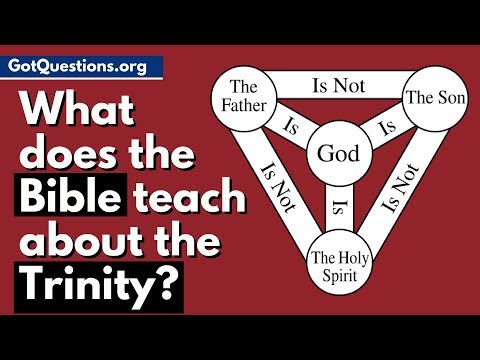
According to Got Questions (see here): “The Trinity is one God existing in three Persons … There is one God (Deuteronomy 6:4; 1 Corinthians 8:4; Galatians 3:20; 1 Timothy 2:5). The Trinity consists of three Persons (Genesis 1:1, 26; 3:22; 11:7; Isaiah 6:8, 48:16, 61:1; Matthew 3:16-17, 28:19; 2 Corinthians 13:14). In Genesis 1:1, the Hebrew plural noun “Elohim” is used. In Genesis 1:26, 3:22, 11:7 and Isaiah 6:8, the plural pronoun for “us” is used. The word “Elohim” and the pronoun “us” are plural forms, definitely referring in the Hebrew language to more than two. While this is not an explicit argument for the Trinity, it does denote the aspect of plurality in God. The Hebrew word for “God,” “Elohim,” definitely allows for the Trinity”. The doctrine of the Trinity, Got Questions and myself see as at least implicit in these first three chapters of Genesis (e.g. use of the word “us”) is a profound and important one that deserves more consideration, but we need to move on and consider the rest of 1:1 and what follows.
I can still recall when as a young child I had a deep sense of awe trying to contemplate “in the beginning” since the truth is that if we go back in time there can never be a beginning and that before there ever was, which is philosophically impossible, there was God, who will ever more be – and somewhere, like a tiny spec on the eternal timeline, you and I, come and go. What can be more awesome? As for Genesis 1:1, God was in the beginning and while what follows is how planet earth came about, along with a fleeting reference to the rest of the cosmos, God is not explained for He always was, always is and always will be. Awesome and amazing!

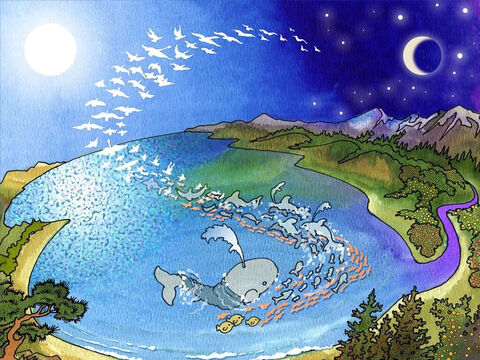
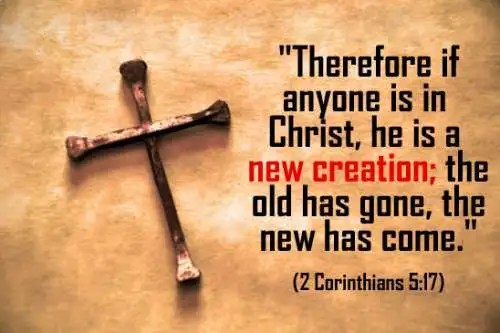
We will take the six days in which the earth and its contents were created, culminating in humankind on the sixth day (with the seventh day being a day of rest), as fascinating as the account in Chapter 1 is, as being read. I will leave others to argue whether or not the days were literal 24-hour ones, but note that at the end of each day that God saw what He had created was good. Among the numerous attributes of God, the one that sticks out in this chapter is Him as creator. While at the end of His creating, everything He had created was good, much of the rest of the Bible tells us of much of that good being undone until right at the end we read about the paradise that was lost being the paradise regained with a new heaven and a new earth (Revelation 21:1). But all the time, God is in the creation business and especially in the work of Jesus when coming from heaven to earth and dying for our sins and how that can make us a new creation: “Therefore if any man be in Christ, he is a new creature: old things are passed away; behold, all things are become new” 2 Corinthians 5:17.
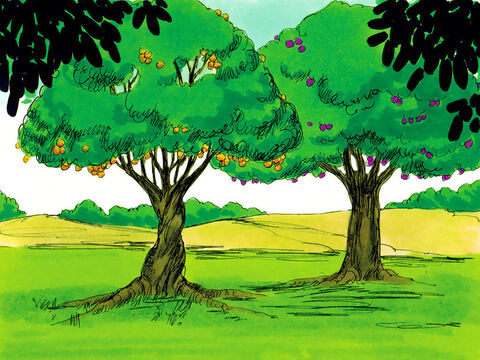
But we now move onto Chapter 2 and consideration of the second complementary creation account, which focuses on what was the highlight of God’s creation, that of man of whom we were told in the previous chapter: “And God said, Let us make man in our image, after our likeness: and let them have dominion over the fish of the sea, and over the fowl of the air, and over the cattle, and over all the earth, and over every creeping thing that creepeth upon the earth” (1:26). Thus Adam (the first human) was created, followed by his perfect help mate (Eve), living in an idyllic, paradise on earth, garden (Eden) and one where we find two named trees (the Tree of Life and the Tree of the Knowledge of Good and Evil) each with their particular attributes, the forbidden fruit and (significantly) a talking snake – all ammunition for unbelievers who dismiss the veracity of what was then to take place but incredibly important for one’s understanding of much essential doctrine from God’s perspective.
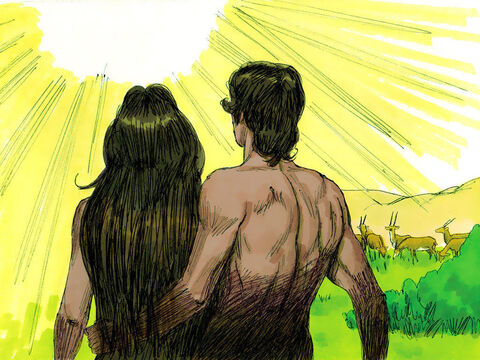
If one were asked what is perfect paradise, that which existed around Adam and Eve could hardly be surpassed. Moreover, they also enjoyed daily communion with God. They were given full freedom to do as they wished except in one important respect and it was this that contributed to their downfall. They could eat of any of the fruits of the garden, including that which God deemed as best of all – fruit from the Tree of Life. But there was also the forbidden fruit from the Tree of the Knowledge of Good and Evil and with it came the warning if they ate of its fruit they would die. What this represented exactly we cannot say for sure; nor can we say why God allowed free access to this tree. What we learn later is that by eating the forbidden fruit and having the knowledge that comes as a result, they could no longer be allowed to eat from the Tree of Life.
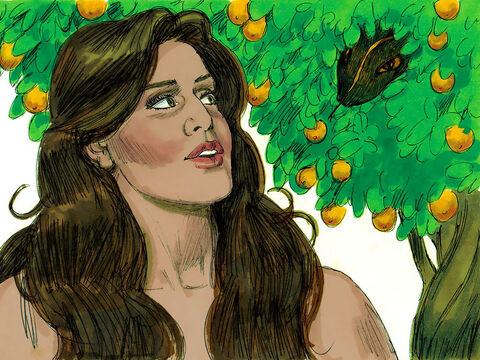
This brings us to the last of our three chapters that some Bible versions introduce with the title “the Fall” because its main theme is the Fall of man and the beginning of the breaking of that perfect relationship human kind was meant to have with God. In this chapter we are introduced to the Devil (Satan) who is to appear throughout the Bible and who is presented as the one who is the chief adversary against God, who manages to capture the hearts and minds of many/most living on earth. He appears operating through his agent – the talking snake and does so with characteristic smooth talk and deceptive cunning that culminates in Eve and then Adam succumbing to temptation and eating of the fruit from the Tree of the Knowledge of Good and Evil that they had been told not to eat.
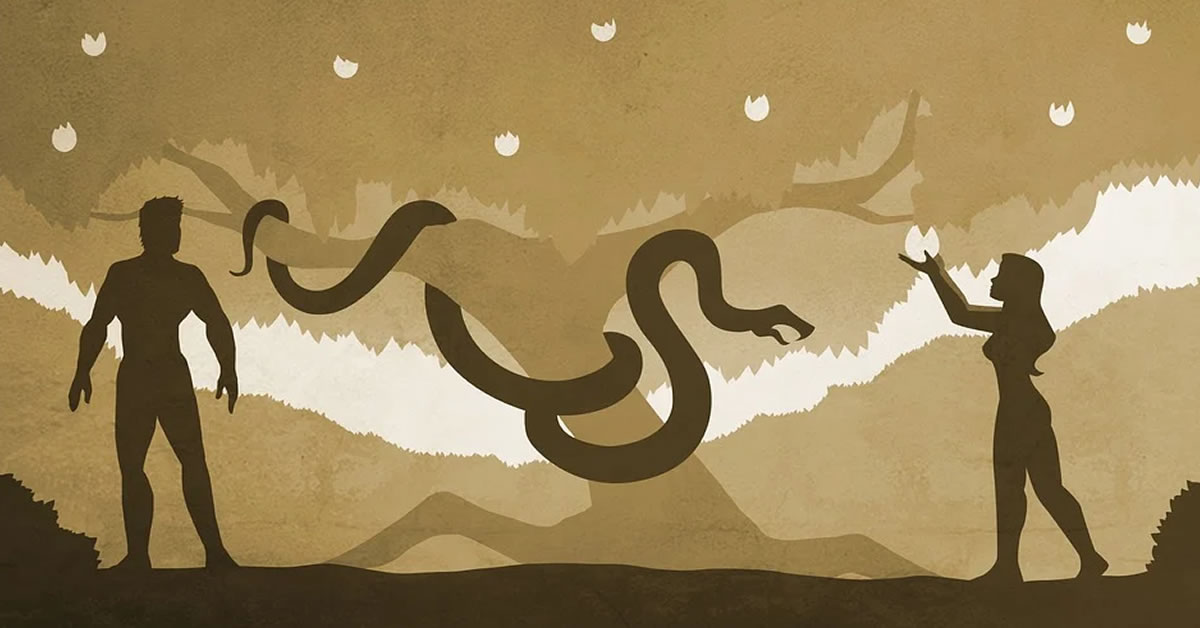
This is the way, theologically speaking, that sin entered into the world and death because of sin (just as God had warned would happen should Adam eat of the forbidden fruit). In the context of the work of Jesus Christ (which we will get to later in the chapter) we would be told by Paul in the New Testament that: “death reigned from Adam to Moses, even over them that had not sinned after the similitude of Adam’s transgression, who is the figure of him that was to come” Romans 5:15, “all have sinned, and come short of the glory of God” Romans 3:23 and “the wages of sin is death” Romans 6:23. In my gospel presentation (see here), I make the point that when we are preaching the gospel we should begin with a presentation of the righteousness of God (ahead of the love of God) since it was by not adhering to God’s perfect standard that Adam and everyone who followed after him are cut off from God, and yet the message of the Bible is about restoring that relationship.
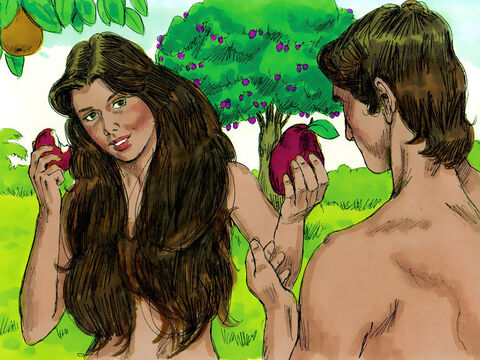
And it was as a result of eating of the forbidden fruit, if we take what is written literally, that led to a change in man’s dwelling place from being paradise on earth to something far from it, along with suffering, sickness, and ultimately death. The chapter begins with an exchange of words: “Now the serpent was more subtil than any beast of the field which the Lord God had made. And he said unto the woman, Yea, hath God said, Ye shall not eat of every tree of the garden?” Genesis 3:1. It is worth reflecting that what seemed fairly natural and innocuous, that we see all the time, and that at some time all of us have eaten our share of the modern forbidden fruit equivalent, that was so heinous to God. Noting that we can fall into the same error as Adam and Eve, and that temptation is all too real, this is something to be aware off and resisted.
After giving in to Satan’s tempting, and afterward being confronted by God, we read: “And the Lord God said unto the serpent, Because thou hast done this, thou art cursed above all cattle, and above every beast of the field; upon thy belly shalt thou go, and dust shalt thou eat all the days of thy life: And I will put enmity between thee and the woman, and between thy seed and her seed; it shall bruise thy head, and thou shalt bruise his heel. Unto the woman he said, I will greatly multiply thy sorrow and thy conception; in sorrow thou shalt bring forth children; and thy desire shall be to thy husband, and he shall rule over thee. And unto Adam he said, Because thou hast hearkened unto the voice of thy wife, and hast eaten of the tree, of which I commanded thee, saying, Thou shalt not eat of it: cursed is the ground for thy sake; in sorrow shalt thou eat of it all the days of thy life; Thorns also and thistles shall it bring forth to thee; and thou shalt eat the herb of the field. In the sweat of thy face shalt thou eat bread, till thou return unto the ground; for out of it wast thou taken: for dust thou art, and unto dust shalt thou return.” Genesis 3:14-19.

After the transgression, God spoke to the serpent as well as Adam and Eve, the above words, before expelling the couple from the garden, never to return. We also read of Adam and Eve being clothed with animal skins, representing the animal sacrifices for atonement that later would follow and the ultimate sacrifice of Jesus Christ. Our chapter ends: “Unto Adam also and to his wife did the Lord God make coats of skins, and clothed them. And the Lord God said, Behold, the man is become as one of us, to know good and evil: and now, lest he put forth his hand, and take also of the tree of life, and eat, and live for ever: Therefore the Lord God sent him forth from the garden of Eden, to till the ground from whence he was taken. So he drove out the man; and he placed at the east of the garden of Eden Cherubims, and a flaming sword which turned every way, to keep the way of the tree of life” (Genesis 3:21-24).
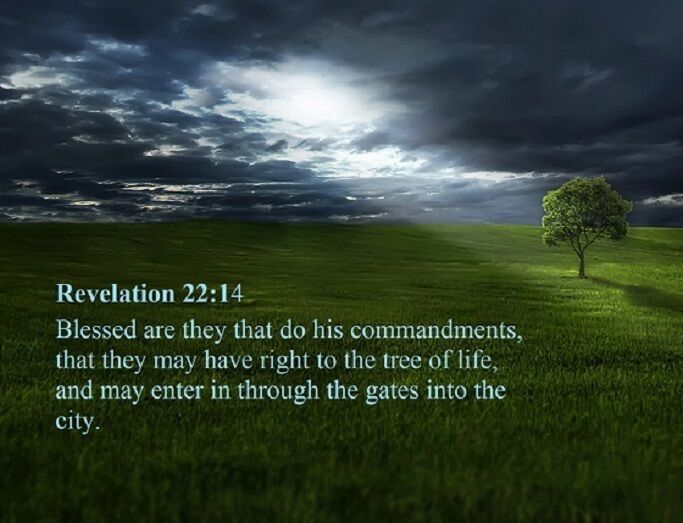
While the Tree of the Knowledge of Good and Evil is not mentioned outside these three chapters, the Tree of Life is, notably in the New Jerusalem: “In the midst of the street of it, and on either side of the river, was there the tree of life, which bare twelve manner of fruits, and yielded her fruit every month: and the leaves of the tree were for the healing of the nations … Blessed are they that do his commandments, that they may have right to the tree of life, and may enter in through the gates into the city” Revelation 22:2,14.
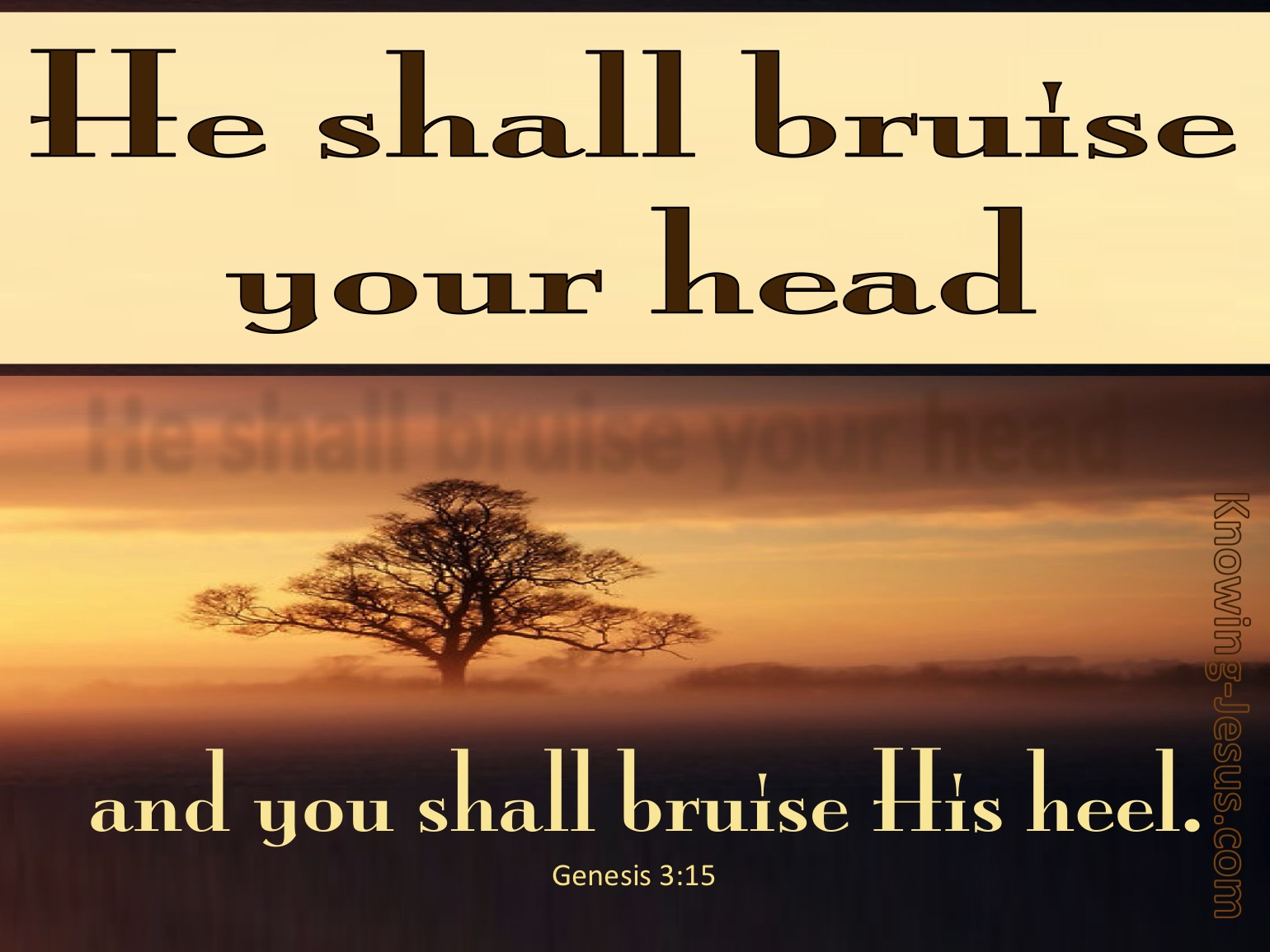
Possibly, the most important text in our chapters, when it comes to establishing what is sound doctrine, is: “And I will put enmity between thee and the woman, and between thy seed and her seed; it shall bruise thy head, and thou shalt bruise his heel” (3:15), which most Christian commentators take as having been fulfilled by the coming of Jesus, when He deals a blow against Satan following His death on the Cross, with some/many seeing this being a prophecy too of the Seed War, evidenced by the mating of fallen angels and human women, written about in Genesis 6, and one that continues right up to the end, including being seen today as part of the pushing of the transhuman / transgender agenda under Satan, who continues right up to the end in rebellion against God and getting humans to rebel too. When it comes to bringing rebels back to God, that is at the heart of the Gospel message found in the Bible.
 JRB Publications