
Oops – missed this by a day … the Feast of the Circumcision of Christ is on 1 January in the liturgical calendar of some churches, including Anglican ones, that celebrate special days.
According to Got Questions (see here): “Circumcision was the sign of a covenant God made with Abraham and his descendants (Genesis 17:9–14; Acts 7:8). The Mosaic Law repeated the requirement that all males be circumcised (Leviticus 12:2–3). So every Israelite boy, as well as any man desiring to become part of the Hebrew people, was circumcised (Exodus 12:48). Since Jesus was a Jew living under the law, He would have been circumcised on the eighth day as were all male Hebrew babies. Luke 2:21 records the fact that Jesus was circumcised: “On the eighth day, when it was time to circumcise the child, he was named Jesus, the name the angel had given him before he was conceived.” Later in the same chapter, Luke emphasizes that Joseph and Mary followed all the Jewish requirements, doing “everything required by the Law of the Lord” concerning their newborn son (verse 39). In following the law, Joseph and Mary would have circumcised Jesus. Failure to do so would have been a clear violation of the law”.
In terms of churchmanship, I have long been associated with the lowest of the low, such that when it comes to celebrating special days “my lot” don’t – yet I get why some do and often respect why – and that was how I felt after checking out one Orthodox website (see here) in order to get further understanding of the meaning and significance of this feast: “Circumcision was the sign of a covenant God made with Abraham and his descendants (Genesis 17:9–14; Acts 7:8). The Mosaic Law repeated the requirement that all males be circumcised (Leviticus 12:2–3). So every Israelite boy, as well as any man desiring to become part of the Hebrew people, was circumcised (Exodus 12:48). Since Jesus was a Jew living under the law, He would have been circumcised on the eighth day as were all male Hebrew babies. Luke 2:21 records the fact that Jesus was circumcised: “On the eighth day, when it was time to circumcise the child, he was named Jesus, the name the angel had given him before he was conceived.” Later in the same chapter, Luke emphasizes that Joseph and Mary followed all the Jewish requirements, doing “everything required by the Law of the Lord” concerning their newborn son (verse 39).
Besides reading articles like that above, I am not in a position to endorse or refute what certain Christians do and why they do it when they celebrate the Feast of Circumcision, simply because I don’t know and my own tradition does not recognise special days. What I might suggest is that Jesus besides being the Priest and the Sacrifice pointed to in the Law, because of what he accomplished by dying on the Cross and rising from the dead fulfilled all the demands of the Law including circumcision on the eighth day.
Three days ago, I posted my “Got Questions and “the Consolation of Israel”” blog (see here), when I reflected on the passage in Luke’s Gospel when Joseph and Mary took the 8-day old Jesus to the Temple at Jerusalem in order for Him to be circumcised and to offer sacrifices as the Jewish Law required, and there they met two remarkable old folk who more or less lived in the Temple: Simeon and Anna. In that blog, I reflected on the phrases “Consolation of Israel” and “Redemption in Jerusalem”, making the important connection that Jesus, who is the Messiah, is also the fulfilment of many texts contained in the Hebrew Bible. Simeon, Anna, like many others, were looking forward to the coming Christ on the basis of what they found written in the Old Testament, which they saw in the baby Jesus. I don’t want to say much more about circumcision from a Bible or Jewish perspective, other than Jesus was a Jew who abided by what the Old Testament set out. What happened on His eighth day set the pattern for the remaining 33 years of His life, evidence by Him following the whole Law, although we read He was often taken to task for not always following the letter of the Law even if He followed the Spirit of the Law.
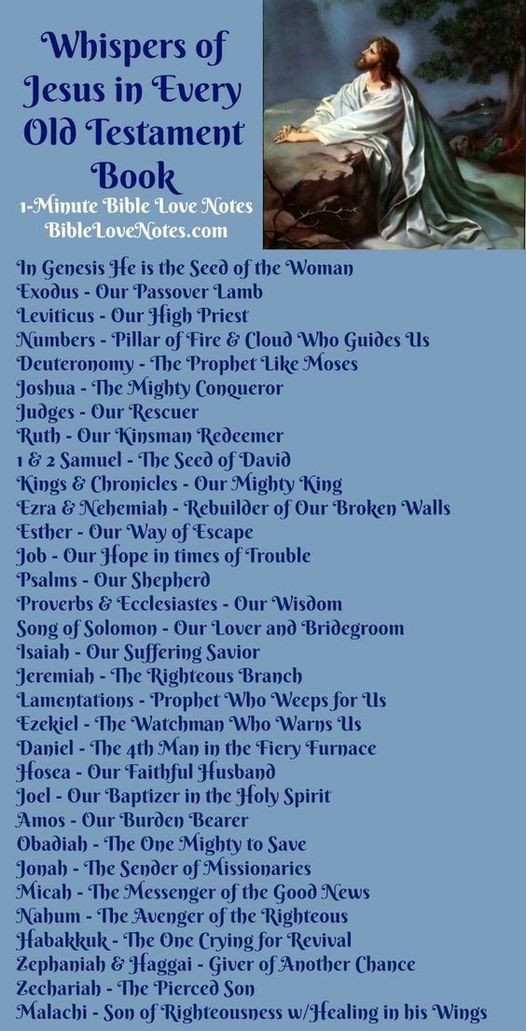
Before I get to my plans to do a series on Christ in the Old Testament (which in the Hebrew Bible can be divided into three sections (Law, Prophets, Writings)) to cover in three sessions:
- Christ in the Law
- Christ in the Prophets
- Christ in the Writings
Noting three different yet complementary ways this subject could be approached:
- Types and shadows (pertaining to events that are recorded that also point us to Christ)
- Prophecies (words of the prophets concerning Christ’s first and second comings)
- Christophany (pre-incarnate appearances of Christ)
Let us turn to after the end of Jesus’s life and Luke 24, when we read of Him appearing to various people following His rising from the dead. In the one of the discourses recorded in this chapter, we read of Jesus telling the two travelers on the Emmaus Road, who were disappointed their hopes had been dashed with Jesus’ untimely death: “Ought not Christ to have suffered these things, and to enter into his glory? And beginning at Moses and all the prophets, he expounded unto them in all the scriptures the things concerning himself” (24:26,27). In another conversation that took place soon after, we read of Him telling His bemused disciples, who were gathered together when He unexpectedly appeared: “And he said unto them, These are the words which I spake unto you, while I was yet with you, that all things must be fulfilled, which were written in the law of Moses, and in the prophets, and in the psalms, concerning me. Then opened he their understanding, that they might understand the scriptures” (24:44,45).

Of all the conversations that ever took place, those involving Jesus explaining about Himself based on what the Old Testament taught might be toward the top of the list of those I might have liked to have eavesdropped on. We can make intelligent guesses of what might have been said and there is the thrilling prospect of delving into what these scriptures may be. What I intend in this coming series is a deep (but not too deep) dive into what the Old Testament tells us concerning the Christ that is to come. So watch this space!

 JRB Publications