
My thoughts recently turned to Hanukkah. Wikipedia (see here) tells us: “Hanukkah is a Jewish festival commemorating the recovery of Jerusalem and subsequent rededication of the Second Temple at the beginning of the Maccabean Revolt against the Seleucid Empire in the 2nd century BCE …”
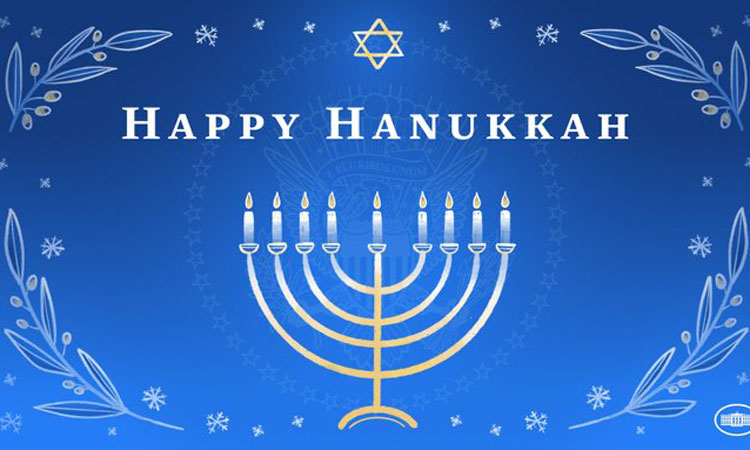
According to Chabad (a Jewish website that helpfully discusses all sorts of Jewish traditions) (see here) “Hanukkah (also spelled Chanukah) is an eight-day Jewish festival of lights that takes place during winter. It is celebrated by lighting a menorah every night, reciting special prayers, and eating fried foods. The word Chanukah means “dedication” in Hebrew, and the festival commemorates the rededication of the Holy Temple over 2,000 years ago by the Maccabees … Chanukah (Hanukkah) 2024 starts at nightfall on December 25, 2024 and ends with nightfall on January 2, 2025, beginning on the Hebrew calendar date of 25 Kislev, and lasting for eight days”.
According to Got Questions (a Christian website that helpfully discusses topics of Christian interest from a Christian perspective) (see here) “Chanukkah (or Hanukkah) is the Jewish Festival/Feast of Dedication, also known as the “Festival of Lights.” It is an eight-day festival beginning on the 25th day of the Jewish month of Kislev, which typically falls in November or December on our calendar. Although this Jewish festival in not mentioned in the Tanakh (the Hebrew Bible), it is referenced in the Talmud: “On the 25th of Kislev are the days of Chanukkah, which are eight… these were appointed a Festival with Hallel [prayers of praise] and thanksgiving” (Shabbat 21b, Babylonian Talmud)”.
I got into a useful discussion earlier today with a Jewish Christian friend and what we talked about included the Jewish celebration of the Feast of Hanukkah, following my blog on the different ways Christians and Jews celebrate seasons of the year such as Christmas. In that blog, I considered Christians who for good reasons celebrated Christmas and those that didn’t, as well as those Christians I called “messianic” that prefer to celebrate the Jewish feasts. I made the point “I was thinking I might have missed a trick concerning Hanukkah, especially as this year it fell on Christmas day. What stopped me when I first wrote my “Christian festivals, Jewish festivals and Christians who don’t care for either” blog (see here) was that it was not one of the feasts mandated for the Jews in the Torah – YET having done a deep dive into the Maccabees and considering the baffling happenings around Israel today can see how it is relevant”.
The Maccabees were a group of Jewish rebel warriors who took control of Judea, which at the time was part of the Seleucid Empire. The main phase of the Maccabean revolt against the ruler at the time, Antiochus Epiphanes IV lasted from 167 to 160 BCE. I discuss the Maccabees and Hanukkah (along with other Jewish feasts) in my book “Priests of the Bible” (see here). More recently, I discussed Daniel’s second and fourth visions (see here) which, while not naming these characters, accurately prophesied some of the events that were to take place nearly 400 years later.
Unlike the Jewish Feasts of Passover, Unleavened Bread, First Fruits, Pentecost, Trumpets, Atonement and Tabernacles, Hanukkah is not mentioned in the Jewish Bible, although mention of the re-dedication of the Temple, which was the time when the feast first began was discussed in the Apocrypha (1 and 2 Maccabees). Some have argued that Jesus may have participated in the celebration of Hanukkah that was about the re-dedication of the Temple under the Maccabees, e.g. “and it was at Jerusalem the feast of the dedication, and it was winter” (John 10:22).
In my book “Priests of the Bible”, I wrote on Jewish feasts. About Hanukkah: “Hanukkah (Chanukah – “dedication”) is the Jewish eight-day, wintertime “festival of lights,” celebrated with a nightly menorah lighting, special prayers and fried foods. It is thus named because it celebrates the rededication of the Temple. In the second century BCE, Israel was ruled by the Seleucids (Syrian-Greeks), who tried to force the Jewish people to accept Greek culture and beliefs rather than of God. Against all odds, a small band of faithful but poorly armed Jews, led by Judah the Maccabee, defeated and drove the Greeks from the land, reclaimed the Temple and rededicated it to the service of God. According to tradition, when they sought to light the Temple’s Menorah (the seven-branched candelabrum), they found only a single cruse of olive oil that had escaped contamination by the Greeks. Miraculously, they lit the menorah and the one-day supply of oil lasted for eight days, until new oil could be prepared under conditions of ritual purity. It has been suggested that Jesus celebrated Hanukkah but there is insufficient evidence to prove this”.
I also discussed the importance of the Golden Lampstand, which alone provided light in the Tabernacle (later the Temple) and was one of six items of furniture. This was made from a single slab of gold and contained seven branches (prongs) comprising clusters of cups, knobs and flowers. The lamp was tended on a daily basis and fuelled by specially prescribed oil. Light is an important theme in both Old and New Testaments and the Feast of Hanukkah was especially significant because it marked the resolve of the people of God to live in God’s light rather than their oppressors’ darkness.
It may be argued that the “miracle” of the oil not running out did not happen (as we do not have sufficient proof). Just as with Christmas, my attitude toward celebrating Hanukkah is mild indifference, given for many it is merely another, mainly secular, holiday and with it an additional religious feel good factor. I do not begrudge anyone celebrating and for those that understand the true spiritual significance, which most do not, I would even welcome it. Might I suggest folk read Daniel 8 and 11 for the back story behind Hanukkah. The Maccabees were true heroes (although like many dynasties that follow, the one they began went off the boil as my book noted). They were heroes, not just because they withstood the Old Testament Antichrist (Antiochus Epiphanes IV), but like the prophet Daniel who had to come to terms with living under foreign oppression, the Maccabees, unlike many of their fellow Jews, who ditched the faith in the hope of an easy life, refused to compromise when it came to matters of faith. I am grateful to Stephen Clayden for making this and related points in his message “Hanukkah: The Triumph of Light Over Darkness” (see here).
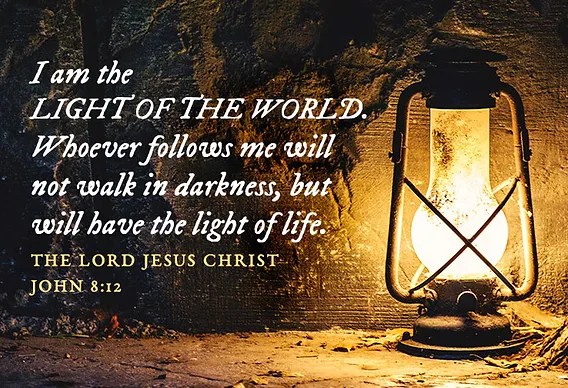
As we enter the final days of the Feast of Hanukkah it is becoming increasingly evident that the pressure on the people of God to compromise with the New Testament Antichrist agenda is being intensified (as I discussed in my blogs and will do so again), and to do so may be at the cost of their lives, if my understanding of Daniel and John (who wrote Revelation) is correct. If there is one reason why I might be interested in joining Hanukkah celebrations it is the thought that by doing so I will be identifying with the Light of the World and rejecting the Prince of Darkness.
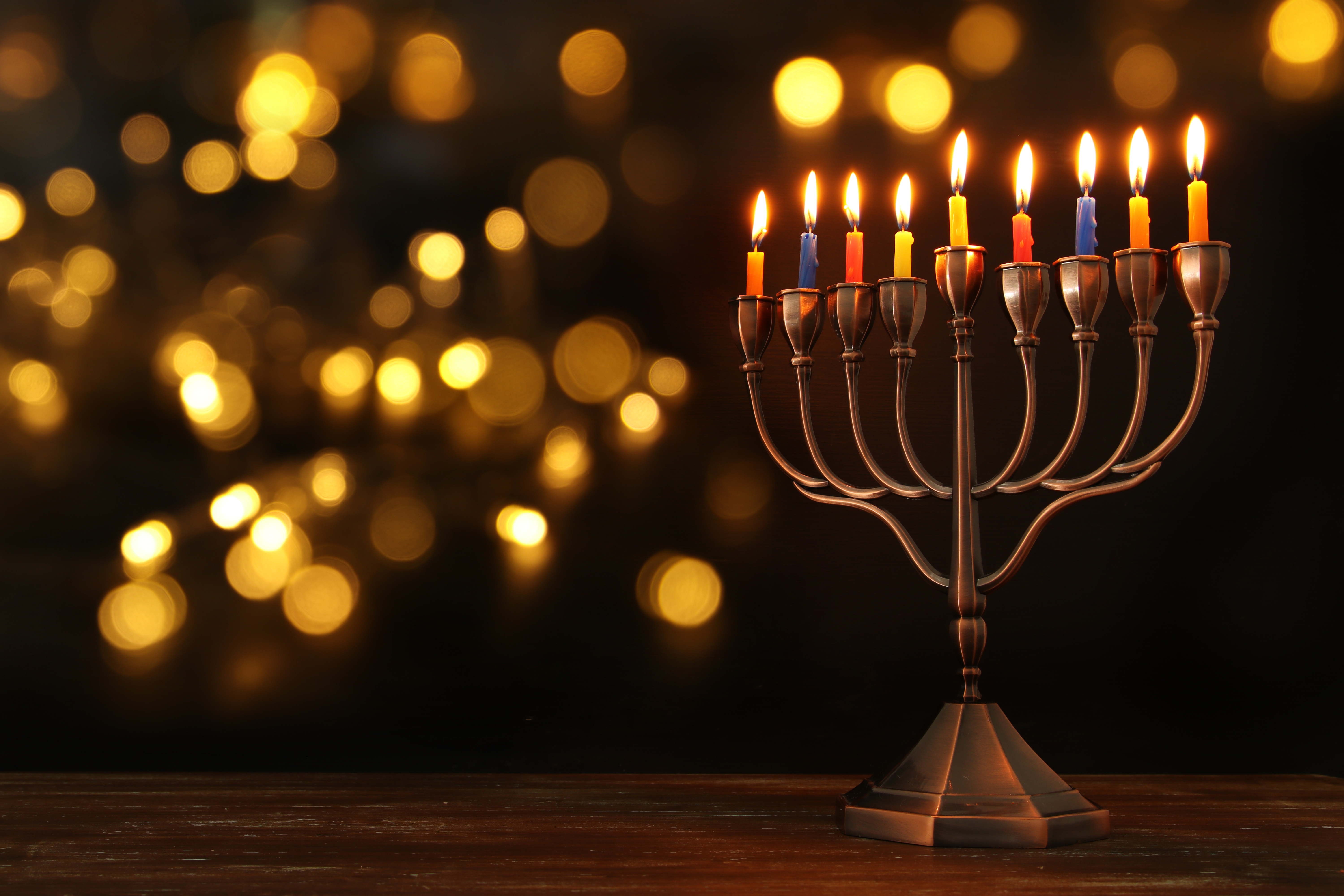
Just as I am ok with wishing folk (Jew as well as Gentile) “Happy Christmas” I am just as ok wishing Jewish folk “Happy Hanukkah”, but always in the back of my mind will be the reason for the season. I would like to end by inviting all who read this to follow Jesus, the true Christ, who rightly claimed He is the true Light of the world.
 JRB Publications