
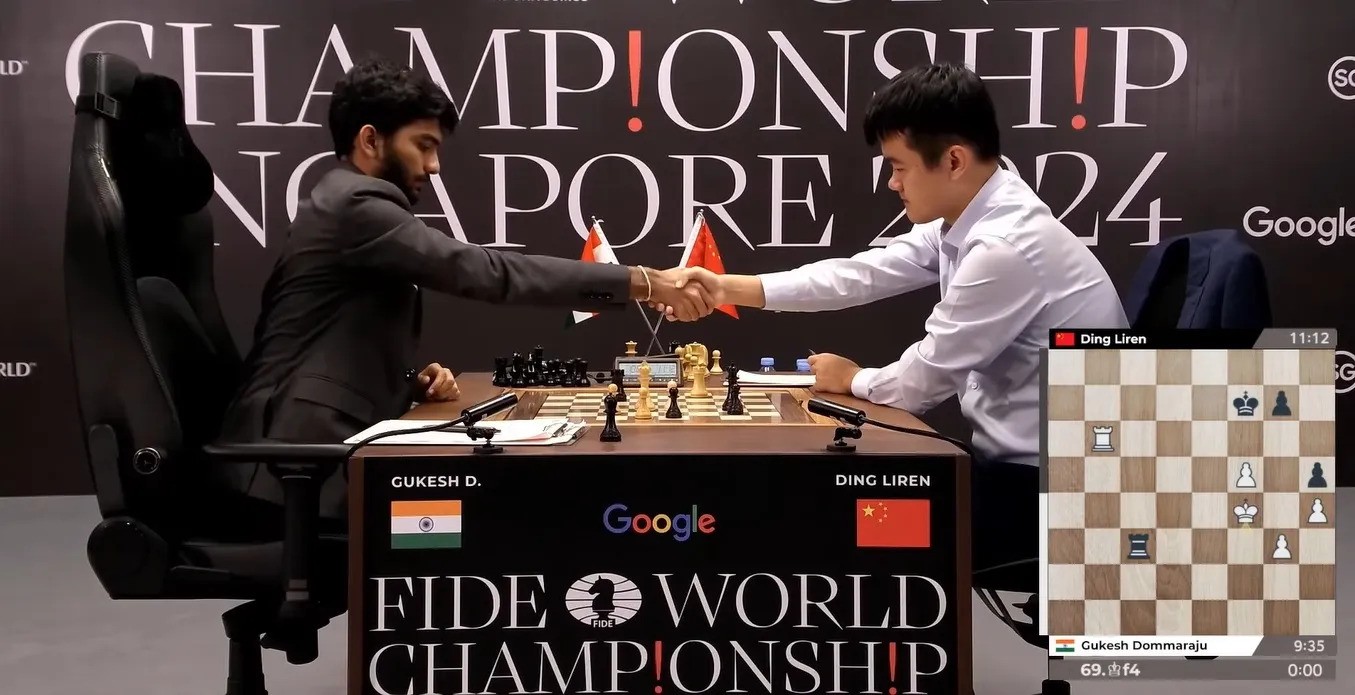
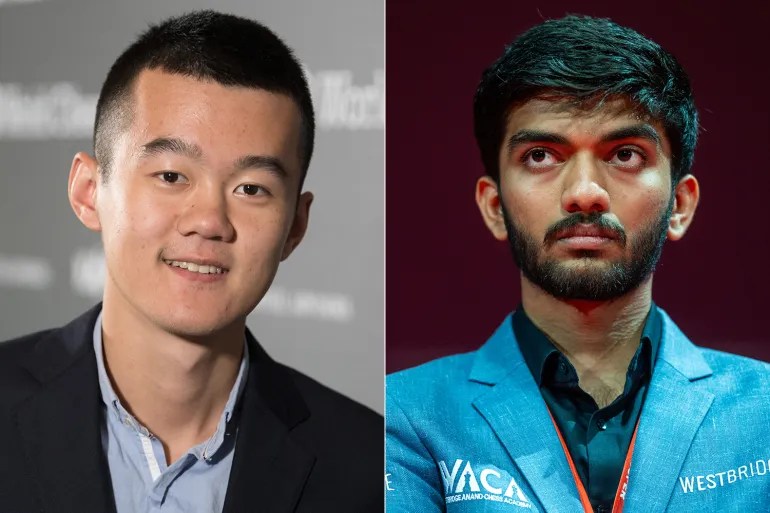
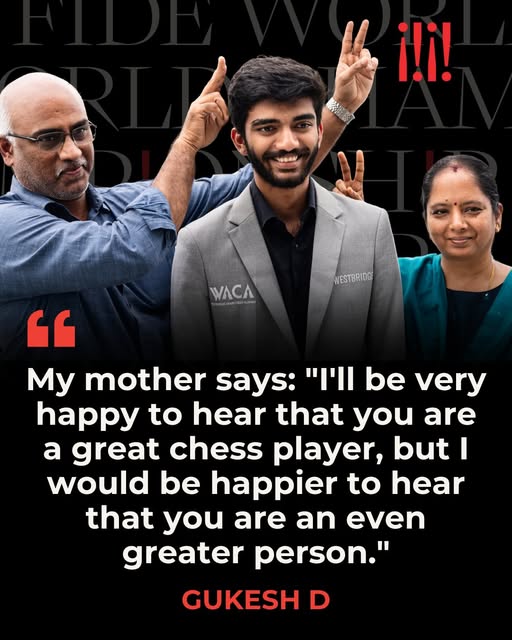
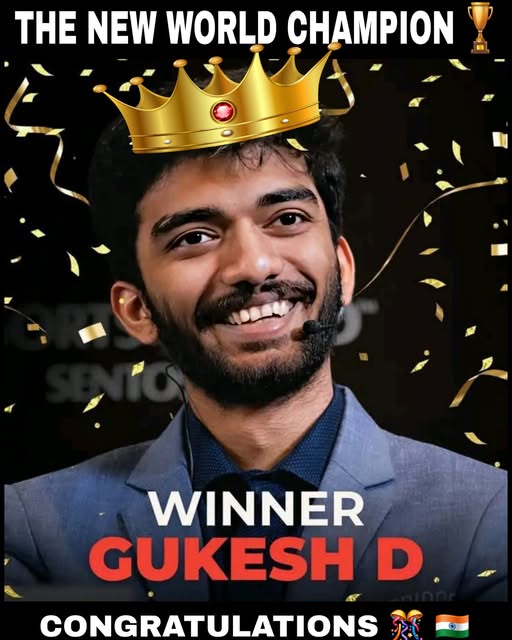
According to Wikipedia: “The World Chess Championship 2024, officially known as the World Chess Championship 2024 presented by Google, was a chess match between the reigning world champion Ding Liren and the challenger Gukesh Dommaraju to determine the World Chess Champion. The match took place between 25 November and 12 December 2024 in Singapore. It was played to a best of 14 games, with tiebreaks if required. The match was won by Gukesh 7½–6½ after 14 games. The win made Gukesh the 18th undisputed World Champion and, at age 18, the youngest of them”, and like many chess fans I have been following it.
Those who follow my forays into the blogosphere may note that besides some of my serious posts on world events etc. I sometimes indulge my interests that include my love for the game of chess ever since as a boy I was taught how to play by two naughty boy neighbours and have been playing it on and off ever since, although these days it is more off than on.

Playing the world championship final is arguably the top event in competitive classical chess (that which allows players two hours to play their first forty moves). It pitched the reigning world champion, Ding Liren from China, against the person who had won the right to challenge him, Gukesh Dommaraju from India, by winning the Candidate’s tournament. A China versus India confrontation was itself a fascinating prospect, especially given that it was not that long ago when neither nation were dominating powers at the top level compared for example with old Soviet Union. But things have changed, e.g. when earlier in the year India convincingly won the World Cup (both the men and women sections) with China not that far behind. The prospect of these two fighting it out over the chess board had long been anticipated with Ding despite recent drop in form and some health issues up against the Gukesh, the eighteen-year-old prodigy along with their contrasting playing styles.

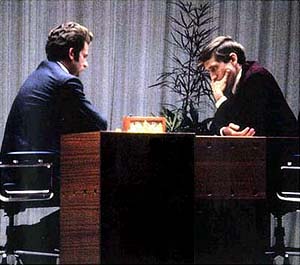
I should add that I have long been intrigued by this pinnacle chess event held every two years. I recall back in the day this being held between Boris Spassky (USSR) and Bobby Fischer (USA) – and it was then seen as an extension of the Cold War with the USSR seen as the global superpower. Looking at past winners, it is an army of legends who are recalled with awe. How things have moved on – not least the amount of commercial sponsorship, live coverage and commentary by experts and with the contestants each having an army of seconds to help them prepare, especially the opening in which an advantage is highly sought after. Then there is the nowadays powerful computer software that can tell us in an instant whether the moves made are good or not, who has the advantage and what are the best moves – all helping to add to the excitement when watching players trying to figure out their next move.
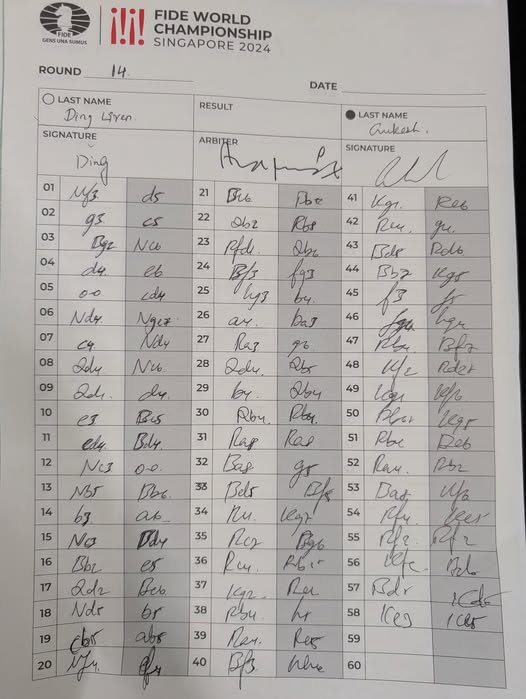
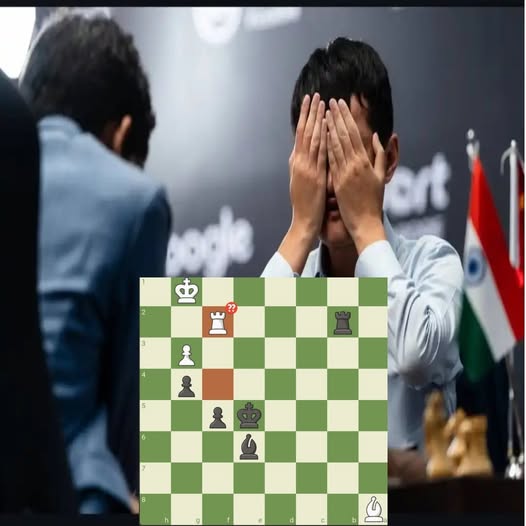
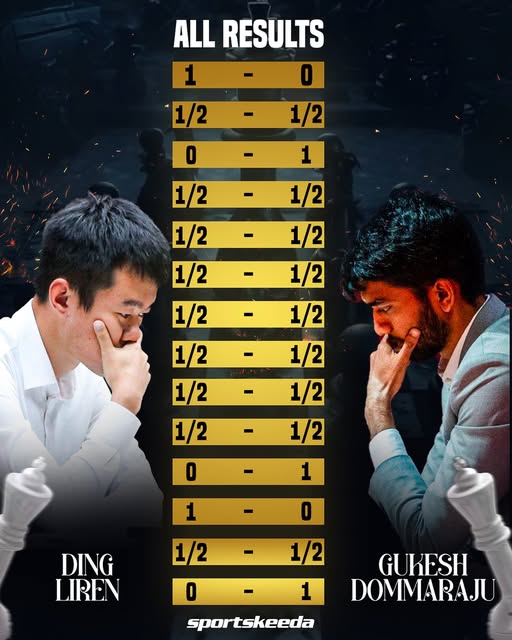
I will spare the details but this years event was a ding dong battle starting with a surprise win by Ding in the first game, with Gukesh bouncing back two games later, followed by a series of draws, some fighting and some less so. Things began to heat up in Game 11 with Gukesh winning, partly due to a Ding blunder, only for Ding to bounce back in Game 12 with arguably the most brilliant game played in the tournament. In the final Game 14 with the match tied it looked as if would end in another draw, with the match heading into tie breaks, until Ding blundered. The rest is history.
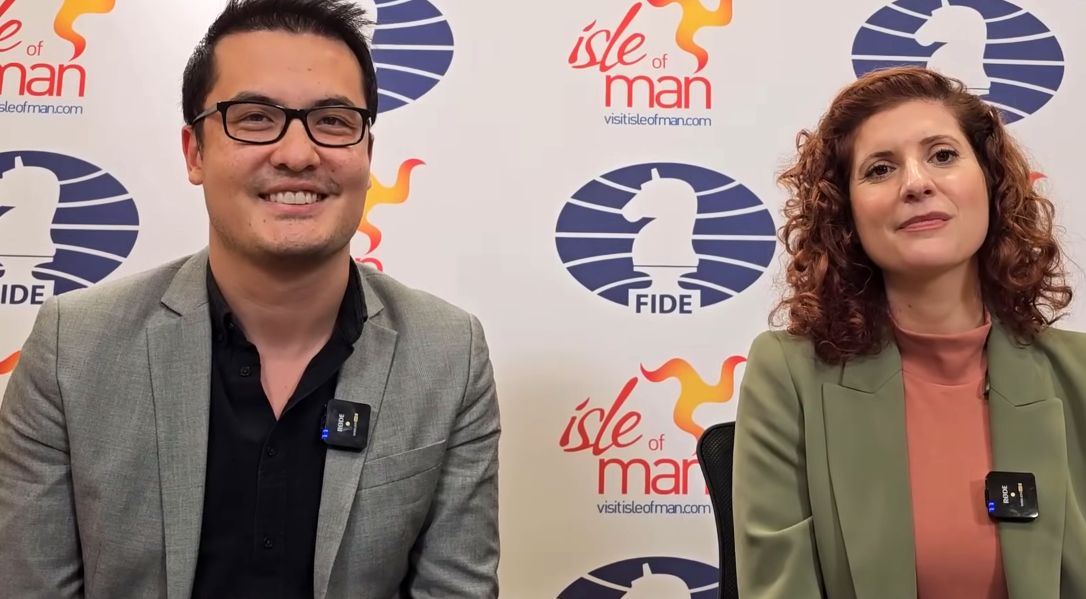
I was glued, often delving into the live commentary with GM David Howell and IM Jovanka Houska followed after by recaps of each game (and here we spoiled for choice). I especially liked those of Levy of Gothamchess fame including the post game analysis with Magnus. I loved the contrasting styles: Ding playing solid and often resourceful chess and often happy with a draw with Gukesh ever pressing for a win. Both played brilliantly and yet showed their human weakness when missing the very best move. I liked the attitude of both players, who were credits to the game and role models for the next generation of aspiring chess players.
 JRB Publications