
In my recent blog, “When Christians stop going to church and some of the reasons why” (see here), I reflected on and lamented the fact that some Christians of the more dedicated and earnest variety often leave churches and stop regularly attending church with a small “c” and yet remain part of Church with a big “C”. While I concluded that doctrinal differences were not necessarily the main reasons, there were a number of doctrinal fall-outs that I have witnessed over the years playing out that were contributory reasons, but on that occasion not sharing my take on doctrine.

What I intend to do in this follow up article is to reflect on these reasons and outline where I stand on these issues (recognising readers may disagree with my take on doctrine) and what to do along with the standard let’s agree to disagree response. As part of my approach, I have in mind the afore-mentioned dedicated and earnest Christians (some I know well and esteem highly) rather that those who I would regard as not truly Christian and who need to be reconciled with God. Maybe I will address this latter group in a future post as they too matter because as with all men our intention should be not so much be to get them back into attending church (although that could be helpful) but rather they come into into Christ’s Church, the object of the Great Commission (Matthew 28:19,20). I have often heard repeated (and have done so myself) the ancient adage “In essentials, unity; in nonessentials, liberty; in all things, charity”, a phrase that has been banded around as a motto that could/should be used by Christians to help when discussing their core theological and ethical beliefs with other Christians. It is a noble aspiration of course but too often it does not happen and as part of my doctrinal survey I want to ask why.
I write based on my firm belief that the Bible should be and is the final authority on what can be deemed as sound doctrine, yet noting despite knowing the Bible a lot better than most and being a regular deep diver into it and having listened to prominent and esteemed Bible teachers expound on doctrinal matters, I can see a lot of difference and scope for the “in nonessentials, liberty” part of the famous quote to play out, begging the “how to reconcile the two” question that is presented in the title of this article. I believe all, even the best of us (including myself), are beholden to certain axioms and prejudices that may be questioned. It is well to recognise this as it is something we often overlook. I am mindful of the importance attached by Jesus to Christian Unity (ref. John 17) and of Paul’s teaching on the subject in Philippians 2. We are also reminded in Revelation 5 that the redeemed of God (I believe is the Church) comprises all sorts and while individual churches tend to attract those who go along with the preoccupations and the culture of those churches, there are still widespread differences in people type and, as with society as a whole, some one will naturally get on with and others not so. As for “hot potatoes”, which Google reminds us are controversial issues or situations which are awkward to deal with, examples of which are seen in the church context I am about to discuss, and how to reconcile church attenders and members who take different views still being truly united as Christians.
Personalities
In my earlier article, I concluded that personality differences are more likely to cause rifts than doctrinal ones and when you have both the outcome can be and often is toxic. I recognise I am not the easiest of people to get along with and therefore need to make allowances for this. I also recognise my primary focus when it comes to church involvement is God and my secondary ones are being made accountable to and learning from others along with blessing others using those gifts and opportunities God has given me, even if that driver is not reciprocated by others. I also recognise there is a power dynamic that is often manifest when two parties oppose one another and when one holds the power e.g. is the minister. The one red line I would draw, besides being deliberately sinned against or sin being tolerated within church life with no recourse being found, is one of the imperative of being true to one’s own conscience. Besides determining what constitutes essential doctrine (and the question is begged – what is and what isn’t essential) is the matter of being able to freely exercise conscience – I believe one must be allowed to differ from one’s brothers and sisters in the church on these non-essential matters and being given freedom to express one’s views while not seeking to undermine those who see things differently, recognising we are people under authority, not just to God but to those who oversee His Church.
Evangelical, Liberal, Catholic
Of the three camps, I am more inclined to the Evangelical one, noting there is considerable variety in all three camps. While I have got to know, respect, esteem etc. many Liberals and Catholics and recognise some/many are my brothers and sisters in Christ, I confess I would disinclined to join a Liberal leaning church for taking away from what is taught in the Bible and not joining a Catholic leaning church for adding to what is taught in the Bible. I also have reservations about certain Evangelical churches, especially those who go down the “woke” path (which I will get to). I would unlikely join any of these in the first place, such that the question of hanging in there ought not arise (but may), yet recognise some who share my concerns are not in such a fortunate position, and it really does come down to seeking God’s will on the matter.
The Charismatic issue
As I intimated in my earlier post, the question of whether the (sign) gifts of the Spirit are for today was the first really contentious issue to affect my church related activities, with the church I was part of being mainly anti-Charismatic, and certain Christians I looked up to pro-, and those who were pro- in the church eventually leaving for pastures new. Today, I sense there is a truce and accommodation between charismatic leaning churches and those that aren’t, with other contentious matters replacing it. I have been both blessed and cursed by what can be labelled as the Charismatic Movement (albeit noting many different varieties). I believe there is a place for the gifts if the Spirit in today’s churches because the Bible does not teach otherwise and surely we should want to bless others. While I accept some of what my Cessationist friends say when it comes to the devil’s deception and charismatic charlatans etc., I oppose their teaching that the gifts are not for today.
The Calvinist issue
Historically, besides the matter of reconciling Christ’s humanity and deity and what one must do or have done to in order to be saved there has been the Calvinist and Arminian debate that began to manifest itself in the days of the history of the church. It hasn’t affected me much, or so I thought, but it was one of the main reasons for three friends recently leaving my Calvinist leaning church. Strangely enough, when I joined it ten years back I hadn’t seen its Calvinist roots as problematic and it wasn’t an issue pushed (other than subtly). Besides which, while I neither identify as a Calvinist nor as an Arminian, I would likely identify more with the former camp. To understand the arguments put forward by experts from both camps (many I respect) would be a monumental exercise and also a distraction from what my priorities ought to be. My belief is that God does choose, elect, predestine who is to be saved but it does also come down to the individual whether he/she accepts God’s gracious gift which has been freely offered to all and with God desiring all men to be saved. All of us will be held personally responsible on the Day of Judgment, including believers, whether or not they are obedient to Him, right up to the very end.
Wokeism
As I pointed out in my previous article, “woke” has meanings ranging from those with very good connotations to very bad. The very good includes interest in “the other” especially if they are poor, dispossessed, disadvantaged etc. The very bad includes an aka Marxist ideology that cares little for God and much for political point scoring toward those seen as enemies to such an ideology and, in the worst cases, when it comes to church, replacing the imperative to preach the gospel that includes that to do with addressing and giving prominence to issues such as sin, judgement and righteousness. My early Christian influencers frowned upon Christians being politically involved and as for activism in the community this was only welcomed if church led and with the intention to share the Gospel. I felt my embarking on a third career as a community activist up to and after I retired was ironic insofar I rubbed shoulders with all sorts including those of different faiths and none in order to promote the common good. This is not something I regret although now looking back I can see the need for wisdom as it can be a distraction from what Christians should do and there is inevitably the pressure temptation to compromise in order to win favour with enemies to the Gospel. The same considerations apply when churches decide on whether to go woke or non woke, for the need is for balance.
Other issues
There are many issues, arguably mostly in the less essential category, that have caused division among Christians and have caused one of the parties leave a church fellowship. While no doubt items can be added to the list of things I have seen firsthand that has contributed to division, these are what I identified in my previous post. I now set out where I stand on such issues:
- Creationism versus evolution
[While I understand the need to respect scientific endeavour, I am inclined to the view man was created as described in Genesis 1 and of the notion of a young earth and chapters 1-11 are key to belief]
- Ecclesiology
[I still hold to many of the beliefs of the early Brethren, including the Priesthood of all beleivers, concerning church government]
- Eschatology
[I am a pre-millennialist and believe there are many yet to be literally fulfilled Bible prophecies]
- Ecumenicalism
[While standing firm on the need for sound doctrine, I am happy to fellowship with any who truly love the Lord regardless of doctrinal differences and denominational affiliation]
- Political involvement
[I am politically neutral when it comes to what political party to support and so should churches be, but there is a need for more Christians to be politically involved for the common good]
- Israel
[Israel (the descendants of Abraham, Isaac and Jacob) has not been replaced by the Church and has a great future but Israel the land currently seems to be led by bad actors]
- Baptism and Communion
[Baptism is for believers and by immersion. I still favour the Brethren approach to participation in the Lord’s Supper e.g. with any male believer taking a lead]
- Styles of worship
[There is a place for both ancient and modern forms but what is needed most is for worship to be undertaken in spirit and in truth]
- Women ministry
[Women have an equal part with men to play in Christian ministry, but shouldn’t be church leaders]
- Covid and vaccines
[Covid and “vaccines” to safeguard against Covid was a scam that was planned and churches were wrong to go along with it]
Persecution
I imagine many/most who read this will be living in the West where arguably there is a good deal of religious freedom. In many countries, dominated by communist and Islamist ideology for example, this is clearly not the case and when Christians gather to worship God etc. they do so in secret or not at all for fear of persecution. A survey of the history of the church in the West will show there have been many times down the ages when Christian’s have suffered persecution. Even today, with the attacks on free speech, we find Christians being punished for proclaiming truth according to the Christian message – and it could well get worse. The prospect of more persecution to be seen throughout the world, including the UK, is very real, and along with it a falling away by those who hitherto identify as Cristian. Our task is to prepare for what may await us and live in the soon expectation of the return to earth of our Lord Jesus Christ.
So where does all this leave us?
I have increasingly come to a view that my job is to love the Church and if at all possible to encourage and support the churches and the people in them by whatever ways and means I can (High, Low and all that is in-between), even those who I happen to disagree with or they with me. We are exhorted to: “not forsaking the assembling of ourselves together, as is the manner of some, but exhorting one another, and so much the more as you see the Day approaching” Hebrews 10:25. The old adage of there being no such thing as a perfect church remains forever true. Leaving a church over some disagreement that isn’t major (although I accept we need to establish what is or isn’t major) should be done only as a last resort, even if it means that our feelings are hurt. Of course, it begs the question how do we decide which church to join in the first place, especially if the choice is limited and unsatisfactory (as it often is). When we get involved in a church, e.g. initially by attending services, whether or not we get on with the people, and regardless what they think of us, we do so to worship God, to give to others through service and to receive from Him. Only when these things aren’t happening should we leave. The sad truth is that it does happen, even among good, well intentioned Christian people.
That being the case – what then? It is worth remembering that the chief end of man is to glorify God and enjoy him forever (according to the Westminster Shorter Catechism). This doesn’t have to happen in a church context of course, but it does help. It doesn’t have to be in a formal church setting and we do well to remember the Church that matters comprises the people of God and we do well to join with the ones or twos for the purpose of Christian Fellowship, Prayer, Bible study and Communion and also to tell others about the good news of the Gospel and all what “love thy neighbour” might entail. Another old adage is of a coal burning brightly in a fire along with other coals but ceasing to burn when taken from the fire. This is true for Christians who stop meeting with other Christians. A day is coming when meeting in churches as most people understand it will not be an option as is already the case in many countries in the world. While having a strong relationship with our Lord is what truly matters, doing so alongside like-minded believers will help and especially as we are here to represent Him on earth. We are called to be a holy people living life for His glory, serving Him and spreading His Word to a lost world. It is best when we can do so together!
Update 08/12/24
It occurred to me that more could be added to my ten points in the section titled “Other issues”. This arose from feedback following my posting along the lines – what about those who stop going to church who are not pillar of the church, doctrinaly sound, devout Christians, which I intend to discuss in the sequel to this article:
I was taken to task that I used “he” rather than “he or she” when referring to people who stop going to church in my particular concern strategy. The reason is simple – having been brought up on texts from the KJV such as God wanting all men to be saved, the KJV translators of the original Greek understood this also included women. I confess to preferring the KJV over other Bible versions but respect those who see things differently and no version is perfect.
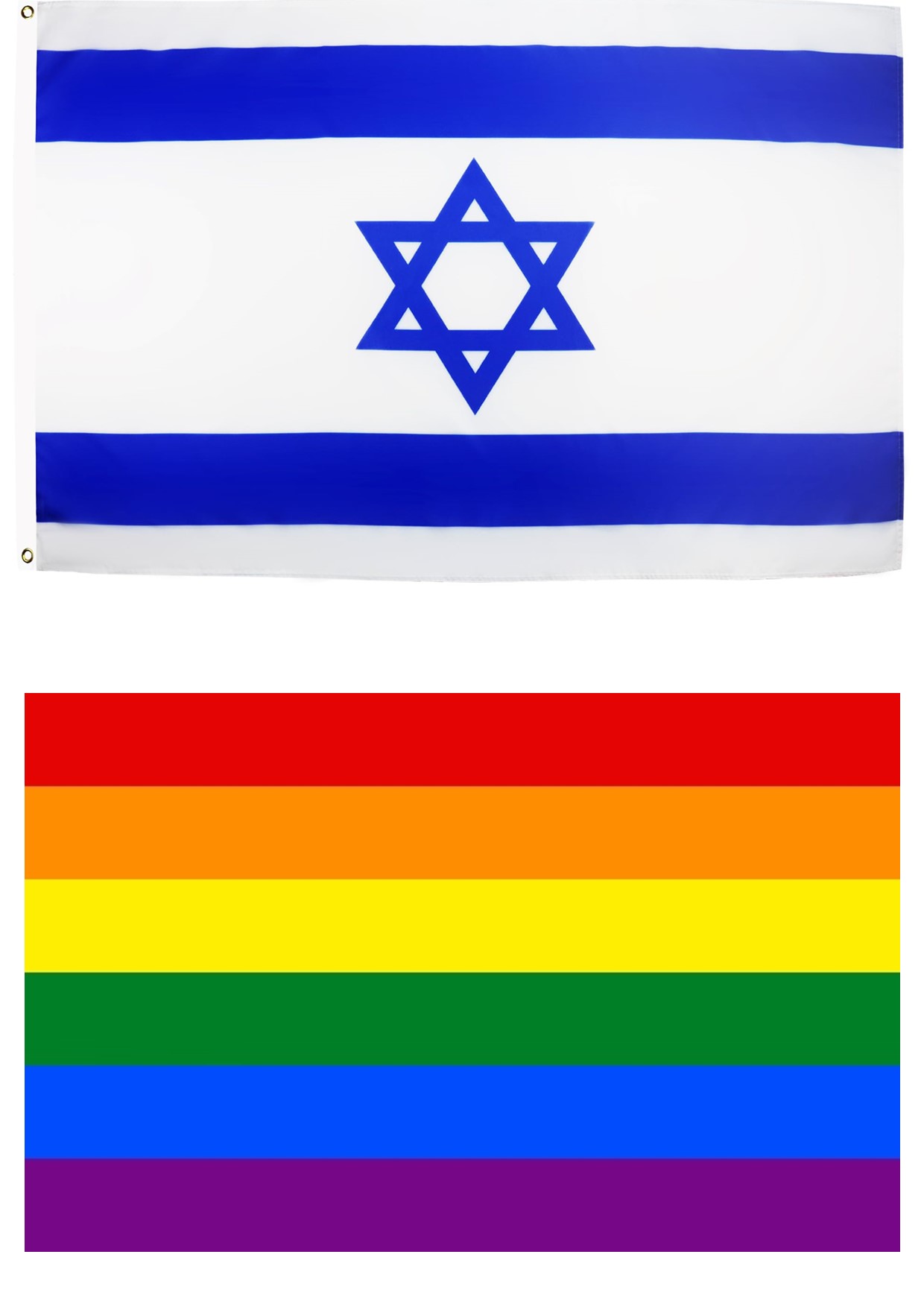
Discussion arose involving someone who was proud of the fact that his church had an LBGT pride flag on display at his church and someone who would be ok if it were an Israel flag – the two being in strong disagreement. What religious or other paraphernalia should be on display in a church building can be a contentious matter. I go back to my PB roots and advocate none (other than Bible texts), but realise on this matter too that others see things differently.
Update 10/12/24
I am grateful to a friend on raising an important point and one I have seen often played out that leads to someone leaving a church.
My friends point: Because we’re human beings, people will from time to time be hurt by the action of another church member. I’m not sure it helps when someone who hasn’t been hurt glibly expects you to forgive. endure the hurt, and carry on in church as if nothing had happened, instead of recognising that there is a hurt which needs to be healed and which if left untreated is likely to drive you away.
My response: Thanks for sharing this thought based on personal experience. It is an experience I share. I suspect in some cases the person who sins against someone else may be unaware and yet it causes a rift that in the worst cases is never healed. I sort of addressed this scenario in my article when I suggested when there is sin in the church that is not dealt with this may be a reason for leaving. I suspect “love covers a multitude of sins” may be too glib but it may be one place to start.
 JRB Publications