
I am a reluctant Baptist for I dislike being associated with any denomination, but for the past ten years I have been a member of a Baptist church that is part of the Grace Baptist set-up (as opposed to the Baptist Union / Baptist Together one, which most Baptist churches in my city belong to) and there are other Baptists too.
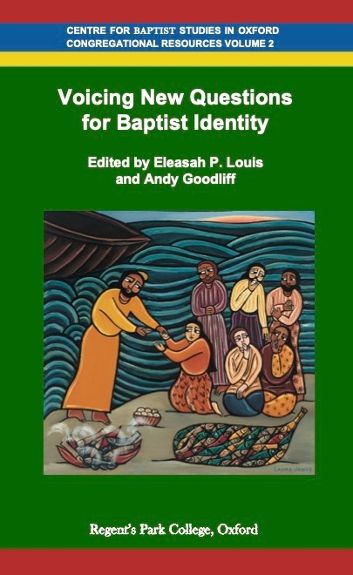
I have just been watching the video titled “Book Launch ‘Voicing New Questions for Baptist Identity’” (see here) following a Google search about the book that gave a response which begun “The new questions it raises are to explore these topics from the perspective of race, gender, culture, disability, sexuality, and nationality. This book is offered as a modest contribution to the ongoing, joyful and challenging, task that is seeking a Baptist identity that is faithful to our call to be a gospel people”. Prior to that a friend presented me with the book and I have begun to read it.
Given what I am about to say is probably going to upset some, I thought I would begin with a glossary in the interests of damage limitation and trying to reduce peoples’ misunderstanding and irritation – all as a result of doing a Google search:
Baptist: Baptists are a branch of Christianity distinguished by baptizing only professing Christian believers (believer’s baptism) and doing so by complete immersion. Wikipedia cites one scholar that traces the movement, of which there are several examples to the Separatists of the seventeenth century, the Anabaptists of the sixteenth century or even a strand within Christianity that goes back to the time of Christ (I find few Baptists know their history – sadly).
BME: Abbreviation for Black, Minority and Ethnic
LGBT: Abbreviation for Lesbian, Gay, Bisexual, and Transgender
Marriage: the legally or formally recognized union of two people as partners in a personal relationship (historically and in some jurisdictions specifically between a man and a woman).
Racism: prejudice, discrimination, or antagonism by an individual, community, or institution against a person or people on the basis of their membership of a particular racial or ethnic group, typically one that is a minority or marginalized.
Woke: originally meaning alertness to racial prejudice and discrimination. Beginning in the 2010s, it came to be used as slang for a broader awareness of social inequalities such as racial injustice, sexism, and denial of LGBT rights.
I had a number of reasons for taking an interest in this Book that covers several hot topics by different authors in the Baptist Together family, and while at times heavy going because of its academic leaning is well researched and provides credible arguments that I braced myself at the start I could quite likely disagree with. One chapter, titled “Can we Talk? A Reflection on Baptists Together and Equal Marriage”, was written by a minister friend in my city and I was part of a focus group she interviewed to gather some of the wide ranging views among Baptists. As for the other subjects covered, as a community activist that had given these some thought including how the church is to respond, I wanted to check out the perspective of those who I suspected I would disagree since I reckoned many in that group had gone overboard to address the “woke agenda” a lot of which have some credence but neglecting, as I see it, the gospel focus of our Baptist forefathers starting with calling sinners to repent to avoid judgment and gain eternal life.
While I had previously read my friends “Equal Marriage” chapter and had a robust but friendly exchange of views, I decided to begin at the beginning with the subject discussed being the Baptist church meeting and what I have come to learn (given the number of nice Christians I have managed to upset when sharing my views): that of racism. The first two sentences completely aligned with my memories of being a member of a Baptist Union church (including serving as a deacon) back in the late 1970’s: “The Baptist Church meeting is a key component of Baptist church life as it provides a distinctive theological pattern for discernment: slow wisdom. Participating in discerning the mind of Christ is challenging however for those who are different to the majority of church members”. I had rather hoped some of my concerns where at least ideally my previous church could have done and my current one could do better would be discussed but given the title was Racism and the Church Meeting it was not to be – sadly!
Further to my disappointment that the author of the article in focusing on her perceived black versus white divide, let me make a few observations to back up my point that there are ways the church meeting can be improved other than addressing perceived racism. I don’t recall any church member in my first church being of BME origin, so the issue of racism wouldn’t have applied. I also noted that it was the one meeting those who would otherwise only attend the Sunday morning service would attend and some of the folk who would attend these other meetings did not attend the Church meeting. Also, having been at a church prior to this that did not hold church meetings (partly because it was of a tradition that saw democracy within a church context as a form of worldliness that needed to be resisted), it was rather an eye opener to sit in on discussions to do with the church, such as finance, fabric and mission, reports from those who led the various activities in the church outside of the Sunday services and when it comes to accepting new members and appointing officers.
I should also mention the period after my having left the city of my birth, growing up and early career and after having moved away for work reasons and returning to my birth city (which is where I now live). At the start, I looked for a church to join and two of the churches I checked out were Baptist Union ones. I didn’t stay around long enough to either to become a member and thus qualify to attend church meetings. The reasons that partly led to me looking elsewhere to join are relevant to this discussion. I found my first Baptist church were in the throes of a split, nominally over the charismatic issue. In looking back, I wonder if a church meeting along non traditional lines might have been a way toward restoring a desirable unity or better still a less formal and small group one focused on airing issues. In the second church, it was dominated by some strong personalities who uncharitably speaking regarded the church as their personal fiefdom. Some shared with me that these also dominated the church meetings and, rather than create a fire let known add fuel to one, either shut up or opted out of attending. Methinks these should be the more pressing issues to be addressed (and still are given the number of disaffected ex Baptist Union Baptist members I keep coming across) when we consider church meetings rather than going down the false racism trail which is precisely what the devil with his divide and rule strategy wants.
As for my present Baptist church, the sort of subjects for discussion are surprisingly similar to that first experience even though the character of the church feels quite different. I confess, I attend the Church meeting as much out of obligation and there are other meetings held at the church e.g. for prayer that I would prefer to attend. The big difference to my old church is that half of the members are of BME origin (in a city according to census results having only an 18% BME population) and the pastor is a Black African. An amusing observation is that many of our BME folk are more traditional British in their mindset than many white Anglo-Saxon folk I regularly come across and as far as I can make out racism has not been an issue in the time I have been at the church. My biggest gripe is that issues I care about are not covered at the church meeting as much in order not to rock the boat and avoid upset. I would love to discuss the way we advertise (or rather don’t) the Communion (Grace Baptists are of the tradition where closed communion was the norm). Sadly, we lost some folk (all of the more earnest variety) over the church’s Calvinist leanings and this could have been a subject to discuss and maybe even resolve. Also, while I think of it, in two cases those who left were not members and still today some of those who keenly participate in church life choose not to become members either and cannot partake in church meetings.
As for me, my biggest upset, was with the church response (wrong in my view) to the Covid lockdown measures we were expected to adopt and these were and they were not discussed at the time, even though subjects of far less importance where I could happily go with the flow would have been. When it came to how the church was to respond to the measures the government mandated or suggested measures to combat the “Covid crisis”, the leadership supported by long standing members (those more likely to dominate church meetings) mainly went along with what took place with those, like me, who objected withdrawing from attending live meetings whilst restrictions were in place. Rather than ask “why” in response to Boris’ jump directives, they seemed to have asked “how high”. One interesting facet, also relevant to this discussion on “the chapter”, was that the black deacon who was tasked with undertaking some of the implementation of restrictions (and doing so well) comes near the very top of my all time favourite “Christian gentleman” list.
One of the statements I strongly disagreed with (p11) was “the organisational structures within the world’s major churches are intrinsically bound with Whiteness”. Not just that but it is yet another example of the bad side of wokeism in Baptist Together churches and playing into the hands of the evil people who want to enslave us, ignore the concerns of those who see the country going down a dangerous path and to do away with God altogether, as evidenced in the aftermath of the Southport stabbings and protests and counter protests where the British Prime Minister identified the main threat to the peace and stability of the country to be far right racist, extremists, who he has avowed to go after and make way in prisons by letting some inmates out early. We are already seeing an old dear sent to prison for 20 months for foolishly posting racist comments on her Facebook page and our two-tier police system ignoring worst crimes. Accusations of racism that isn’t is a recurring theme e.g. during the race riots following the killing of George Floyd during and despite Covid lockdown and the so called good and the great taking the knee on Black Lives Matter organizers say so.
Before people take umbrage and react untowardly after reading the previous paragraph, let me make it clear that breaking just laws (as occurred when there were attacks on a local mosque following the Southport stabbings) need to proportionately punished. Also, in the words of a black Baptist minister, Martin Luther King, his words need to resonate: “I have a dream that my four little children will one day live in a nation where they will not be judged by the color of their skin but by the content of their character”. What also needs to be recognised is that there are many good people who see how the country is going and are alarmed, and not just as a result of unchecked immigration, and feeling being silenced want change and some are making their concerns known, e.g. through typically misreported peaceful protest. To accuse them of racism is wrong.
As for me, a good part of my community activism from 2000 onwards has been working with and helping to empower BME folk in many and various ways, including those who were asylum seekers. While, looking back over the years, I can see regrettable instances of racism in my attitudes, I believe that is no longer the case. For me race is now a non-issue and is for the great majority of white folk that belong to Baptist congregations. The challenge for all of us is to recognise all have their dignity and perspective whatever their race or whatever happens to be and in a church context it is a matter of discerning the mind of the Lord and accepting differences in that which is non essential. But I have seen cases of racism e.g. toward the Roma community (and have called it out), but not as much as some would want us to think (although I recognise others have seen worse and it wasn’t long ago when things were worse). Ironically, one recent example of racism was by South Asians toward African folk. Not just racism but any attitude that is not about loving our neighbour (whoever he/she is) needs to be repented of.
Even so, I recognise the author of this chapter has made valid points that BME folk coming in to a white majority church with a long established culture may feel disempowered etc. due to their own cultural baggage, theological perspectives, use of language, views on finance etc. and it was right to alert Baptist churches that they do well to take this into consideration regarding how they conduct their church meetings. I suspect too that the situations that helped to inform her views were largely London based where I suspect the power dynamics would be different. Yet these are similar issues to those that affected me and my wife when we left our Open Brethren church and joined our Grace Baptist one. We recognised then, and still do, that we needed to adapt (a principle that could apply more widely) and recognise it is as it is and people see things differently.
Fortunately for us, the three things that matter most in my book were practiced by my set in their ways Baptist friends: godliness, faithfulness and kindness and this needs (as well as something that often appears to be missing in today’s Baptist Together churches – doctrinal soundness when it matters) to be applied to all of church life, not just church meetings. We do well to take note and to put into practice the exhortation of Paul: “Let nothing be done through strife or vainglory, but in humility let each esteem others better than themselves” Philippians 2:3.
 JRB Publications
Hi John. The huge problem we have is mankind thinks they know better than God. That’s way we have all these various tensions in he World today also there are those who are just evil. I myself might of been a bit racist but not to the point of killing them just because they had a darker colour skin. Then God saved me out of my cloud of my own darkness. Then a whole lot of knowledge filled my understanding of live. What is this whole thing all about. What am I, why life what is that to me, death why that. All come sharply into focus. God has a wonderful plan for His Creation but man messed it up, or did he yes he did, but God had that covered as well. History, is actually His story. I myself now know there is only one race because we all come from the first Adam. Then the second Adam came into this World and saved them that will trust in the second Adam which as we know is Gods only begotten Son Jesus Christ. So until all come to the place of repentance and get saved we will have this tension. They say I do not like you so then I must kill you, sin in man cause this huge gulf of indifference. Do I have an answer to the problems we have today no I do not I’m not God or even a little god, as some say they are. There is much that gives me much concern the only thing I can do is take it to the Lord and leave it in His hands. Because I think that it gives me a sad heart it must be of even greater concern to God. I think, not I understand God because His ways are way above my small brain of understandings.