
The following is the draft of the latest chapter written that will be included in my forthcoming book “Priests of the Bible“.
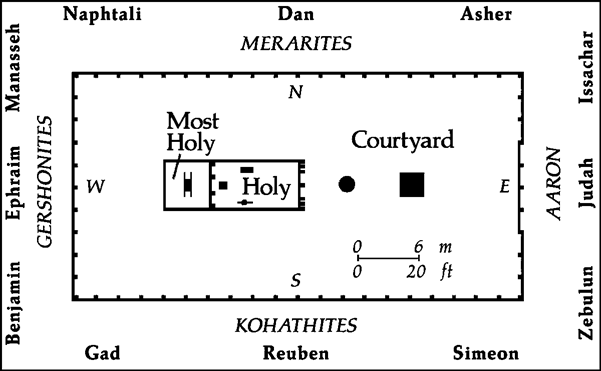
Figure 12 – The Tabernacle and its surroundings

Figure 10 – The Tabernacle
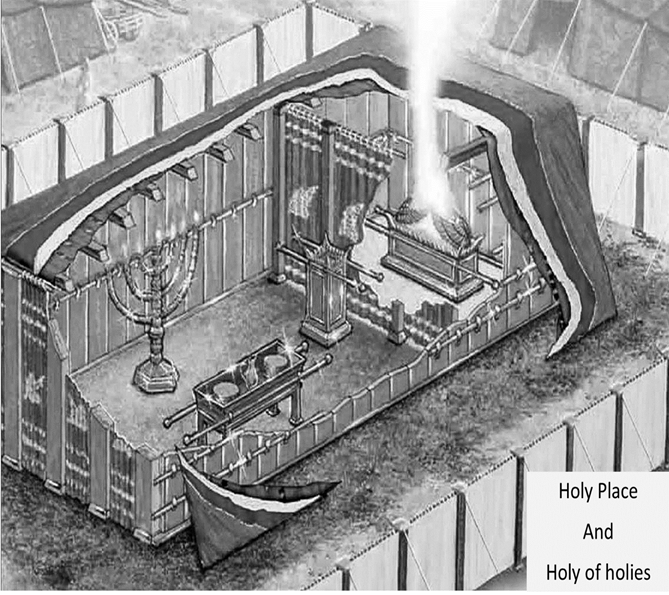
Figure 11 – the Holy Place and Holy of Holies
Chapter 5: The Tabernacle – an introduction
“And the Lord spake unto Moses, saying, Speak unto the children of Israel, that they bring me an offering: of every man that giveth it willingly with his heart ye shall take my offering … And let them make me a sanctuary; that I may dwell among them. According to all that I shew thee, after the pattern of the tabernacle, and the pattern of all the instruments thereof, even so shall ye make it” Exodus 25:1-2,8-9.
Before we turn to one of the most important aspects of “Priests of the Bible”, in terms of what was expected of priests and the central place where they carried out many of their duties, readers are invited to check out the pictorial illustrations of what we are about to describe in words concerning the Tabernacle – Chapter 2, Figures 10, 11 and 12, which, while artistic representations, nevertheless accurately portrays what actually took place. We can say: since God gave Moses precise instructions concerning the Tabernacle’s contruction, down to the last tent post/peg and curtain ring, which instructions were carried out to the letter so that, besides setting out what God required of Moses and the Israelites, these all reflect profound spiritual truths, from which many lessons can be drawn.
In our previous chapter, we find Moses and the Children of Israel, encamped around Mount Sinai, where they would remain for a little over a year, from whenceforth they would move on (taking with them components needed to put up the Tabernacle (Tent) and what was inside it). They would remain wandering in the Wildreness for the next thirty eight years, before taking possession of the Promised Land under Joshua. In that time, they would have taken down and put up the Tabernacle on several occasions. It was eminently designed for such an undertaking, helped by the three Levite putter upper, taker downer clans, all with their well defined duties, who were needed to carry out such operations.
Before we get to the commissioning of the Aaronic Priesthood in Exodus 28-29, to be discussed in later chapters of this book, who were to carry out the various duties that were to take place inside the Tabernacle, we find before then God instructing Moses concerning that which was Tabernacle related, starting in Exodus 25. But it was at Mount Sinai that God began to give Moses the Law and to set out the Covenant. Instructions concerning what God told Moses about building Tabernacle can be found in Exodus 25-27 and 30-31, and then later on, following the Golden Calf incident, we read in Exodus 35-40 concerning the construction and the making ready and commissioning of the Tabernacle.
When it came to making it ready for use at the end of the Book of Exodus and before God called Moses from inside the Tabernacle in the Book of Leviticus, we read: “Then a cloud covered the tent of the congregation, and the glory of the Lord filled the tabernacle. And Moses was not able to enter into the tent of the congregation, because the cloud abode thereon, and the glory of the Lord filled the tabernacle. And when the cloud was taken up from over the tabernacle, the children of Israel went onward in all their journeys: But if the cloud were not taken up, then they journeyed not till the day that it was taken up. For the cloud of the Lord was upon the tabernacle by day, and fire was on it by night, in the sight of all the house of Israel, throughout all their journeys.” Exodus 40: 34-38.
Before we get going, this author would like to make the point that he has had as long a love affair with the Tabernacle, as he has had with the Song of Solomon, going back to the time, when as a young believer, an itenerant Bible teacher came to his assembly with a scaled down model of the Tabernacle (long before the Internet) and spent a number of nightly sessions talking about the significance of much that was Tabernacle related, down to every tent post/peg and curtain hook/ring, using the opportunity to bring out important spiritual lessons that might well apply to our present situation.
Not just in the Old Testament, but the New Testament too, there are many instances when the Tabernacle is alluded to. Besides which, there are teachings of a heavenly temple (tabernacle), the church being the temple (tabernacle) where God dwells and of Jesus tabernacling among men. He was to find while researching this book that those Christians that gave particular attention to such details were much in a minority, with the majority appearing to view the Tabernacle in very much broad brush terms and skipping over and failing to see the significance of the numerous fine details.
While readers will need to go elsewhere for many of the fine details, the intention in this chapter and the one that follows (that is to do with the furniture inside the Tabernacle) is that we address some of these aspects whilst providing a balance between over and under spiritualisation. What these chapters will not do, if for no other reason than that the task is too big, is to explore every nook and cranny of the Tabernacle, despite being described in the Bible narrative. As for going “elsewhere” to find out more, there are many, typically old, books that go into the details of the Tabernacle, sometimes going further than would the author in seeking out spiritual relevance and application. One book the author often refers to is “The Tabernacle – Shadows of the Messiah by David Levy”. As for helpful resources from the Internet, the series on the Tabernacle found on the 119ministries (www.119ministries.com) is one he recently stumbled upon that makes many important points, but there are several others.
Before we consider Exodus 25 when God tells Moses to build a Tabernacle exactly as instructed so God can dwell among the Israelites for the first time in their history and do so permanently, we should reflect on the previous chapter when He tells Moses to climb the mountain along with Aaron, Nadab and Abihu (Aaron’s two eldest sons, who later God punishes with death), and seventy of the elders of Israel such that they would worship God, but only from a distance. We find the people enthusiastic to do all what God commanded and obey the Covenant, after which Moses built an altar and made a burnt offering and a peace offering to the Lord (the significance of which is explained in Chapter 9).
As Moses and his band climbed the mountain they saw something of the glory of God and were able to enjoy a fellowship meal, as it were, with God. But only Moses, initially accompanied by Joshua, could climb higher and there they saw more of the glory of God. There Moses patiently waited for God to reveal Himself and did so for seven days. It would have been an awesome sight when people could view from a distance the presence of God’s glory and as God called Moses from a cloud, into which he entered. We read that Moses was on the mountain forty days, most of that time alone, and the first thing God told him was concerning the Tabernacle, thus indicating how important this was to God.
We see from the outset what God intended concerning His relationship with the people with which He had made a covenant, which while they were soon to break it, as we see just prior to Moses ascending the mountain they were eager to keep. God told Moses exactly what was needed and invited the people to make offerings, whether precious metals or animal skins or a plethora of other necessary items, which were in their possession following their exodus from Egypt. This they willingly and freely gave – more than what was needed, and different people who were so gifted played their part in the construction work of the Tabernacle itself and what was placed inside it. Besides materials found in the Wilderness, such as shittim wood, there was what had been offered by the people for carrying out the work, most of which were put to good use in making something beautiful.
The wonder of the Tabernacle was that it was where God dwelt and, when we consider the Tabernacle in the Wilderness, it was erected right in the centre of where upwards of two million Israelites were encamped around it. The glory of the Lord could be physically sensed and there was a cloud hovering over it, which represented God’s presence and when that cloud moved so did the Israelites. With reference to Figure 12, the Tabernacle was surrounded by an inner circle of the Levi clans of Merar, Gershon, and Kohath and finally Aaron and Moses encamped on the North, West, South and East sides respectively. Then there was an outer circle of the remaining tribes: Naphtali, Dan, Asher (North); Benjamin, Ephraim, Manasseh (West); Gad, Reuben, Simeon (South); Zebulun, Judah, Isaachar (East).
We see right away this careful ordering with respect to families was deliberate and typical of every feature of the precise Tabernacle construction that included the pillars/posts that were on the outside of the Tabernacle and the boards around the Holy Place and Holy of Holies and, in all these cases, the curtains around the pillars and boards, along with the sockets and how these were held together and, in the case of the Holy Place and Holy of Holies, the several layers of different animal skins that formed the roof, and especially the curtain (the Veil) separating the Holy Place from the Holy of Holies (the same curtain that was torn in two from top to bottom in the Temple when Jesus died on the cross).
Precise instructions were given on the curtain design that included blue, scarlet and purple yarn interwoven along with cheribims, along with the intricate needle work (complementing incidentally the design of the Priest’s garments). Much could be made of the significance of blue (the heavenly colour), scarlet (symbolic of blood) and purple (the royal colour) and the cherubim who were part of the angelic protection. The same could be said on how poles and planks were ordered, how curtains were arranged and down to tent pegs and curtain rings – all resulting in a unified whole – suggesting that as well as glory and beauty there was order and unity – all important aspects of God’s design.
Because the Tabernacle represented God’s holiness, no-one who was in a state of undealt with sin (unless making a guilt offering/sacrifice) or in a state of uncleanness or ritual impurity, as set out in Leviticus, could enter the Tabernacle. If they did enter, it was though the curtain on the East side (the only way in and the only way out) but only priests could enter the Holy Place and only the High Priest, once a year, could enter the Holy of Holies. While what was inside was a holy marvel, none but the priests could see it. In Chapter 6, we consider the six items of furniture: the Brazen Altar and the Brazen Laver in the Outer Court; the Golden Lampstand, the Table of Showbread and the Altar of Incense in the Holy Place and the Ark of the Covenant (along with the Mercy Seat) in the Holy of Holies.
One can see a progression as priests (on behalf of the people drew near to God) and all that had to do so in a prescibed way. Before priests could enter the Holy Place, they needed to be justifed by offering sacrifices at the Brazen Altar and sanctified by washing at the Brazen Laver. While what could be seen in the Outer Court was bronze, when we get to the Holy Place it is gold. While priest’s daily duties involved the Golden Lampstand, the Table of Showbread and the Altar of Incense in the Holy Place (all of which, as we will see, was deeply spiritually significant), that was as close as they could get to God whose dwelling was in the Holy of Holies, except on that one occasion that involved the High Priest. As for the rest, providing they were qualified to do so, they could enter the Outer Court and no further.
Much more can be said on the Tabernacle, and what took place inside, led by the priests (which we will consider in later chapters) but for now, besides encouraging readers to check out for themselves this subject, we end with some reasons why studying the Tabernacle and its ministries are important.
- It is needed for a fuller understanding of God’s redemptive program – something that is progressively revealed starting in Genesis and going right through to Revelation.
- It informs sinful people (you and me) about the holiness of God and the fear of God.
- It points to Christ and all-sufficient His work, God’s answer to man’s sin problem.
- It shows us how can a holy God exercise His grace and mercy to a sinful people.
- It shows us how a sinful people can acceptably approach and worship this holy God.
- It helps us to better understand the Aaronic Priesthood and Christ’s priestly ministry.
- An understanding of how priests operated in and around the Tabernacle can throw further light on what ought to be expected of Christians when they exercise their priestly role.
- The sacrificial system, one of the main activities inside the Tabernacle, brings home to us the importance of blood sacrifice and of its necessity when it comes to atoning for sin.
- A greater knowledge of those sacrifices helps us to better understand how God views sin and what pleases God when it comes to showing gratitude and expressing worship.
- A better understanding of the Tabernacle helps us toward a better undestanding of the New Testament and especially the Book of Hebrews.
 JRB Publications