
In this latest chapter in my Priests of the Bible project, I reflect on what the Bible has to teach us concerning sacrifices and offerings.
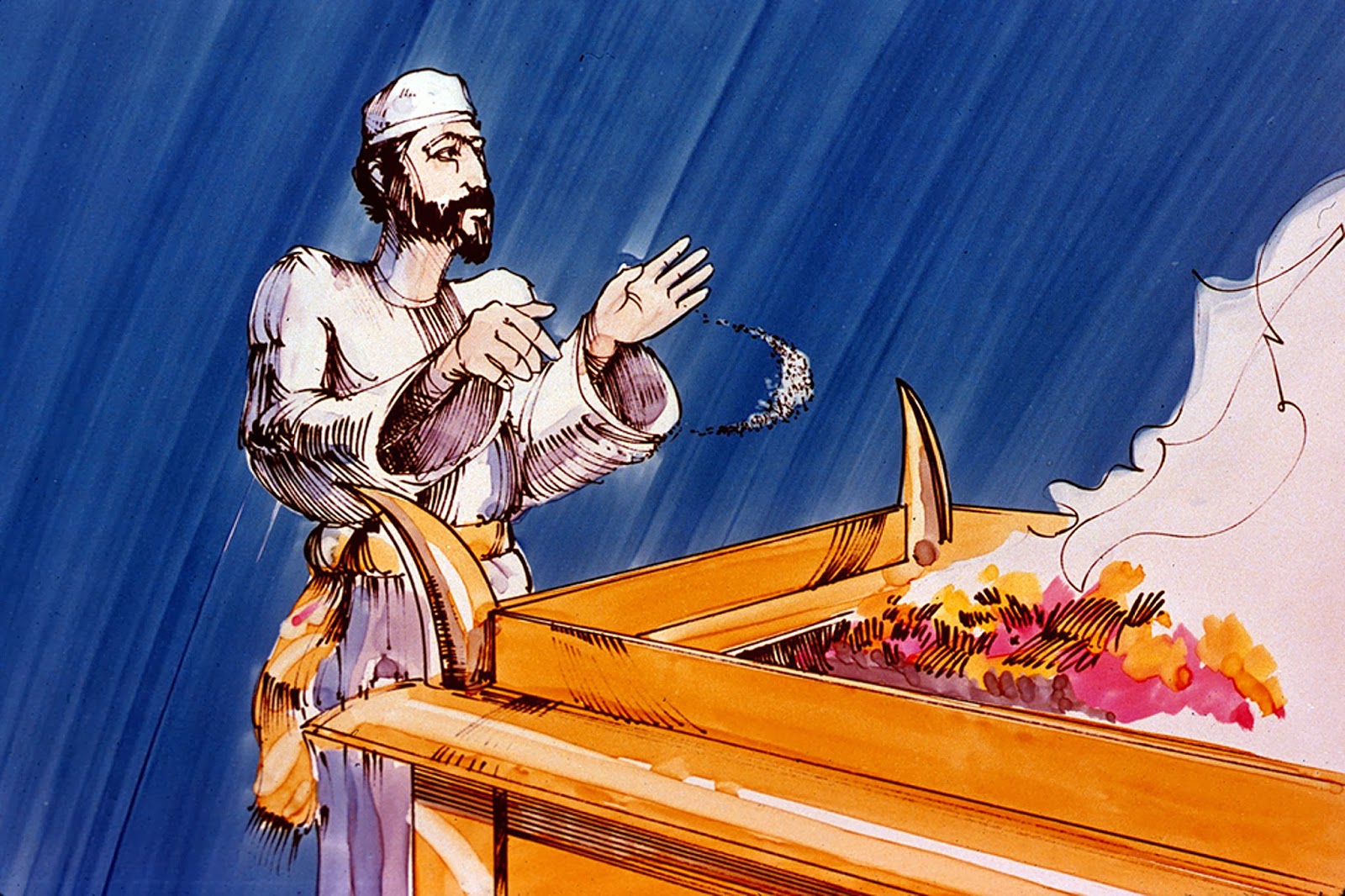
Chapter 9: Sacrifices and Offerings to YHWH
There can be little argument that as far as the Old Testament is concerned, sacrifices to YHWH were a big deal and were mandated, according to a prescribed criterion, typically when there had been sin, as well as those that were free will offerings. Following the setting up of the Aaronic priesthood and while there was a Tabernacle or Temple, offering sacrifices on behalf of the people was one of the principal activities of the priests, and while we read of exceptions, for example Manoah, Samson’s father, offered a burnt offering to the Lord (Judges 13), it was something only priests did.
Sacrifices and offerings, terms that appeared to be used synonymously were typically animals. Five types were identified: bulls, goats, lambs, turtle doves and pigeons, and in some cases those making the offering could choose which animal they offered, according to their means, and it could involve agricultural produce in the case of certain offerings. We read, for example, how Mary and Joseph, following the birth of Jesus, offered two turtledoves at the Temple in Jerusalem, in Luke 2:21-24.
When we come to later in the New Testament, such sacrifices were no longer required. This is because Jesus is the ultimate sacrifice as discussed in “Chapter 19: Jesus our Great High Priest” and “Chapter 55: Hebrews – the New Testament book about priests”. As for followers of Jesus, they were expected to offer themselves up as living sacrifices (Romans 12:1) to God, to offer sacrifices of praise (Hebrews 13:15) and as a holy priesthood they were to offer spiritual sacrifices (1 Peter 2:5).
| Sacrifice/Offering | Significance | References |
| Burnt | Gratitude – Surrender | Leviticus: 1; 6:8-13, |
| Meat (Meal, Grain)* | Gratitude – Service | Leviticus: 2; 6:14-23 |
| Peace (Fellowship, Thanksgiving)* | Gratitude – Serenity | Leviticus: 3; 7:11-21 |
| Sin | Guilt – Substitute | Leviticus: 4:1-5:13; 6:24-30 |
| Trespass (Guilt, Reparation)* | Guilt – Satisfaction | Leviticus: 5:14-6:7; 7:1-6 |
*We refer to the offerings by the names given in the KJV, noting the offerings may be referred to by different names in other Bible versions.
What we have in our diagram are the five sacrifices/offerings which are discussed in Leviticus chapters 1 to 7, which is followed by discussion on “Eating Fat and Blood Forbidden” 7:22-27 and “The Priests’ Share 7:28-38”, before attention is turned to the consecration of priests in chapters 8 and 9, during which there is the presenting of a sin offering (8:14-17) and a burnt offering (8:18-21), which is further discussed in this book in “Chapter 8: Commissioning and equipping priests”.
Before we discuss these five sacrifices/offerings, let us consider general principles behind sacrifices and offerings and what went on before Moses received these instructions from the Lord, further to the setting up of the Tabernacle in the Wilderness, and for that we need to go back right to the beginning, when God created the heavens and the earth, and Adam, followed by Eve, were installed in the Garden of Eden, where they were able to enjoy a harmonious relationship with God.
Up to the point they ate of the forbidden fruit, just as no priestly intermediary was needed between Adam and God, given there was perfect fellowship, neither were sacrifices. Sacrifices with the assistance of a priest came some 2600 years later for the godly line, and it would have been without a priest before that. We get a hint of sacrifices beginning to happen when, prior to being expelled from Eden, following their sin of eating the forbidden fruit, God clothed Adam and Eve with animal skins (Genesis 3:21). As for explicit references of offerings and sacrifices, the first we read of is that of Cain and Abel, when we read “Cain brought of the fruit of the ground an offering unto the Lord. And Abel, he also brought of the firstlings of his flock and of the fat thereof. And the Lord had respect unto Abel and to his offering: But unto Cain and to his offering he had not respect” Genesis 4:3-5.
Before Moses appeared on the scene, we read of Noah, Abraham, Isaac, Jacob and Job (and his three comforters) making offerings to the Lord, usually coinciding with significant events in their lives. We read the first thing Noah did when he stepped out of the Ark as the flood subsided: “Noah builded an altar unto the Lord; and took of every clean beast, and of every clean fowl, and offered burnt offerings on the altar. And the Lord smelled a sweet savour; and the Lord said in his heart, I will not again curse the ground any more for man’s sake; for the imagination of man’s heart is evil from his youth; neither will I again smite any more every thing living, as I have done. While the earth remaineth, seedtime and harvest, and cold and heat, and summer and winter, and day and night shall not cease” Genesis 8:20-22. Another example of a significant event was in Abraham’s life when a sacrifice was made following God reaffirming His covenant, in Genesis 15. We do not read of sacrifices being made while Israel was in Egypt prior to Moses. Before we come to the specific instructions given to Moses concerning the offerings in Leviticus, we read of occasions in the time of Moses when sacrifices were offered, notably in the killing of the Passover Lamb and applying the blood to doorposts and when the Israelites were encamped around Mount Sinai.
It is worth noting that offerings and sacrifices were a feature of most religions, and not just with the descendants of Abraham. The main reason for doing so was to gain the favour of their deity, notably in times of calamity or when the help of that god was wanted. Sometimes it even involved human sacrifice, a practice that even Israel and Judah in their apostacy had sometimes succumbed to. The only time a human sacrifice was sanctioned by God was when He tested Abraham and told him to offer up his son, Isaac, but was given a last-minute reprieve. When it comes to sacrifices and offerings to YHWH, as we will see, this covers making atonement for one’s sins and it was a means of thanking Him for all what He has done and as a means of enjoying fellowship with Him. At the end of Exodus, after the Tabernacle was ready to be used, we find that the glory of the Lord had come down and no-one was able to enter in until at the start of Leviticus God calls Moses from inside. The first thing God instructed Moses concerning was to do with offerings, indicative of their significance.
While offering sacrifices was done according to a prescribed pattern, it is worth noting the attitude of the offeror was as if not more important than following all the requirements God specified. In David’s Psalm of penitence, we read: “For thou desirest not sacrifice; else would I give it: thou delightest not in burnt offering. The sacrifices of God are a broken spirit: a broken and a contrite heart, O God, thou wilt not despise” Psalm 51:16,17. It is salutary to note Samuel’s words to King Saul: “Hath the Lord as great delight in burnt offerings and sacrifices, as in obeying the voice of the Lord? Behold, to obey is better than sacrifice, and to hearken than the fat of rams” (1 Samuel 15:22). Such sentiments are expressed by the prophets, e.g. “To what purpose is the multitude of your sacrifices unto me? saith the Lord: I am full of the burnt offerings of rams, and the fat of fed beasts; and I delight not in the blood of bullocks, or of lambs, or of he goats” Isaiah 1:11.
We now consider each offering God commanded Moses, mindful of the depth and significance of every detail, concerning which it is unlikely we can do it full justice. While we read of other types of offerings, such as when ordaining the priests, these are the main ones and these are frequently referred to throughout the Bible, notably on feast days, and also on other special occasions.
The Burnt Offering
“And the Lord called unto Moses, and spake unto him out of the tabernacle of the congregation, saying, Speak unto the children of Israel, and say unto them, If any man of you bring an offering unto the Lord, ye shall bring your offering of the cattle, even of the herd, and of the flock. If his offering be a burnt sacrifice of the herd, let him offer a male without blemish: he shall offer it of his own voluntary will at the door of the tabernacle of the congregation before the Lord. And he shall put his hand upon the head of the burnt offering; and it shall be accepted for him to make atonement for him. And he shall kill the bullock before the Lord: and the priests, Aaron’s sons, shall bring the blood, and sprinkle the blood round about upon the altar that is by the door of the tabernacle of the congregation” 1:3-5.
It is likely that the Burnt Offering was the most common of all the offerings that had been made before these words were spoken and also after. There was no compulsion behind making this offering and it was to be burnt whole and as a sweet-smelling aroma to the Lord. While carrying out the sacrifice as with the other offerings was to be done by the priest, the person making the offering would lay his hand on the animal before it was killed by way of identifying with the sacrifice. It is an example of an offering when any of the animals mentioned earlier could be offered, and it was, just as with the animals in the other offerings, to be without blemish (a criticism in Malachi’s day was this was not done:) and suitable preparation including the washing arrangement of body parts.
Also significant was the priest taking off his garments and putting on other garments and carrying the ashes outside the camp to a clean place after the animal had been completely burnt. Concerning the fire on the altar, it needed to be kept burning and was not to go out, suggesting when it came to burnt offerings the life of whoever was to present the offering needed to be fully surrendered to God irrespective of the time, season and circumstance. It should be noted that the priests were to perpetually offer burnt offerings both at the start and at the end of the day.
The Meat (Meal, Grain) Offering
“And when any will offer a meat offering unto the Lord, his offering shall be of fine flour; and he shall pour oil upon it, and put frankincense thereon: And he shall bring it to Aaron’s sons the priests: and he shall take thereout his handful of the flour thereof, and of the oil thereof, with all the frankincense thereof; and the priest shall burn the memorial of it upon the altar, to be an offering made by fire, of a sweet savour unto the Lord: And the remnant of the meat offering shall be Aaron’s and his sons’: it is a thing most holy of the offerings of the Lord made by fire” 2:1-3.
When it comes to word usage, in particular in giving a title to convey what this offering is for, the KJV use of meat is somewhat confusing as unlike the four other offerings no meat was involved. A better word is meal (Hebrew: minchah – meaning gift), and in the usage here it was in the context of a response by the Israelites by way of thanksgiving to God for His love and goodness toward them. The NIV and ESV translate the word used as “grain”, which was the central feature of the cocktail of ingredients which were offered, and is the word we will use here as it is one that may be least likely to create confusion among readers when it comes to distinguishing between the different offerings.
As with all the offerings there is a lot of detail given and along with that a lot of spiritual significance – much of which in this brief summary we will not do justice to. As will the burnt offering and the peace offering that follows it was to burnt as a sweet-smelling savour to the Lord and was offered freely, and in this offering as one that the offerors and in particular Aaron and his family could partake in as only a part was to be an offering to the Lord made by fire. There appears to be three types of grain offerings. Firstly, there is the offering of fine flour with oil and frankincense put on it. Secondly, there is the offering of cakes of fine flour unleavened, mingled with oil, baked in a pan. Thirdly, there was the offering of the firstfruits of green ears of corn dried by the fire served with oil, frankincense and salt, all of which were symbolic of the sort of relationship the people were meant to have with God, with salt symbolic of the covenant. This was an offering the priests made daily.
The Peace (Fellowship) Offering
“And if his oblation be a sacrifice of peace offering, if he offer it of the herd; whether it be a male or female, he shall offer it without blemish before the Lord. And he shall lay his hand upon the head of his offering, and kill it at the door of the tabernacle of the congregation: and Aaron’s sons the priests shall sprinkle the blood upon the altar round about” 3:1-2.
When the offeror makes this offering, he first lays hands on the animal to be sacrificed, by way of identification and then slaughter it at the entrance of the tent of meeting. The priest then splays the blood around the alter and carefully lays the kidney and liver along with the fat of the animal to be burnt on the altar. This offering is made as an expression of thankfulness, along with thick loaves made without yeast and brushed with oil. What is not burnt is divided between the priest and his family and the offeror, along with his families and associates, and as it were enjoy a meal with God. They were not to eat any of the fat or any blood. The peace offering is also made in fulfilment of vows, e.g. the vow of the Nazarite. The food needed to be consumed within a given time period.
The Sin Offering
“And the Lord spake unto Moses, saying, Speak unto the children of Israel, saying, If a soul shall sin through ignorance against any of the commandments of the Lord concerning things which ought not to be done, and shall do against any of them: If the priest that is anointed do sin according to the sin of the people; then let him bring for his sin, which he hath sinned, a young bullock without blemish unto the Lord for a sin offering” 4:1-3.
Having considered three offerings made by way of gratitude, we turn to the remaining two that were made because of guilt due to sin. We often find in our reading of the Old Testament that more than one type of sacrifice was offered and it was important to deal with guilt before showing gratitude. Unlike the “gratitude” offerings, the “guilt” offerings were not offered as a swell smelling savour. Firstly, we consider the sin offering. Here it is clear it was sin due to ignorance, i.e. unintentionally.
A number of groups were identified: priests, whole communities, leaders of communities and individuals and slightly different instructions were given, starting with the type of animals that could be offered. The one presenting the offering needed first to place his hands on the head of the animal being offered as a way of identifying with the sin that the animal was taking upon itself. In all cases blood was applied to the horns of the altar and what is left poured out at the base of the altar. In the first two cases blood was also sprinkled inside the Tent of Meeting and the part of the bull (in this case) that was not burnt on the altar was burnt outside the camp. The purpose of the offerings was to make atonement for sin. A number of scenarios where making such offerings was required were identified. Regarding individuals, a number of alternatives were given for choice of animals, and for the very poor it could be as modest as a tenth of an ephah of fine flour.
The Trespass Offering
“And the Lord spake unto Moses, saying, If a soul commit a trespass, and sin through ignorance, in the holy things of the Lord; then he shall bring for his trespass unto the Lord a ram without blemish out of the flocks, with thy estimation by shekels of silver, after the shekel of the sanctuary, for a trespass offering. And he shall make amends for the harm that he hath done in the holy thing, and shall add the fifth part thereto, and give it unto the priest: and the priest shall make an atonement for him with the ram of the trespass offering, and it shall be forgiven him” 5:14-16.
There is much in common between the Sin and Trespass offerings. Both were made as a result of guilt on the part of the offeror in order to receive atonement. A number of different scenarios were given, when it comes to sinning against God and man (which also in effect was a sin against God). But there was one further significant aspect when it came to the Trespass offering. The one who was guilty needed to make restitution to the one he sinned against. It is a salutary reminder for those who are under the New Covenant that while we know that “If we confess our sins, he is faithful and just to forgive us our sins, and to cleanse us from all unrighteousness” 1John 1:9, if we are truly repentant and. if applicable and we are in a position to do so. then we need to make restitution.
In Conclusion
From a Gentile Christian perspective, especially for those not well versed in the Hebrew scriptures, one might be tempted to see “Sacrifices and Offerings to YHWH”, like much else that concerned the Levitical priests, as nigh irrelevant, especially if (rightly) taking the view that, when Jesus died for our sins as a willing, atoning sacrifice, He did all that was needed in order for us to be reconciled with a holy God. Before Christ, such may have, at best, seemed to be a remote prospect and how one might become right with God was a crucial question that needed to be answered. The sacrificial system, especially the five offerings discussed in the first seven chapters of Leviticus, was God’s answer and pointed to what was later to come about through the only begotten Son of God. Moreover, this sacrificial system highlighted two important truths: having a right relationship with God (which was always God’s desire) and, before that, the need to deal with sin in the light of scriptures like “the soul that sinneth, it shall die” Ezekiel 18:20 and “the wages of sin is death” Romans 6:23. Rather than theologise further on such matters, which we will do later, we might do well to reflect on the words of the old hymn, that tells us a lot concerning what we need to know:
1 No blood, no altar now,
The sacrifice is o’er!
No flame, no smoke ascends on high,
The lamb is slain no more,
But richer blood has flow’d from nobler veins,
To purge the soul from guilt, and cleanse the reddest stains.
2 We thank Thee for the blood,
The blood of Christ, Thy Son:
The blood by which our peace is made,
Our victory is won:
Great victory o’er hell, and sin, and woe,
That needs no second fight, and leaves no second foe.
3 We thank Thee for the grace,
Descending from above,
That overflows out widest guilt,
Th’eternal Father’s love.
Love of the Father’s everlasting Son,
Love of the Holy Ghost, Jehovah, Three in One.
4 We thank Thee for the hope,
So glad, and sure, and clear;
It holds the drooping spirit up
Till the long dawn appear;
Fair hope! with what a sunshine does it cheer
Our roughest path on earth, our dreariest desert here.
5 We thank Thee for the crown
Of glory and of life;
‘Tis no poor with’ring wreath of earth,
Man’s prize in mortal strife;
‘Tis incorruptible as is the throne,
The kingdom of our God and His incarnate Son.
 JRB Publications