
The following is the draft of my latest chapter for Priests of the Bible
Chapter 55: Relating Old and New Testaments
“For the prophecy came not in old time by the will of man: but holy men of God spake as they were moved by the Holy Ghost” 2 Peter 1:21.
“All scripture is given by inspiration of God, and is profitable for doctrine, for reproof, for correction, for instruction in righteousness: That the man of God may be perfect, thoroughly furnished unto all good works” 2 Timothy 3:16.
“These (Bereans) were more noble than those in Thessalonica, in that they received the word with all readiness of mind, and searched the scriptures daily, whether those things were so” Acts 17:11.
As with “Prophets of the Bible”, “Priests of the Bible” contain far more references, concerning what we need to know about those subjects, from the Old Testament rather than from the New. The reason for this is simple – just as there was far more prophets (and prophecies) written about in the Old Testament than in the New, there was also far more priests (and priestly activity) written about in the Old Testament than in the New Testament. Yet together, the two Testaments, besides being of paramount importance when it comes to discerning the will of God and understanding His ways, they contain God’s written Word, and that is reason enough for our needing to study them both.
With reference to the three texts given at the beginning at this chapter, the first is do with prophecy that is originated from God and can be all found in the Old Testament, with the fulfilment of some to be found in the New Testament, some since then and some yet to be fulfilled but will be by the time of Jesus’ Second Coming, His millennial reign and the bringing in of the new heaven and the new earth. The second text provides several good reasons why scripture needs to be studied and, given the full New Testament was not available, the scriptures Paul would have had in mind would have been found in the Old Testament. Regarding the third text, this was in the context of the response of Jews that Paul met on his missionary journeys, when it was his practice to reason with them out of the scriptures, a challenge the Bereans responded to and were commended for it.
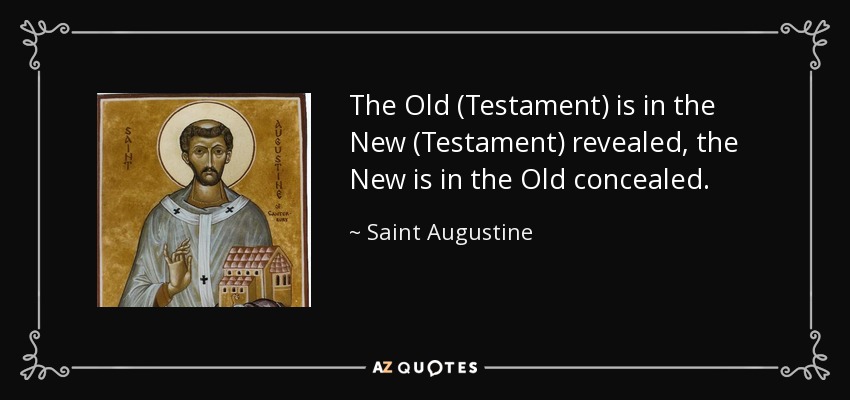
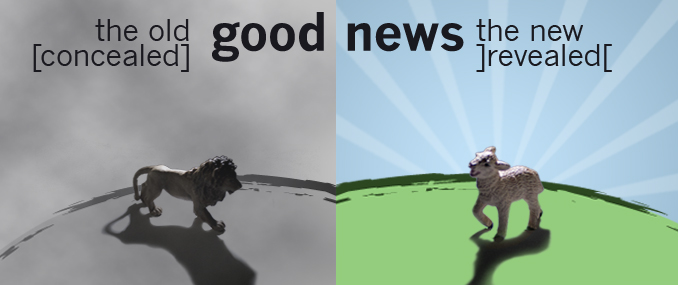
I recall as a young man listening to the person, who helped to sow the seed for my interest in Bible priests, coming out with the saying: “the New is in the Old concealed; the Old is in the New revealed”. He was spot on and he was simply expressing why Old and New Testaments are complementary and why we need both to fully understand either. That same brother taught the young people, over several sessions, lessons arising from the Wilderness Wanderings of the Children of Israel, following their Exodus from Egypt, and these lessons generally had some New Testament application. As for this book, when it comes to priests and the priesthood, much of the basics concerning those subjects can be found during that time. The same principles apply to all the books of the Old Testament.
Without overstating the obvious, the God of Israel in the Old Testament is the same God of followers of Jesus (Jews and Gentiles) in the New: “I am the Lord, I change not” Malachi 3:6 and given the notion of the Trinity (Father, Son and Holy Ghost) is to be found right at the start of the Bible: “Jesus Christ the same yesterday, and today, and for ever” Hebrews 13:8. While it is true that the central focus in the Old concerned the Covenant God made with Israel on Mount Sinai, the principles laid down are for all of us. The Old Testament, especially the books following the Torah (Law), also looked forward to the coming Messiah that Christians believe were fulfilled in Jesus. As for the New Testament, the Messiah has been revealed in the person of Jesus and also the New Covenant in His blood – but, to explore more deeply all the ramifications of this, we need to refer back to the Old.
When advising a new Christian where to begin when studying the Bible, the standard response is to begin with one or more of the four gospels – but what next? Understandably, he/she might be encouraged to stay in the New Testament before delving into the Old, beginning with Genesis and Exodus, until it stops being primarily story telling. But to gain a full understanding of God’s revealed word and will, he/she needs to study all the Bible and, while not a practice of most, read the whole Bible in a year and do so every year because always there are things not previously seen arising.
A good reason to study the Old Testament is it helps us understand the new. The Books of Matthew, and Hebrews spring to mind as ones containing many references to the Old Testament and, not surprisingly, these were aimed firstly at Jewish believers as well as containing truth we all need. There are somewhere between two and three hundred actual quotations of the Old Testament in the New Testament. Beyond this, there is a great amount of allusive material, some of which is deliberate, and some is unconscious, though nonetheless real. The New Testament writers were thoroughly immersed in the Old Testament. They lived and breathed the content of these writings, particularly God’s saving activity on behalf of Israel and the covenant promises concerning Israel.
When they were confronted with the ministry of Jesus, its proclamation by word and deed of the presence of the Kingdom, they understood it as the consummation of God’s saving activity and the fulfilment of the covenant promises. When they came to narrate the story of Christ in the gospels and the meaning of that story in the epistles, these writers continually made use of the Old Testament to show that what had so recently taken place in their midst was in fact the goal of Old Testament anticipation. As for the one book that is mainly prophecy, Revelation, this is best interpreted in the light of the Old Testament. Often too their interpretation of the scriptures they cited may not be ones that occur to the modern Gentile mind, thus making it even more pertinent.
When Paul engaged with Jews who knew the Hebrew scriptures, he used those same scriptures to prove his case, as noted earlier with the Bereans. We are no Paul, but unlike Paul, we do have the whole of the New Testament (including Paul’s writings) from which we can make our case. While the sad reality is while there are Jewish believers in Yeshua their Messiah, they are a small minority and this has been the case ever since Jesus’ First Coming. While the Gospel is for the Jew first, a day is coming when all Israel shall be saved and the challenge to bring them the Gospel remains. The Bible is a book of truth and in order to get anything approaching the full truth, and in order to fully grasp the whole counsel of God, which should be the goal of all believers, we need both Testaments.
A powerful argument as to the truth that Christians claim concerning Jesus is the fulfilment of Old Testament prophecy, such as Isaiah 53 that is to do with the Suffering Servant. Many scriptures can be cited: Genesis 3:15, Genesis 12:3, Psalm 2:6, Psalm 22:16, Psalm 45:6-7, Psalm 110:4, Isaiah 7:14, Isaiah 9:1-2, Isaiah 50:6, Daniel 2:44, Daniel 7:13-14, Micah 5:2, Hosea 11:1, Zechariah 9:9, Zechariah 11:12, Zechariah 12:10 are all worth checking out, and many more. It should be realised that, when the Hebrew prophets prophesised, they often did not see the time gap between the two comings. As believers, we are told to “be ready always to give an answer to every man that asketh you a reason of the hope that is in you with meekness and fear” 1 Peter 3:15. The fulfilment of Old Testament prophecy, among other things, may be cited as reasons for that hope.
Some commentators have had a field day going through every book of the Old Testament and saying why in each of these books we can see types and shadows of, if not references to, the Christ that is to come. I will focus on the first five books and affirm my belief these are more than tenuous links:
Genesis, specifically 22:1-19, relates to God telling Abraham that he needed to sacrifice his son, Isaac. When Isaac asked: “Behold the fire and the wood: but where is the lamb for a burnt offering?” (v7), Abraham responded “My son, God will provide himself a lamb for a burnt offering: so they went both of them together” (v8). In the end, Isaac earned a reprieve, just before the knife came down, and a ram caught in a thicket was sacrificed instead. At the Cross of Calvary, God did sacrifice His own Son and, like Isaac, Jesus obeyed His Father. “For God so loved the world, that he gave his only begotten Son, that whosoever believeth in him should not perish, but have everlasting life” John 3:16.
Exodus, specifically 12:1-51, tells us what happened on the first Feast of Passover, just before the Children of Israel left Egypt in order to journey to the Promised Land. The central act was each Israelite family sacrificing a lamb and applying the blood and the key text was “when I see the blood, I will pass over you” 12:13. That night every firstborn Egyptian son was slain. We read in the New Testament, when Jesus celebrated the Passover with His disciples just prior to going to the Cross: “the Lord Jesus the same night in which he was betrayed took bread: And when he had given thanks, he brake it, and said, Take, eat: this is my body, which is broken for you: this do in remembrance of me. After the same manner also he took the cup, when he had supped, saying, this cup is the new testament in my blood: this do ye, as oft as ye drink it, in remembrance of me. For as often as ye eat this bread, and drink this cup, ye do shew the Lord’s death till he come” 1 Corinthians 11:23-26.
Leviticus, specifically 16:1-19 details what took place on the day of Atonement. In part, it was the tale of two goats. One goat was sacrificed for the sin of the people and its blood sprinkled by the High Priest over the Mercy Seat situated in the Holy of holies to atone for the sins of the people. The other goat (the Scapegoat) had the High Priest’s hands laid on it whereby the sin of the people would be transferred, before being released into the Wilderness. We are reminded that Jesus is both the Priest and also the sacrifice for sin (our sin). “Wherefore Jesus also, that he might sanctify the people with his own blood, suffered without the gate” Hebrews 13:12.
Numbers, specifically 21:4-9 is the account of God sending a plague of snakes in response to the Israelites complaining during their wilderness journey, but there was a solution: “And the Lord said unto Moses, Make thee a fiery serpent, and set it upon a pole: and it shall come to pass, that every one that is bitten, when he looketh upon it, shall live. And Moses made a serpent of brass, and put it upon a pole, and it came to pass, that if a serpent had bitten any man, when he beheld the serpent of brass, he lived” 21:8,9. In Jesus’ discourse with Nicodemus, He recalled that incident and applied it to himself and the lesson that one needed to look to Jesus in order to live: “And as Moses lifted up the serpent in the wilderness, even so must the Son of man be lifted up” John 3:14.
Deuteronomy, specifically 21:22,23, is where we learn “And if a man have committed a sin worthy of death, and he be to be put to death, and thou hang him on a tree: His body shall not remain all night upon the tree, but thou shalt in any wise bury him that day; (for he that is hanged is accursed of God;) that thy land be not defiled, which the Lord thy God giveth thee for an inheritance”. We learn in the New Testament that Jesus took that curse on our behalf by taking upon Himself our sin and being forsaken by His Father as a result: “Christ hath redeemed us from the curse of the law, being made a curse for us: for it is written, Cursed is every one that hangeth on a tree” Galations 3:13.
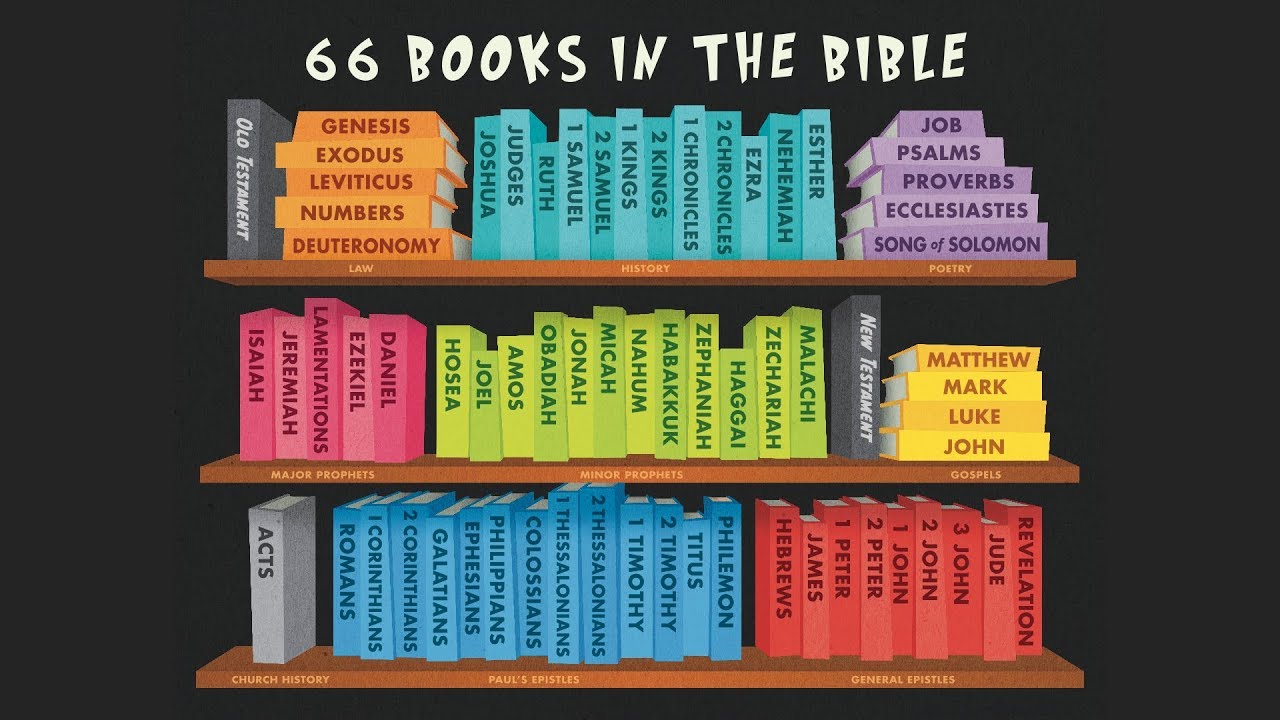
Finally, if it comes to having to choose between studying the Old or the New Testament, I refuse to choose. While it is true that much “Christian” teaching may be more specifically laid out in the New, teaching that benefits any who sincerely seek to be disciples of Jesus will be found in both and both are needed to reach a full understanding. We need to “study to shew thyself approved unto God, a workman that needeth not to be ashamed, rightly dividing the word of truth” 2 Timothy 2:15. While, there is a lot more to the Christian life than studying the Old and New Testament and knowledge of the scriptures is no substitute to obedience to God, but if we are to know what God requires of us, there is no better place to begin than the Bible, and that includes the Old and the New Testaments.
 JRB Publications