
Chapter 57 – “Outside the Camp” revisited

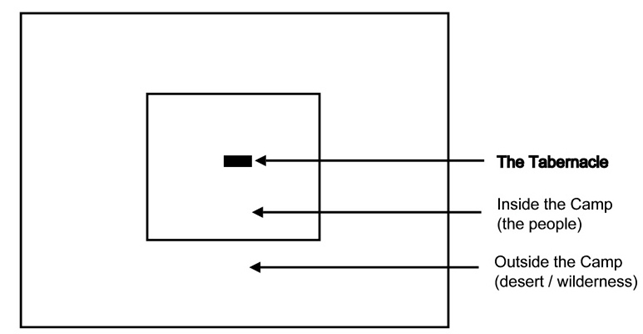
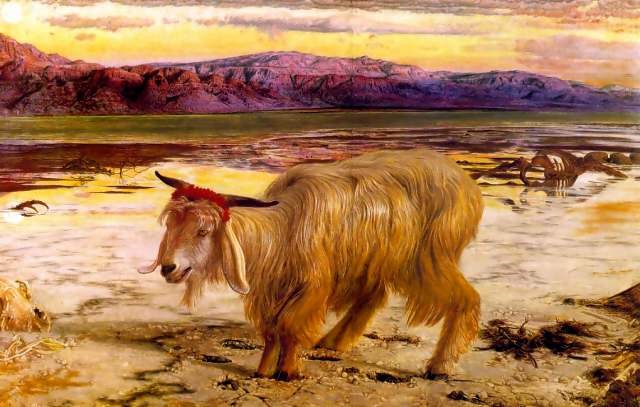
The above image is a non-colour reproduction of the painting “The Scapegoat” by William Holman Hunt (1827-1910), a member of the Pre-Raphaelite Brotherhood. Besides being a fan of Holman Hunt, the Scapegoat, along with the previous image (Inside and Outside the Camp), relates to an important theme of this book (Priests of the Bible) as well as to my earlier work (Outside the Camp). We learn in Leviticus 16, how the High Priest drew lots concerning two goats on the Day of Atonement, one being offered as a sacrifice for sin, with the High Priest entering the Holy of holies and applying the blood to the Mercy Seat, and one designated to be the Scapegoat (all of which is discussed in Chapter 10). After the High priest had laid hands on the Scapegoat in order to transfer the sins of the people, it was then released “outside the camp” (into the wilderness) bearing the sins of the people. Holman Hunt saw the Scapegoat as a type of the Lord Jesus Christ e.g. “Surely he hath borne our griefs, and carried our sorrows: yet we did esteem him stricken, smitten of God, and afflicted.” (Isaiah 53 v 4).
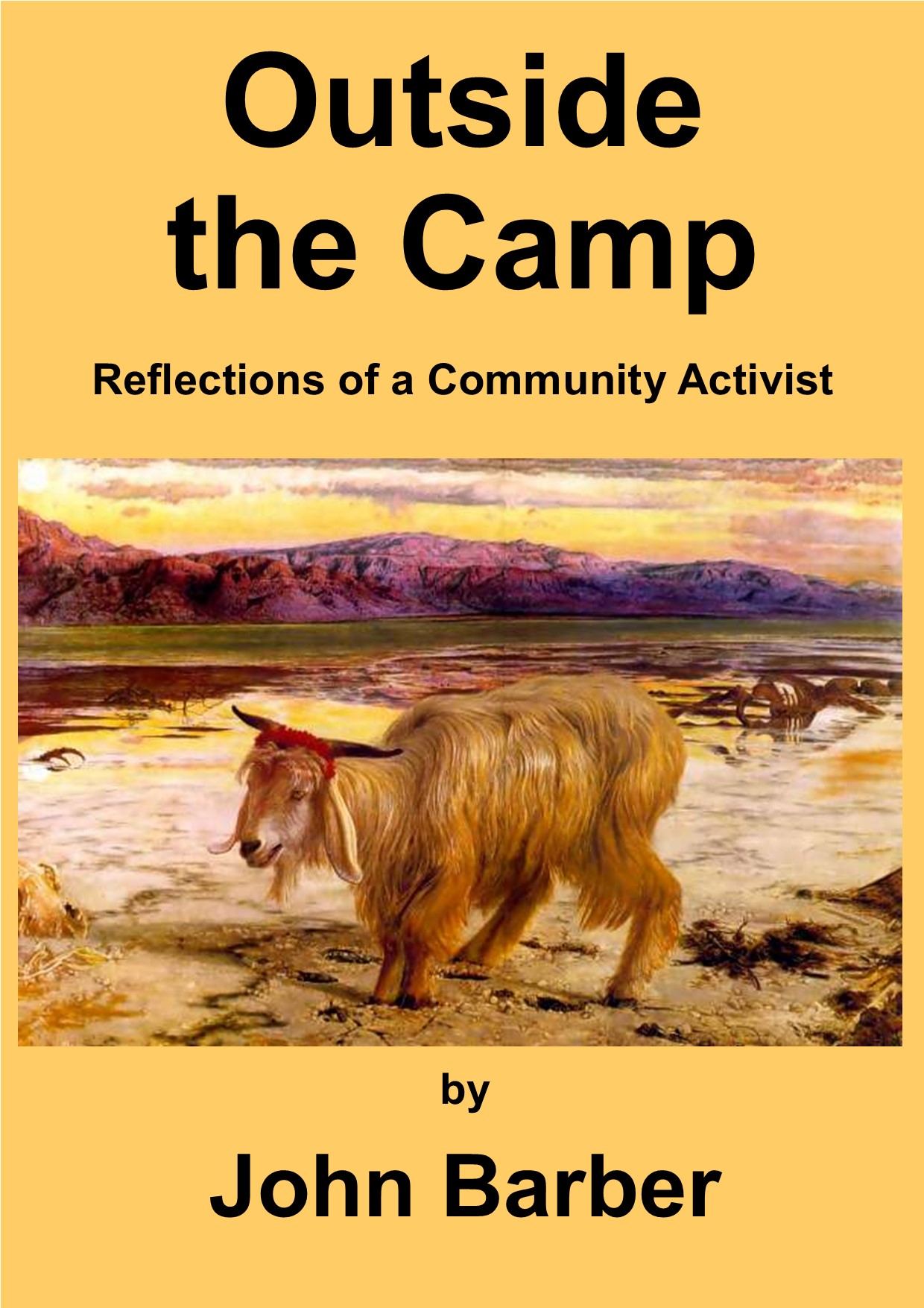
In 2012, I wrote my book “Outside the Camp” and produced a second edition in 2014 in order to incorporate updates to what I was doing as a community worker and offer further analysis and reflections (it can be freely downloadable from my website). A synopsis begins: ““Outside the Camp – Reflections of a Community Activist” contains the author’s own “inside” story of his wide-ranging, full-time activities in the community, in the town in which he was born and grew up in, over a period of more than ten years, in the latter part of his working life”. I also included thoughts on two hot topics: homosexuality and mental health. I mentioned two key texts, both of which are quoted elsewhere in this book and have much to do with Priests of the Bible. “Having therefore, brethren, boldness to enter into the holiest by the blood of Jesus, by a new and living way, which he hath consecrated for us, through the veil, that is to say, his flesh” (Hebrews 10:19,20) and “Wherefore Jesus also, that he might sanctify the people with his own blood, suffered without the gate. Let us go forth therefore unto him without the camp, bearing his reproach. For here have we no continuing city, but we seek one to come” (Hebrews 13:12-14).
Regarding my story as a community worker / activist, I refer readers to the book. There is a certain irony behind the story because while my PB background attached significant store to going inside the veil and outside the camp, community activism beyond being a good neighbour and serving the community as part and parcel of gospel outreach, evidenced for example in the setting up of schools, hospitals and orphanages in overseas mission, was not something that was encouraged – in fact working alongside those who were not true believers in Jesus was often discouraged. While going inside the Veil was seen to be a good thing as part of the prayer life of the believer, going outside the camp was associated with the Holman Hunt’s forlorn looking Scapegoat being cast out alone into the wilderness, but that was where believers were meant to be, as they awaited the return of Jesus.
My own philosophy was to do with community engagement, encompassing all faiths and none, with the idea of working in a partnership paradigm to promote the common good. In doing so I was able to engage with the six strands to do with equality and diversity that were what was being widely encouraged at the turn of the millennium when I began my third career, following that of a teacher and software engineer. These strands were: age, disability, race, religion, sexual identity and sexual orientation. I recognised there were areas of potential conflict with those whose world view was different to my own yet was able to accomplish a good deal of what I regarded as being positive. My activities included supporting community groups, organising community events, helping set up and manage a mental health charity, advocating on behalf of asylum seekers and various homelessness related activities. I was happy to call myself a “gospel preaching, community activist”, and in later years as I moved into semi-retirement, I was able to add “watchman on the wall” to that title.
A lot of water has gone under the proverbial bridge since then and, while I have had to cut down on my community involvement, and can be selective when it comes to choose what I participate in, not just because I am officially retired but due to other priorities, including writing books like this, as well as slowing down due to old age and disability, but I am still involved, e.g. helping the homeless as a volunteer and supporting the next generation of community activists. I have no intention to producing a third edition of “Outside the Camp” but, if I had, I might be tempted to re-write the book, not just to bring it up-to-date with what has since taken place in the nearly ten years since I wrote the second edition, but to reflect on significant changes to my perspectives.
While I still believe my earlier PB influencers were wrong to take the view of not getting involved, I can now look back and see many of their concerns were valid. To cut to the chase, and having seen many good Christians get involved in community activism, I can see how it can be a distraction to what they should be doing: “Go ye therefore, and teach all nations, baptizing them in the name of the Father, and of the Son, and of the Holy Ghost: Teaching them to observe all things whatsoever I have commanded you” Matthew 28:19,20a. While it is true that many an opportunity to serve a community has been lost through lack of activism, it has also been true that the people of God have lost their nerve by allowing those who have no time for the God of the Bible to set the agenda, expecting Christians to comply while unwilling themselves to make compromises.
While looking back, I can see how I could have done certain things differently and made many mistakes, yet I do not regret my third career despite going from being a highly paid computer consultant running my own business to being a lowly paid community worker that often had to eat humble pie in order to realise my common good goals. I was often amazed and encouraged by the efforts of those who did not share my faith in order to help others with no expectation of any reward. I like to think I made an important difference, but that will be for God and others to decide.
 JRB Publications