

In this presentation, I want to consider the subject of the Brethren and Last Things, based on my own experiences and observations inside Brethren Assembly circles, and its relevance today. In particular, I want to focus on a 12-year period concerning the assembly that I was mostly connected with, that was founded in 1900. In its heyday, it had some 300 people “in fellowship” and a Sunday School of 500, and was instrumental in establishing several Gospel Halls and missions, both home and abroad.
I would like to begin with two quotes and, at the end, reflect on the accuracy of what is quoted:
Firstly: “The beginnings of the Brethren movement were attended by a keen interest in the fulfilment of Biblical prophecy, and many of them are still characterized by this eschatological awareness. Their hymnology gives quite a prominent place to the Second Advent of Christ. But no single line of prophetic interpretation is held or imposed by them. Indeed, one of the many features which many people find attractive is the spiritual and intellectual liberty which is enjoyed there is an atmosphere of brotherly love”, from a paper titled “Who are the Brethren? by F.F. Bruce” (1962).
Secondly: “But the most significant figure to adopt a form of futuristic premillennialism was J.N.Darby, the fertile mind behind another Adventist sect, the Brethren … He steadily advocated the view that the predictions of Revelation would be fulfilled after believers had been caught up to meet Christ in the air, the so-called ‘rapture’”, from the section to do with Millennial beliefs, from a book titled “Evangelicalism in Modern Britain” by David Bebbington (1989).
I began to be actively involved in Coleman Street Chapel, Southend, a ‘middle of the road’ Brethren assembly, soon after my conversion as a Christian in 1966, aged 15, and remained involved until I moved away in 1977. I wish to concentrate on this period. While based on my personal memories, perspectives and earlier research, I sought corroboration where I could. I re-joined the Assembly in 1988 when I came back to live in Southend and remained a member and later an elder until we decided to close in 2013. That period also has a bearing. Besides the Chapel, I was associated with other differing Brethren set-ups, ranging from ‘tight’ to ‘progressive’, in the UK and also in India.
In the first period, the Assembly held two mid-week meetings, one for prayer and one for ministry, which was in effect solid Bible teaching. My first visit to a ministry meeting was a defining experience insofar as in recent years it helped inspire me to write my book, “Prophets of the Bible”. The brother teaching on that occasion was Winston Chilcraft. His subject for the evening was the prophet Elijah and Naboth’s vineyard, and what was happening in the region. I got to know Brother Chilcraft in later years. He was known as the go to man when it came to Bible prophets. Rather than talk much about Last Things it was more about the prophets’ rebukes regarding idolatry, sexual immorality, dealing unjustly with the poor and needy, and the relevance of their message to their day and to our own.
Coleman Street Chapel had a long history of inviting well known (in Brethren circles) speakers in order to minister. One big name was Mark Kagan and I recall him teaching on Ezekiel’s Temple, found in Ezekiel 40 – 48. Brother Kagan was clearly of the view this was a prophecy yet to be fulfilled, and it would happen during Christ’s millennial reign. When it comes to more controversial aspects, such as the Third Temple where the Zadok priests ministered, including the offering of animal sacrifices, he viewed this as all part of God’s plan in order to teach the Jewish people, who had been anticipating the coming of their Messiah ever since Ezekiel’s day, the prophetic significance of Hebrew scriptures.
While I don’t recall them making a big deal over it, when it came to theology, the Chapel’s leading lights in this period were into Dispensationalism rather than the Covenant Theology as subscribed to by some of my Strict Baptist associates, who I am involved with now. One exponent of this was Victor Levitt, a well-respected Bible teacher, known as the go to man when it came to the first five books of the Bible. Just as Brother Chilcraft helped inspire me to write my Prophets of the Bible book, Brother Levitt helped me to do this with my current writing project: Priests of the Bible. I recall one short but significant exchange when Brother Levitt attempted to put me right, insisting that the Gospel of the Kingdom, found for example in Matthew’s gospel, was different to the Gospel of the Grace of God, found in Paul’s epistles, that would be regularly preached at the Sunday evening Gospel meetings.
This exchange was significant because another brother contributed to the conversation, who saw the Gospel of the Kingdom and that of the Grace of God as being in effect the same. His name was Paul Bullivant, who had his own teaching and evangelistic ministry and attracted round him some of the young people with the camps he organised and meetings in his own home. He had shortly prior to that a healing experience and was referred to by a member of the Oversight, who later had his own charismatic experience, as someone who had just crossed Jordan and was still dripping wet. Brother Bullivant expressed the view that rather than see the Kingdom in futuristic terms, it is something that ought to be experienced in the here and now. Not long after, he decided to leave the Chapel and was later to join the band that Neil Summerton labelled as “were Brethren” (“Local churches for a new century”, Partnership, 1996), and became a leader in one of these new expressions of church.
Last Things were not the main concerns of the Oversight during this period and neither was refuting the “errors” of Catholics, Liberals and many Evangelicals, nor urging members not to succumb to the dangers that would arise from being too worldly, but rather it was the teachings that arose out of the new Charismatic Movement, notably concerning the Second Blessing and Speaking in Tongues.
While most members of the Chapel did not have a complete view concerning how events detailed in the Book of Revelation would pan out in the days to come, my recollection is those who thought they nearly did usually believed that after the scenes set in heaven, in Chapters 4 and 5, the rest of the Book is about happenings in a yet to take place future, including the Great Tribulation, in which period the Antichrist emerges. Two notable occurrences in that period are the forcing of humanity to take the Mark of the Beast (Chapter 13) and the Mystery and Fall of Babylon (Chapters 17 and 18).
Fifty years on, arguably, we can now see more clearly how both of these could happen. At the end of the Tribulation period, there will be a great battle and then Christ returns in glory, in Chapter 19. Then the Marriage Supper of the Lamb is followed by the binding of Satan and the Millennium. Then after one final battle, following Satan being released and deceiving the nations, there will be the Last Judgement when humankind has to appear before God at the Great White Throne and will be judged and, along with Satan, cast into the Lake of Fire should their names not be written in the Book of Life.
One emphasis should be noted, since it reinforced the necessity of being ready for the Lord’s return. Many Brethren believed the Judgement Seat of Christ (1 Corinthians 3:10-15), with rewards handed out based on our works, is for true believers only, and is different to that of the Great White Throne Judgement (Revelation 20:12) that is for the everyone else. The final big events will see new heaven and the new earth established. In chapter 6 to chapter 19, attention switches to Israel and its saints, as the Church had been raptured. It was thought that event could happen any time. In coming to this understanding, many Old Testament scriptures were studied, for example from the Book of Daniel.
The Pre-Tribulation Rapture, when the “saints” (all true followers of Christ) will suddenly meet Him in the air, was a cherished belief. This could happen at any time and the subject was often brought up during the Sunday evening gospel preaching meetings and other times, when the main emphasis was calling on people to turn to Christ (even though often it was a matter of preaching to the converted). One consequence of those not responding to the Gospel call was, in the words of the popular 2000 series, they will be Left Behind. I don’t recall any dissenting voices in that time (and in other Brethren set-ups also) to this view. If there were, these would likely not have been looked upon favourably.
An even more important meeting than that taking place on Sunday evenings for Gospel preaching was the Morning Meeting to Break Bread, when considering the Lord’s return took only second place to remembering His atoning sacrifice. When I first began to attend meetings, the Believers Hymn book was used on Sunday mornings and “Sankeys” on other occasions, with both containing several hymns to do with the Lord’s return. A popular “Breaking of Bread” hymn, had the title: “For the bread and for the wine”, and was often sung on such occasions. What follows are all eight verses:
1. For the bread and for the wine,
For the pledge that seals Him mine,
For the words of love divine,
We give Thee thanks, O Lord
2. Only bread and only wine,
Yet to faith, the solemn sign
Of the heav’nly and divine!
We give Thee thanks, O Lord.
3 For the words that turn our eye
To the cross of Calvary,
Bidding us in faith draw nigh,
We give Thee thanks, O Lord.
4 For the words that fragrance breathe
These plain symbols underneath,
Words that His own peace bequeath,
We give Thee thanks, O Lord.
5 For Thy words in Spirit, shown,
For Thy will to us made known,
“Do ye this until I come,”
We give Thee thanks, O Lord.
6. Till He come we take the bread,
Type of Him on whom we feed,
Him who liveth and was dead!
We give Thee thanks, O Lord.
7. Till He come we take the cup;
As we at His table sup,
Eye and heart are lifted up!
We give Thee thanks, O Lord.
8. For that coming, here foreshown,
For that day to man unknown,
For the glory and the throne,
We give Thee thanks, O Lord.
My final brother of note in that era concerning Last Things was Anton Campbell. He was seen as the go to man when coming to an understanding of the Book of Revelation, due to his extensive study of that subject. I recall him taking a series with the young people on this Book. One thing I remember him telling us was man would not get to the moon! Listening to him speak on other occasions, my belief is he took the standard Brethren view when interpreting the Book of Revelation, as outlined above, and part of his prophetic understanding was that the true Church would simply disappear as raptured, meeting the Lord in the air, before most of the events described in Revelation took place, and was distinct from the Lord’s Second Coming, when “every eye shall see him” (Revelation 1:7).
I ran an earlier draft of this paper by Una, Mr. Campbell’s daughter, requesting she confirm or refute the above observations, particularly as relating to her father and also inviting her to share her own thoughts concerning the period in question. I am glad that she concurred and agreed, making this significant point: “The rapture was an even more vivid part of the gospel in the late 40s and early 50s than I remember at Coleman Street in the 60s. I think that was because having emerged from WW2 and been made aware of the horrors of the concentration camps, and also the re-birth of Israel as a nation, believers were expecting the Lord to intervene at any moment as surely iniquity had come to the full?” The following is what Una Campbell wrote concerning the main subject of this paper …
“My memories of Coleman Street date from the early 1960s until 1972. It was a very happy time, marked by the great interest all the older folk took in the children and young people’s activities. Looking back, I believe the Christ-centred Breaking of Bread meeting on Sunday mornings was at the heart of all the service at Coleman Street. With regard to Last Things, I would say that the Dispensational, futuristic view was held by the majority. I hesitate to say ‘all’, but I never heard other views put forward during my younger days. Two things in particular stand out: First, that the second coming of the Lord was often spoken of in the gospel meeting with the emphasis on not delaying to come to Jesus for salvation. This was, of course, a reference to the Rapture and not the Lord’s Second Coming at the end of the Tribulation. By the mid-60s, I had stopped teaching in Sunday School and was holding meetings for young folk at home and inviting friends from work, old school friends etc., but the aim was always to bring as many as possible to the gospel meeting on Sunday evening. From time to time Peter Brandon visited Coleman Street for a gospel campaign and his emphasis was always the Lord’s return. Second, a notable speaker on Last Things was Mark Kagan, as you have already mentioned. He had one great enthusiasm; to speak about Israel and her coming Messiah. Mark Kagan stayed in our home during his visit to Coleman Street and he spent a long time talking to me about Israel and pointing out many things from the scriptures. Undoubtedly, it was more of a privilege than I realised at the time. In later years I have read other views, such as replacement theology, but have never found any scriptural reason to change my mind”.
When returning to the Chapel in 1988, I found numbers had sharply declined, as was the case with many UK Brethren assemblies, including the sort of old men once active in Assembly life, like I may have become, who assiduously studied not yet fulfilled prophecy, and also interest in Last Things had considerably lessened. There was, for example, little mention of the Pre-Tribulation rapture of the Church in the preaching, although the basic beliefs that I encountered as a 15-year-old still held. One likely reason is those who preached were no longer exclusively members of the Brethren who were considered to be doctrinally sound, and those who did preach were likely to be of the view this was too complex and controversial a subject on which to preach. Interestingly, I found this was not the case with many Indian assemblies I visited, where the preachers were usually “old school” Brethren.
But the emphasis “Ye should earnestly contend for the faith which was once delivered unto the saints” (Jude 1v3) continued at the Chapel. In 1999, I published “Coleman Street’s Children”, a history of the Chapel through the lens of its leading lights, including their beliefs, which may be seen as mainstream Evangelical. In its Doctrines and Practices, as taken from the Trust Deeds of Coleman Street Gospel Hall, when it came to Last Things, we read “That He will come again to receive them (them being true followers of Christ) unto Himself and to set up His kingdom”.
In my research, it was often confirmed that members tended not to be involved in the community or politically. But there was lots of evidence of them helping the poor, done either as well-meaning individuals, without ostentation, or as part of the natural outworking of assembly life, although this did not take precedence over Gospel proclamation. Political activism did not happen as a rule (although members tended to vote Conservative, even if closeted, if they voted at all). It should be noted though, whether it was as professionals or tradesmen, those so engaged took their work responsibilities seriously, as well as the need to be good neighbours. When I interviewed David Iles, who was the Correspondent during the period I was first involved, he confirmed that the focus was on the world to come, rather than today’s world (which in accordance with Darbyite eschatology was on a downward spiral) and the priority, through mission and evangelism, was to get people saved.
When applying Last Things prophecy to world events, this was what Brethren students of prophecy often did, but two stuck out. Firstly, Israel becoming a sovereign state in 1948, the first time since around 600 BC, when the Southern Kingdom of Judah went into Babylonian captivity; for, besides a short period under the Maccabees, up to 1948 it was always under foreign rule. It made possible the fulfilment of many prophecies where Israel would occupy centre stage. Concerning the Jews and Israel, they broadly supported them in control of the land promised to Abraham and there remained for them a special place in God’s plans as promised to Abraham. Secondly, regarding the Common Market, later known as the European Union, many Brethren were against the UK joining (the UK did join in 1973 but left in 2020), because they saw this as related to the ten nation confederacy that was prophesied in the Books of Daniel and Revelation, that would become allied with the Antichrist.
In 2020 and 2021, my Covid lockdown project was to search the scriptures and what had been said about the prophets and their prophecies, noting it is reckoned that 27% of the Bible is of a predictive nature, culminating in writing my book “Prophets of the Bible”, where I attempted to consider the lives, times and prophecies of every prophet in the Bible, including those that are generally not seen as prophets, noting much unfulfilled prophesy is interpreted differently by even doctrinally sound Christians. In a Web article, “Fulfilled Prophecy: Evidence for the Reliability of the Bible by Hugh Ross – August 22, 2003” it was argued: “Unique among all books ever written, the Bible accurately foretells specific events in detail many years, sometimes centuries, before they occur. Approximately 2,500 prophecies appear in the pages of the Bible, about 2,000 of which already have been fulfilled to the letter – no errors”. That means there are four times as many fulfilled prophecies as unfulfilled.
I tried to provide balanced, sound exegesis, but was up front concerning my axioms and the influence of my early Brethren upbringing. I took the view that the Bible should be considered literally unless that was clearly not the case, there will be a future, physical millennium and, unlike the majority of Christendom, Israel has not been replaced, all in accordance with Darby’s system but, unlike Darby, I was not convinced when it came to his views on the Pre-Tribulation Rapture and his dispensational approach to interpreting Last Things. In the Second Edition, I considered two controversial subjects.
Firstly, I questioned if there are true prophets prophesising now, bearing in mind the gift of prophesy was widely practised in the Early Church and the exercise of that gift was actively encouraged. I was particularly concerned with what is happening in the world today, noting many “were Brethren” charismatic prophets took strong issue with what some political prophets who prophesied about current events have said, such as concerning the Trump presidency and him being anointed by God in order to drain the swamp, noting too that many traditionalist Brethren took the view that, once the Bible canon was complete, there was no office of prophet and no further prophetic word.
Secondly, I did what Brethren prophecy students of old did: consider world events in the light of Last Things and how the world was heading, studying how current events were reported and misreported by mainstream and alternative media. This included trying to come to terms with notions like “Great Reset”, “Great Awakening” and “Great Deception”, and coming to a view we are now seeing all of these being played out and that the Devil is most effective operating as an Angel of Light rather than as the Prince of Darkness. As interesting and pertinent as my findings may be, it is outside the scope of a paper that is to do with what the Brethren I have come across thought about Last Things. But with arguably so much pointing to prophecy being or about to be fulfilled before our very eyes, one might expect, if around today, they might have a field day reconciling prophecy and world events.
Arguably, many of the Last Things enthusiasts in the Brethren circles that I was long ago acquainted with asked many of the right questions, even though, and depending on one’s views of eschatology, they may not have always come up with the right answers. It was evident though that even among the most saintly and scholarly there is a wide range of views. If there is a major criticism, in my view, it is the escape mentality that many had that, given evil was going to get worse, and at some point before the Antichrist is revealed they will be raptured, they did little to confront evil, partly too as a consequence of seeing the Kingdom in futuristic terms and not something for the present. It is worth noting though that many who were interested in Last Things realised when it came to the Book of Revelation, for example, a true understanding required a thorough study of the Old Testament (part explaining why Brethren often ended up as professors of Old Testament at theological institutions).
While we cannot say for certain how the Brethren between when the movement emerged in the 1830s and fifty years ago would have responded to today’s crazy, messed-up world, yet it is likely since they questioned what one was told one should believe, doing so in the light of scripture, they might have been less likely to be misled, for example regarding the Corona Plandemic, the Climate Emergency and the War in Ukraine; and would not have been too carried away with the social justice concerns that have beset modern evangelicalism. We must not forget too the place and role of Israel in world events, which students of prophecy would have seen as being significant in these End Times.
While my recollection of the Brethren fifty years ago is they were pro-Israel, albeit prioritising the conversion of the Jews, their views on Christian Zionism, Anti-Semitism, Messianic congregations and the Palestinian perspective were probably not unanimous. It is notable that many Brethren gave much attention to studying the Pentateuch (which I discuss in my “Priests of the Bible” book). In studying Brethren writings on matters such as the Tabernacle, we often find a considerable amount of these attempting to apply this teaching to today. They tended to over-spiritualise, a Greek rather than Jewish tendency, although this is the one, unlike most churches, they favoured. The Brethren were into Last Things because it formed a major part of the Old Testament scriptures and intrinsic to their theology. While the promised Messiah has come, much needs to happen around His Second Coming, in which both the Church and, mostly unbelieving, Israel still have important parts to play.
Today’s makeup of the Brethren, in the UK at least, is a lot different to that of fifty years ago, partly as a result of a steep decline. It has resulted in a lot of polarisation and separation of ways between the more progressive (usually ditching the term “assembly”) and the more traditionalist assemblies. The number of UK traditionalist leaning assemblies operating may these days be in a minority, and along with retaining the distinctive traits of Brethrenism, it is these that would have taken most interest in Last Things. As for the rest, many would take from non-Brethren traditions and likely to go along with whatever is the Evangelical consensus they are more inclined toward, with some having ditched their Brethren roots altogether and, more likely than not, interest in Last Things might not feature highly.
If the Brethren were right and the world will get even worse, which following the emergence of the movement 200 years ago has arguably been the case, we must take note, recalling their emphasis on holiness, mission and walking with God in obedience, and be like the five wise virgins who had their lamps trimmed while waiting for the bridegroom. We must prepare for the worst (mindful that the world will only get truly better after the return of Christ) and hope for the best (the physical return of Christ, this time it will be in glory, righting what is wrong; and that has to remain our blessed hope).
In the period 1966-1977, while we note much interest in Last Things by members of Coleman Street Chapel, but it was one that was already declining, and that included the expectation of the imminent rapture of the Church, and has continued until this day. Likely, what we have seen was typical for the Brethren movement as a whole, at least in the UK. We now live in extraordinary times (maybe our Brethren forefathers would have said the same about their times), where Christians, including today’s Brethren, have differing views on where the world was heading. Besides the views that were traditionally held, these include not having any view or to go along with the narratives mainstream media, politicians and societal elites would have us believe or for there to be a great awakening as evil is exposed and dealt with, believed by a mixture of political prophets, new agers and conspiracy theorists, or what is seen by some as an Orwellian, dystopian nightmare being promoted by the likes of Klaus Schwab and Yuval Noah Harari, endorsed by many world leaders, including King Charles, which scenarios many early Brethren believed could play out leading up to the Great Tribulation.
Another view is whichever way it goes, the onus is on their successors today to be faithful to God, remembering He is in control and if we read to the end of our Bibles we find that He wins in the end and, while we are at it, we do well to draw lessons from what our Brethren forefathers believed.
Going back to the Bruce quote, he was right, although maybe a little too generous when declaring Brethren could and would graciously agree to disagree regarding different interpretations to those that were most widely accepted, i.e. Darby’s and those of his ilk, when it came to Last Things.
As for Bebbington, he too was essentially correct given my own experience when it came to Brethren eschatology, but rather too dismissive when it came to labelling them as “another Adventist sect”, since they had many other preoccupations besides that of Adventism, notably their primary concern to faithfully carry out the Great Commission (Matthew 28:19,20) and to be holy (1 Peter 1:16).
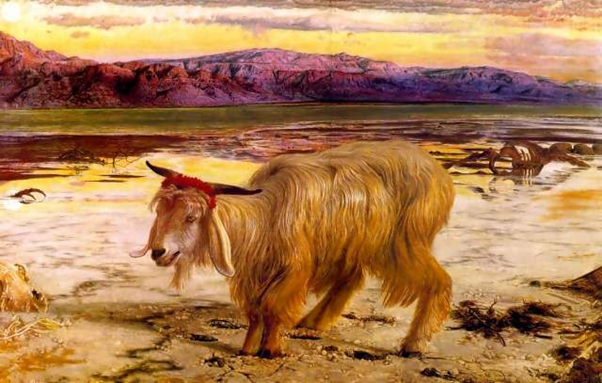
But let us give Mr. Darby the last word; sentiments many early Brethren would have resonated with:
This world is a wilderness wide –
I have nothing to seek or to choose;
I’ve no thought in the waste to abide;
I’ve nothing to regret or to lose.
And, Saviour, ’tis Thee from on high,
We await till the time Thou shalt come,
To take those Thou hast led by Thine eye
To Thyself in Thy heavenly home.
John Barber (03/07/2023)
 JRB Publications